US tightens remote-access controls on advanced AI chips in latest push against China
Congress moves to embed semiconductor export limits in defense bill
Trade truce expires Jan. 10 — next month's G20 seen as pivotal
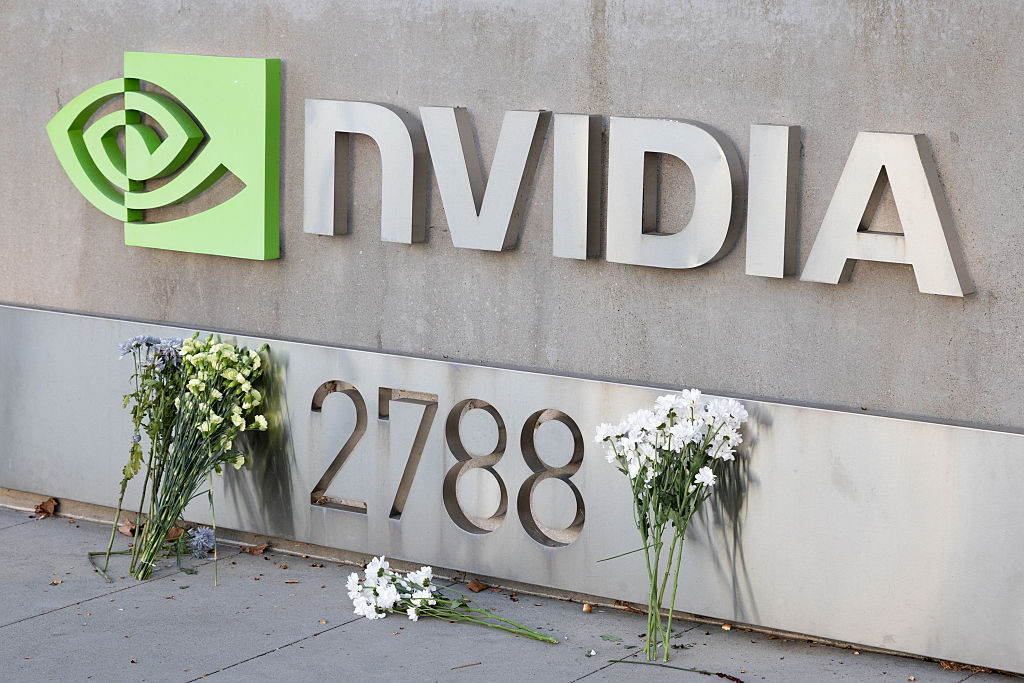
Allegations that China obtained advanced Nvidia semiconductors through a female spy have emerged as a new flashpoint that could reignite the US-China trade war. As Washington tightens export controls on cutting-edge AI chips and Congress moves toward legislation, Beijing's pushback is intensifying. With the possibility of Chinese rare earth export restrictions now being raised, the outlook for extending the two countries' trade truce — which expires in January — has grown deeply uncertain.
According to Reuters and CNN on Sunday (local time), the US government and Congress have been rolling out a series of tightened export controls on advanced semiconductors targeting China, spurred by the Nvidia affair. The moves follow allegations that China illegally obtained Nvidia's advanced chips and used them to develop AI technology, heightening the perceived need to protect American technological superiority.
The Commerce Department's Bureau of Industry and Security recently announced measures to restrict Chinese entities from remotely accessing computing resources that use advanced AI chips, including Nvidia products. Under the new rules, even if the semiconductors and servers are located outside the United States, any company in a country designated by Washington as a national security concern — including China — must obtain US government approval before receiving computing services.
The move goes a step beyond existing controls that restrict chip exports, extending US oversight to the use of advanced semiconductors already installed abroad. It is widely seen as an effort to close off workarounds that allow Chinese companies to tap the computing power of American AI chips through data centers or cloud services in third countries.
The Commerce Department published the measures in the Federal Register, bringing them into force, while simultaneously scrapping the "AI diffusion rule" put in place by the Joe Biden administration. The change replaces a broad country-by-country licensing framework for AI chip exports with a tighter regime focused on specific countries and end-use purposes.
Congress has also joined the push for stricter controls. Lawmakers are working to include provisions in the fiscal year 2027 National Defense Authorization Act that would restrict exports of advanced AI chips to China.
The key provisions would require the administration to notify Congress before approving exports of advanced AI chips to adversaries such as China, and give lawmakers the power to block such approvals. The legislation would also mandate tracking of advanced chip locations to prevent smuggling through third countries, and push allies including Japan and the Netherlands to bring their semiconductor equipment export controls in line with US standards.
These moves put Washington on a direct collision course with China's national strategy, which has made securing advanced semiconductor technology its top priority.
Xi Jinping called for extraordinary measures to acquire critical technologies at a Politburo meeting last January, saying China must resolve technological bottlenecks blocking the development of future industries as quickly as possible.
According to CNN, acting on Xi's directives, China's Ministry of State Security elevated the acquisition of advanced semiconductors and related intelligence to a top priority. The Central Science and Technology Commission has also designated computing power as a core indicator of China's overall national strength and is focused on closing the gap with the United States.
Analysts say US export controls could deal a significant blow to China's AI industry. According to an analysis by the Information Technology and Innovation Foundation, a US think tank cited by Reuters, tighter American semiconductor export controls could affect roughly two-thirds of the computing capacity China is seeking to acquire by 2027.
Beijing has already signaled a forceful response. China's Ministry of Foreign Affairs, in a statement issued shortly after the Commerce Department's Nov. 16 announcement, condemned the restrictions as unjust suppression of China's advanced technology industry and said it would take necessary measures to defend its legitimate rights and interests.
Rare earth export controls are widely cited as Beijing's most potent retaliatory tool. Rare earths are critical minerals used extensively in semiconductors, electric vehicles and advanced weapons systems — a domain where China wields considerable influence over global supply chains.
The United States and China agreed last year to ease rare earth export restrictions as part of their trade war ceasefire. However, according to the Center for Strategic and International Studies, current rare earth export volumes remain below 25 percent of pre-restriction levels.
Han Lin, China director at consulting firm The Asia Group, said Beijing retains significant leverage. "China can hit back hard," Han said. "It still holds the lever of export controls on critical rare earth minerals, and that is a negotiating tool it can deploy under any circumstances."
Reuters reported that China may be preparing to go further, with plans to extend export controls beyond rare earths and critical minerals to areas including AI, biotechnology and solar technology as part of its response to Washington.
There are growing fears that a renewed escalation could replay the trade war in which both sides imposed tariffs exceeding 100 percent on each other's goods last year. The current truce runs through Jan. 10, leaving less than two months to decide whether to extend it.
While an extension had initially been expected, the Nvidia affair has introduced fresh uncertainty into the negotiations, clouding the outlook for a deal.
Donald Trump and Xi are said to have briefly touched on the Nvidia affair at their summit in Shenzhen on Thursday. However, neither side's readout of the meeting included any announcement on extending the trade truce.
Attention is now turning to next month's G20 summit in Miami, Florida, which is shaping up as a critical juncture for the trajectory of US-China trade tensions. Should Trump and Xi meet again on the sidelines, semiconductor export controls, rare earth restrictions and the fate of the trade truce are all expected to be central issues.
Reuters noted one potential bright spot: even if the two sides reach another impasse, they may ultimately have little choice but to return to the negotiating table.
sjy@heraldcorp.com