Confirmation of 2 senior Defense Department posts effectively blocked
Army, Navy leadership picks also in limbo; $1.5 trillion defense budget faces headwinds
Republican defections accelerate ahead of Democratic takeover in January
In an era when a single word from Trump can shake global markets, the Herald Business international desk delivers a daily briefing — from Wall Street closing figures to the Trump news most likely to move global assets — in under a minute. Subscribe at https://1day1trump.stibee.com/
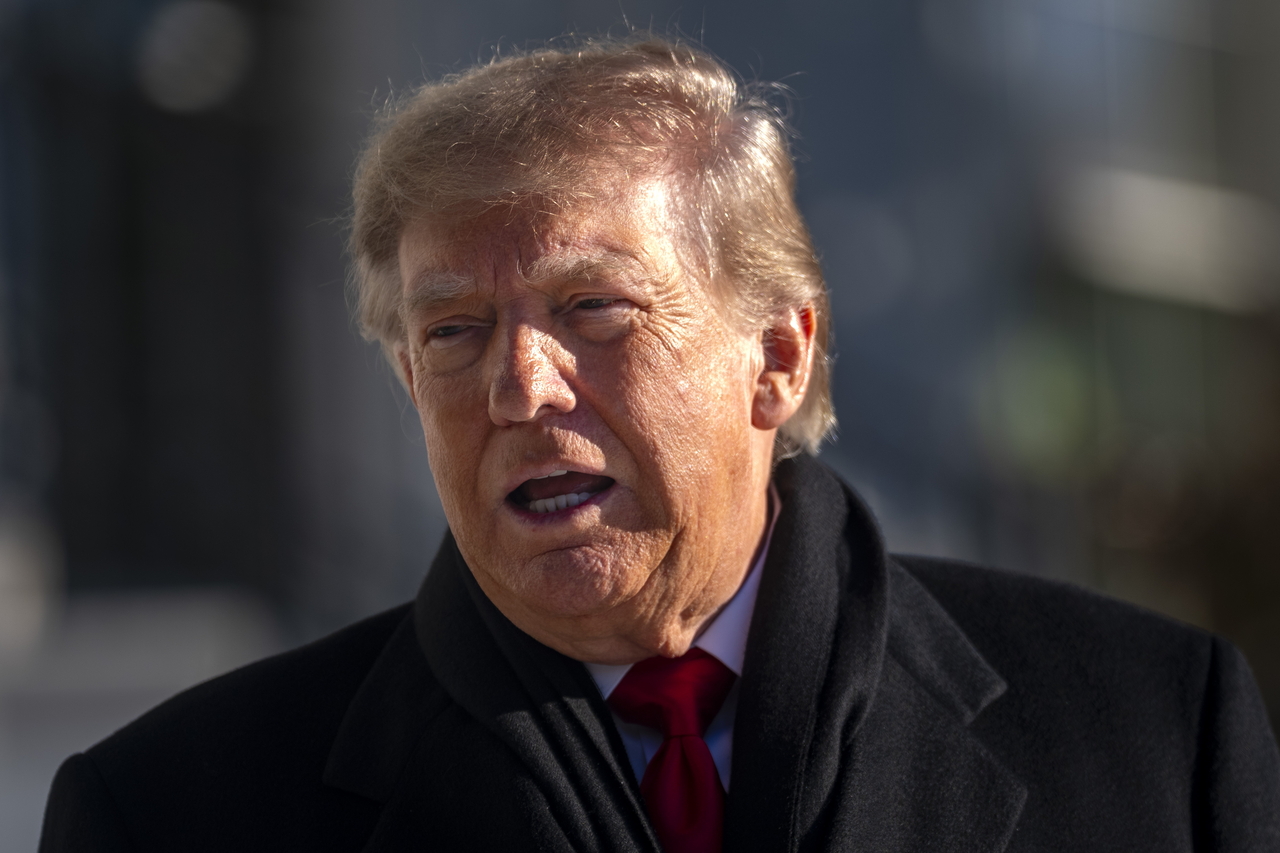
Donald Trump is showing early signs of a lame-duck presidency, running into resistance from within his own Republican Party following a midterm election defeat. His administration had sought to push through key Pentagon appointments and a massive defense budget increase before the Democratic Party takes control of both chambers of Congress in January, but Republican lawmakers have repeatedly blocked those efforts, disrupting the administration's agenda.
Republican senators are expected to block confirmation of at least two senior Pentagon nominees, the Washington Post reported Sunday (local time). The pushback from within the ruling party came even before Democrats have taken their majority in the new Congress.
The two nominees whose confirmations have effectively collapsed are Austin Dahmer, nominated as director of strategy, plans and capabilities in the Defense Department's policy office, and Alex Velez-Green, nominated as deputy director. Both were nominated more than a year ago, but despite months of lobbying by the administration, the White House failed to secure the votes needed for confirmation. They are now expected to be left off the Senate's final confirmation schedule for this year.
The two nominees are key aides to Undersecretary of Defense for Policy Elbridge Colby and have been involved in reviewing US military deployment posture in Europe and shaping major defense strategies. Criticism emerged within Republican ranks, however, after the Pentagon announced last year the withdrawal of a US Army brigade stationed in Romania, with lawmakers complaining they had not been adequately consulted.
Republican lawmakers who have taken hard-line positions on defense and security issues were particularly vocal in their opposition. House Armed Services Committee Chairman Mike Rogers claimed Colby had lied to him about the troop withdrawal, a charge Colby denied. The episode illustrated how an internal Republican dispute over the Trump administration's overseas military deployment strategy had spilled over into a personnel fight.
The administration is also struggling to fill top Army and Navy leadership posts. Acting Navy Secretary Hung Cao faced criticism from both Republican and Democratic lawmakers at his Senate confirmation hearing Tuesday over administration plans to replace electromagnetic catapult systems on aircraft carriers with older steam-powered ones, among other issues. Cao needs 60 Senate votes to be confirmed, but with several Democratic senators signaling opposition, his path to confirmation has become uncertain.
Army Chief of Staff nominee Gen. Christopher LaNeve has also seen his confirmation delayed for months due to opposition from some Republican senators. LaNeve has been serving as acting chief since Defense Secretary Pete Hegseth fired former Army Chief of Staff Gen. Randy George. The position of Army secretary also remains in an acting capacity after former Secretary Dan Driscoll resigned following a falling-out with Hegseth, with no permanent successor yet nominated.
The Trump administration's push for a sweeping defense budget increase has also hit a wall. The Pentagon is seeking $350 billion in additional funding to bring the fiscal year 2027 defense budget to $1.5 trillion, with part of the money earmarked to replenish ammunition and weapons systems expended in the war with Iran.
Senior Pentagon officials have argued the administration should use the budget reconciliation process — which allows legislation to pass without Democratic support as long as Republicans hold a congressional majority — to move the bill quickly. Republican leadership, however, has been cautious.
Deputy Defense Secretary Steve Feinberg visited Capitol Hill Wednesday to lobby Republican lawmakers, but Senate Majority Leader John Thune told reporters afterward that he preferred to pursue a bipartisan approach with Democrats on the defense budget bill. The remarks were widely interpreted as a signal that Thune favors negotiated, cross-party budget passage over the rapid timeline the Trump administration wants.
Republican resistance is spreading beyond the Pentagon to other key administration nominees. According to the Wall Street Journal, Trump's nominees to lead the Government Accountability Office and the National Science Foundation have also run into opposition from Republican senators.
GAO comptroller general nominee Eric Ueland has drawn concern that his close ties to White House Office of Management and Budget Director Russ Vought would compromise the agency's independent oversight function. Republican Sens. Thom Tillis, Susan Collins and John Curtis are among those opposing his confirmation.
National Science Foundation director nominee Jim O'Neill is facing pushback from Republican Sen. Bill Cassidy and others who say he failed to adequately oppose Health Secretary Robert F. Kennedy Jr.'s vaccine policies during his time as acting director of the Centers for Disease Control and Prevention.
Trump urged the Senate earlier this month on his Truth Social platform to confirm all 161 of his nominees, including 25 federal judges currently awaiting confirmation. "It is very important that the Senate confirm all 161 nominees," he wrote.
With less than a month remaining before Republicans hand their Senate majority to Democrats, and with defections continuing within the ruling party itself, the administration's personnel plans appear increasingly difficult to execute. Once Democrats take control of both chambers in January, congressional checks on Trump's appointments, budget requests and major policy initiatives are expected to tighten considerably.
Analysts say Trump, whose political standing has weakened since the midterm defeat, now faces a new obstacle — defections from within his own party — even before the opposition has begun its full-scale challenge.
sjy@heraldcorp.com