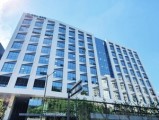
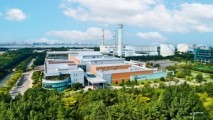
Suncheon sets its 2027 budget at 1.63 trillion won ($1.23 billion); Yeosu plans 1.43 trillion won
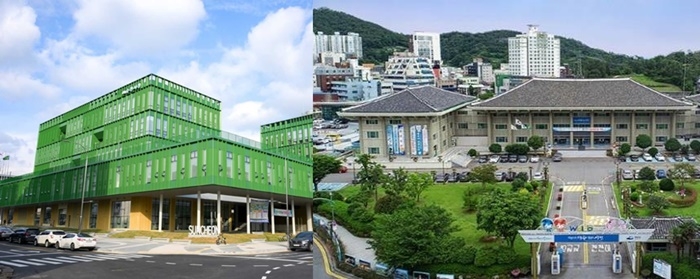
Suncheon and Yeosu, the two leading rival cities in eastern South Jeolla Province, have each drafted their 2027 base budgets at around 1.5 trillion won.
The two cities share several historical and administrative ties: both were affected by the Yeosu-Suncheon Incident, both were elevated from towns to cities after Korea's liberation, both are designated urban-rural integrated cities encompassing surrounding agricultural and fishing communities, and both fall within the Gwangyang Bay Free Economic Zone.
Suncheon submitted a 2027 base budget proposal of 1.63 trillion won to the Suncheon City Council on Friday.
The figure represents a 63.7 billion won increase, or 4.1 percent, from this year. The general account stands at 1.41 trillion won, up 2.3 percent, while the special account totals 221.9 billion won, up 16.6 percent.
The city has consistently expanded its budget through focused and efficient fiscal management.
Suncheon has maintained the largest base budget among cities and counties in South Jeolla Province for three consecutive years, cementing its standing as one of the three major cities in the Honam region — behind only Gwangju and Jeonju — in both population and fiscal scale.
The city said its 2027 budget prioritizes stabilizing livelihoods and revitalizing the local economy while also directing investment toward strengthening urban competitiveness.
Plans include easing the financial burden on small business owners and farmers, supporting the livelihoods of vulnerable groups and the economic independence of youth, and laying the groundwork for growth in strategic industries such as defense, AI and biotech — all aimed at transforming Suncheon into a future economic hub.
Yeosu drafted its 2027 budget at 1.43 trillion won, comprising 1.3 trillion won in general accounts and 126.7 billion won in special accounts — an austerity budget 52.1 billion won smaller than this year's.
Major expenditure categories include 535.7 billion won for education, welfare and public health; 170.3 billion won for transportation and regional development; 129 billion won for environment, industry and energy; 94.2 billion won for agriculture, forestry, marine affairs and fisheries; 94.1 billion won for general administration and public safety; and 72.8 billion won for culture and tourism.
Notable individual projects include 3.6 billion won for transitioning to high-value, eco-friendly petrochemical production; 2 billion won for residential land development in Yulchon-myeon; 2.1 billion won to support 500 units of youth rental housing; 2 billion won to develop Bitseom Park; and 3.5 billion won to build a rail trail park along the former Yulchon Station corridor from Daepo.
Both budget proposals will be finalized after review by the respective city council standing committees and budget and accounts special committees.
parkds@heraldcorp.com