Special prosecutor's targets overlap significantly with committee's probe
Chair denies wielding investigative command authority over fact-finding team
The chair of the Prosecution Human Rights and Future Committee said the body would continue its work even as a newly enacted special prosecutor law targeting alleged prosecutorial abuses takes effect — raising concerns about duplication between the two overlapping investigations.
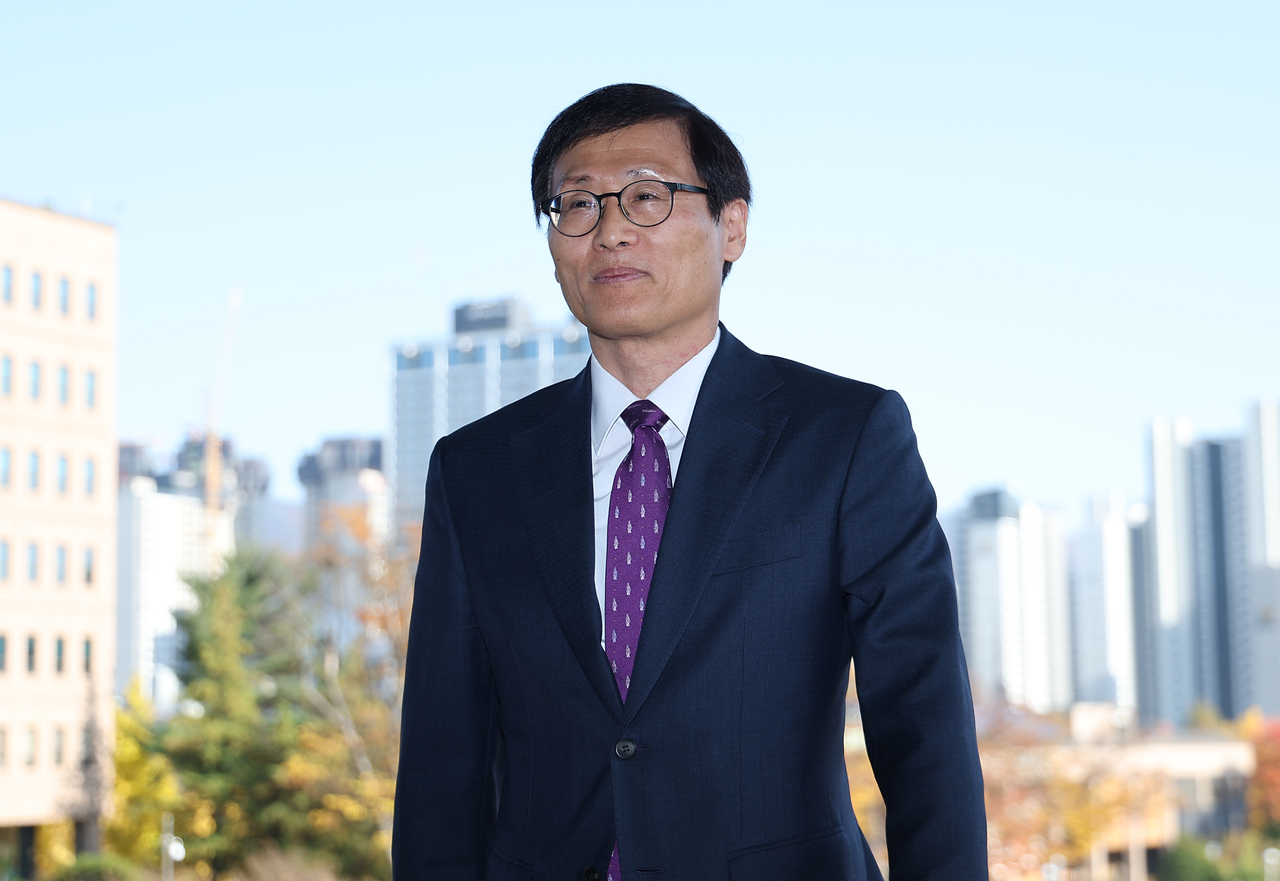
Jang Ju-young, the committee's chair, made the remarks Friday morning while speaking to reporters outside the Ministry of Justice building in Gwacheon, Gyeonggi Province, ahead of a committee meeting. Asked whether the parallel existence of the special prosecutor and the committee posed a risk of duplication, Jang said, "The committee intends to fulfill its own role."
The National Assembly passed the special prosecutor act — formally titled the Act on the Appointment of a Special Prosecutor to Investigate Allegations of Fabricated Investigations and Indictments by the Prosecution Service, National Intelligence Service, Board of Audit and Inspection and Other Agencies Under the Yoon Suk Yeol Administration — on Nov. 6, led by the Democratic Party of Korea. Prime Minister Han Seong-sook chaired a Cabinet meeting Tuesday that deliberated and approved the bill's promulgation, and President Lee Jae Myung signed it into law Thursday, bringing it into immediate effect.
The special prosecutor is authorized to investigate alleged prosecutorial abuses in 12 cases: the Daejang-dong development allegations, the Wirye new town development allegations, allegations that former Democratic Research Institute Vice Chairman Kim Yong accepted illicit payments, the Baekhyeon-dong apartment development allegations, Public Official Election Act violations related to the Daejang-dong and Baekhyeon-dong development cases, allegations of third-party bribery involving Seongnam FC, allegations that Kim Jin-seong suborned perjury, SBW's remittances to North Korea, allegations involving Gyeonggi Province corporate credit cards, the shooting death of a South Korean civil servant in the West Sea, allegations of statistical manipulation under the Moon Jae-in administration, and allegations of defamation against former President Yoon Suk Yeol.
The committee, which launched in June to examine alleged abuses of prosecutorial authority, has a mandate that overlaps substantially with the special prosecutor's targets, prompting criticism that the two bodies operating in parallel would duplicate each other's work. Jang, however, said Friday that the committee would carry out its role independently of the special prosecutor.
The committee's fact-finding team last month reported to the full committee on its inquiries into the Wirye new town development allegations, the statistical manipulation allegations under the Moon administration, and the West Sea civil servant shooting. The team is understood to have concluded that it found no evidence prosecutors deliberately fabricated anything in those three cases. The committee has nonetheless continued to demand supplementary investigations, and some critics have said the demands amount to directing the probe at a level equivalent to investigative command.
Asked about those criticisms Friday, Jang said the committee has no authority under its rules to directly command the fact-finding team. "The process is for the committee to recommend supplementary investigations to the minister, and for the minister to act on that — it is not a relationship in which the committee directly commands the investigative team," Jang said.
When asked whether the committee would demand further supplementary investigations if it found the day's report unsatisfactory, Jang said, "We will need to receive the report and discuss it," before entering the building.
bell@heraldcorp.com