Trump heads home after US-China-Russia summit with no North Korea encounter — third failed attempt in second term
Midterm setback narrows political room as diplomatic reset bid falls short
A daily briefing on the Trump news that moves global markets and economies — curated fast, readable in one minute.
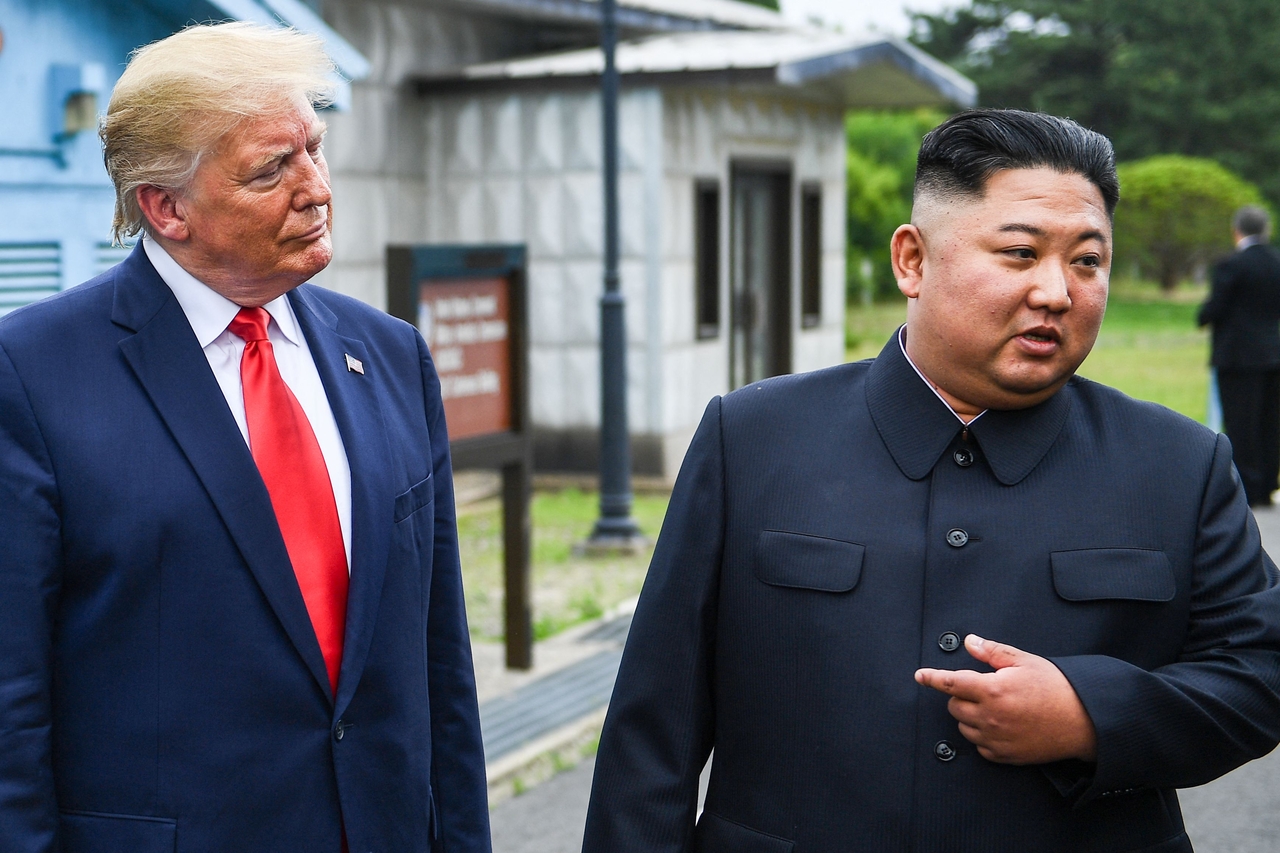
A widely anticipated surprise meeting between Donald Trump and North Korean leader Kim Jong-un — seen as a real possibility on the sidelines of the Asia-Pacific Economic Cooperation summit Wednesday and Thursday (local time) — fell through once again.
Trump had raised the prospect himself on Monday, just before departing the White House for an Asia tour that included stops in the Philippines and China.
Without being asked, he volunteered that in addition to meeting Chinese President Xi Jinping and Russian President Vladimir Putin during his China visit, he might also meet Kim.
"Kim Jong-un could come," Trump added. "That's up to President Xi."
The remarks came despite a White House official having said on Nov. 13 that no US-North Korea summit was planned for the Asia trip — yet Trump's unsolicited comments sent expectations soaring.
At a Quad leaders' meeting in Manila on Tuesday, Trump was asked whether Kim would show up. "He'd like to do that," Trump said. "Let's see what happens."
On Wednesday, Secretary of State Marco Rubio told reporters in Manila before flying to Shenzhen, China, that Trump's push for a North Korea meeting was "a serious idea" and that the president was "ready to do it."
Rubio acknowledged that no meeting had been scheduled, saying it "may not actually happen," but speculation that a US-North Korea summit could take place during Trump's China visit refused to die down.
In the end, Trump boarded a flight home Thursday after wrapping up a trilateral summit with Xi and Putin, and the reunion with Kim appeared to have fallen through once more.
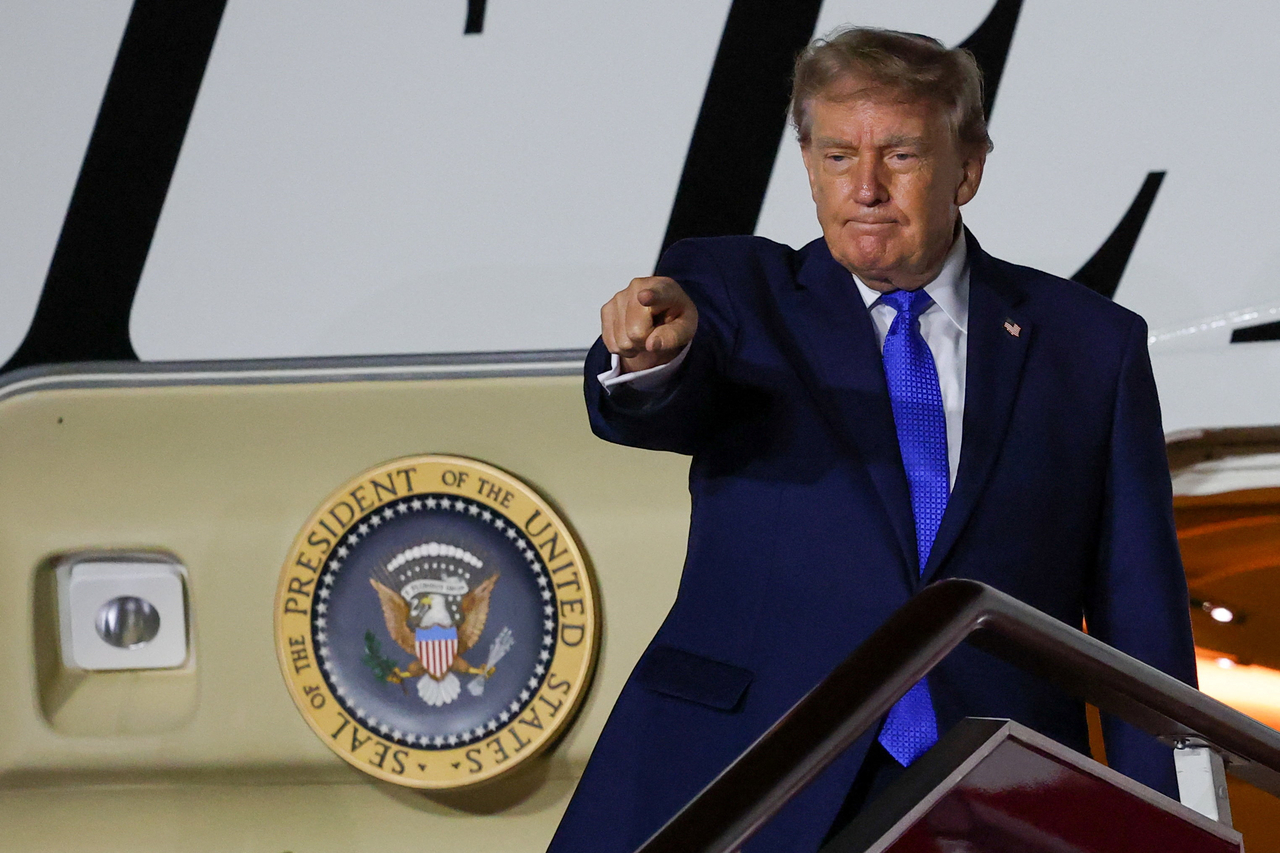
Speculation about a possible US-North Korea summit has consistently surfaced during each of Trump's Asia visits in his second term.
The logic has been straightforward: Trump has repeatedly highlighted his personal rapport with Kim, whom he met three times during his first term, and when Trump visits South Korea or China, Kim — who rarely travels abroad — faces a relatively short journey to any potential meeting site.
When Trump visited South Korea in October last year for the APEC summit there, he said he would be willing to meet Kim if the North Korean leader reached out — but no meeting materialized.
During a state visit to Beijing in May, some quarters raised the possibility of renewed US-North Korea dialogue, but Trump left China without separately mentioning any prospect of seeing Kim.
Expectations ran higher this time: Trump had been openly talking up the possibility before he even departed, and Kim had recently made a surprise visit to Dandong, a Chinese city near the North Korean border. Speculation mounted that a surprise encounter could take place in Dandong or another Chinese location close to North Korea — but ultimately the two leaders failed to meet for the third consecutive time in Trump's second term.
Many analysts had argued that Trump's decision to float the idea of a US-North Korea summit in China — and keep it alive throughout the trip — was tied to his domestic political standing.
With his position at home and abroad significantly weakened after a midterm election defeat, the thinking went, Trump was trying to engineer a diplomatic reset by adding a meeting with the leader of an emerging nuclear state to his summits with the Chinese and Russian presidents and presenting the whole package as a foreign policy win. That plan has now come to nothing.
Analysts are likely to note that Kim had little reason to respond to Trump's repeated overtures.
A Department of State fact sheet released Tuesday following a US-ASEAN summit in the Philippines — stating that "the United States remains committed to the complete denuclearization of North Korea and the full implementation of UN Security Council resolutions related to North Korea" — may also have given Pyongyang pause.
There is also the possibility that Trump, focused on his meetings with Xi and Putin, simply had no bandwidth left to pursue a North Korea summit as well — or that a degree of satisfaction with the trilateral outcome reduced his appetite for staging yet another high-profile event.
In addition, China and Russia, both close allies of North Korea, may not have welcomed a Trump-Kim encounter.
Before the trip, some experts had noted that neither Beijing nor Moscow had any incentive to facilitate a US-North Korea meeting that could cut across their own foreign policy strategies.
mokiya@heraldcorp.com