US press: personal diplomacy alone cannot extract concessions
Xi, Putin seen using trilateral summit to signal end of US-led order
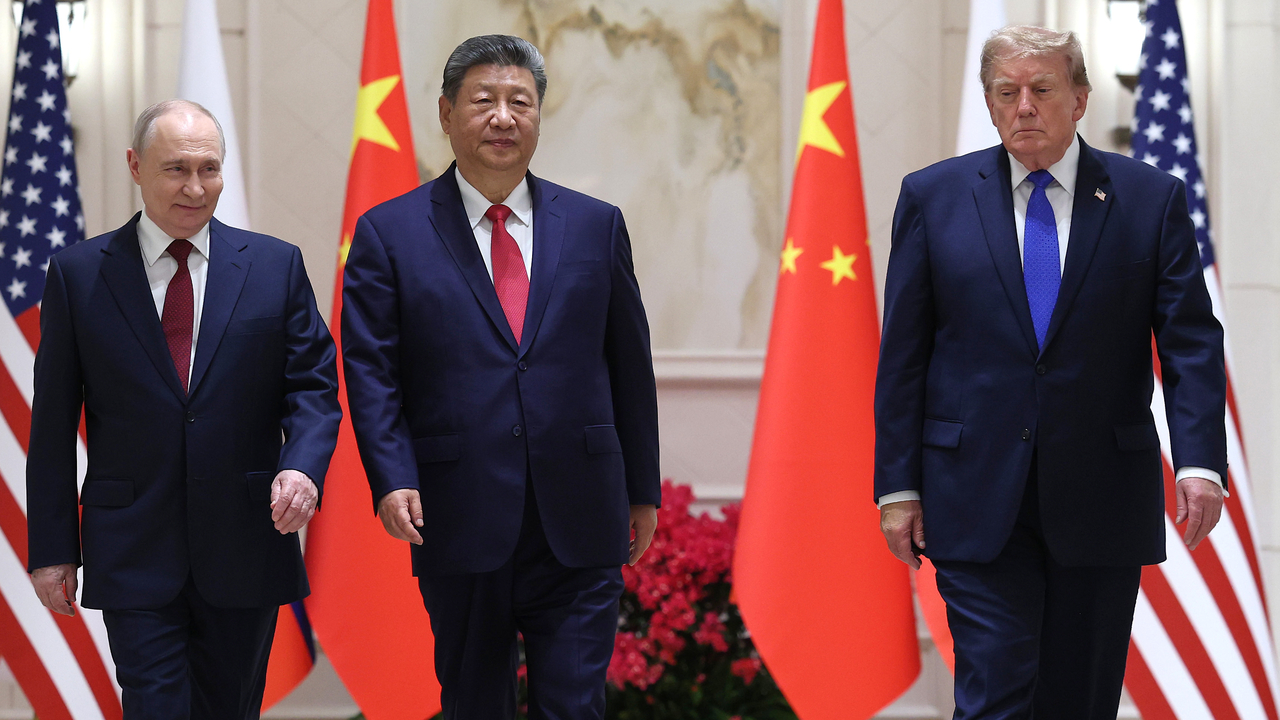
Donald Trump again made a show of personal warmth toward Chinese President Xi Jinping and Russian President Vladimir Putin during his China visit, repeatedly calling both leaders "my friend."
Trump embraced Xi, who came to the airport to receive him, and told the Chinese leader at their bilateral summit: "You are my friend, and we have a very special relationship. As long as you and I are in charge, we will have no problems."
At a brief US-Russia summit, Trump greeted Putin with "my friend" the moment they met and said the two had "maintained a very good relationship over many years."
The scenes were a vivid illustration of Trump's signature diplomatic style — a willingness to engage even the leaders of countries at odds with Washington and a belief that personal rapport can resolve diplomatic problems.
Major US media outlets, however, were sharply critical of what they saw.
The New York Times reported Thursday that "behind their meetings with Trump, Xi and Putin share a vision of stripping the United States of its dominance," and that the two leaders are seeking to "reverse the victory the United States won in the Cold War."
The Times noted particularly that Xi and Putin share a grievance over the United States' rise to global preeminence after the collapse of the Soviet Union, drawing attention to remarks Xi made to Putin more than three years ago at the close of a visit to Russia.
At the time, Xi told Putin: "Right now there are changes — the likes of which we haven't seen for 100 years — and we are the ones driving these changes together."
Xi struck a similar note in his opening remarks at the trilateral summit Thursday, saying that "transformations unseen in a century are accelerating."
The Times interpreted this as a signal that "China and Russia are reshaping the world order by usurping the role of the United States — the clear winner of the Cold War and the world's sole superpower."
China has in fact continued to cooperate with Russia in tangible ways. During the war in Ukraine, Xi allowed Chinese companies to sell critical materials to Russian defense firms and kept buying Russian oil, providing Moscow with crucial financial support.
Adding to the concern is that while Xi and Putin are in effect governing for life, Trump has only about two years left in his term.
John Delury, a professor at the Hopkins-Nanjing Center for Chinese and American Studies, told the Times that Xi and Putin are "leaders with a very deep sense of history, who view geopolitics through the lens of their countries' national narratives." Delury added: "They seem to see themselves as great figures of history, on a different plane from mere politicians. Even Trump may appear to them as a secondary phenomenon."
The Washington Post also noted that while Trump "views his willingness to engage with authoritarian leaders as a virtue, critics say his approach — driven by a craving for personal flattery — is open to exploitation."
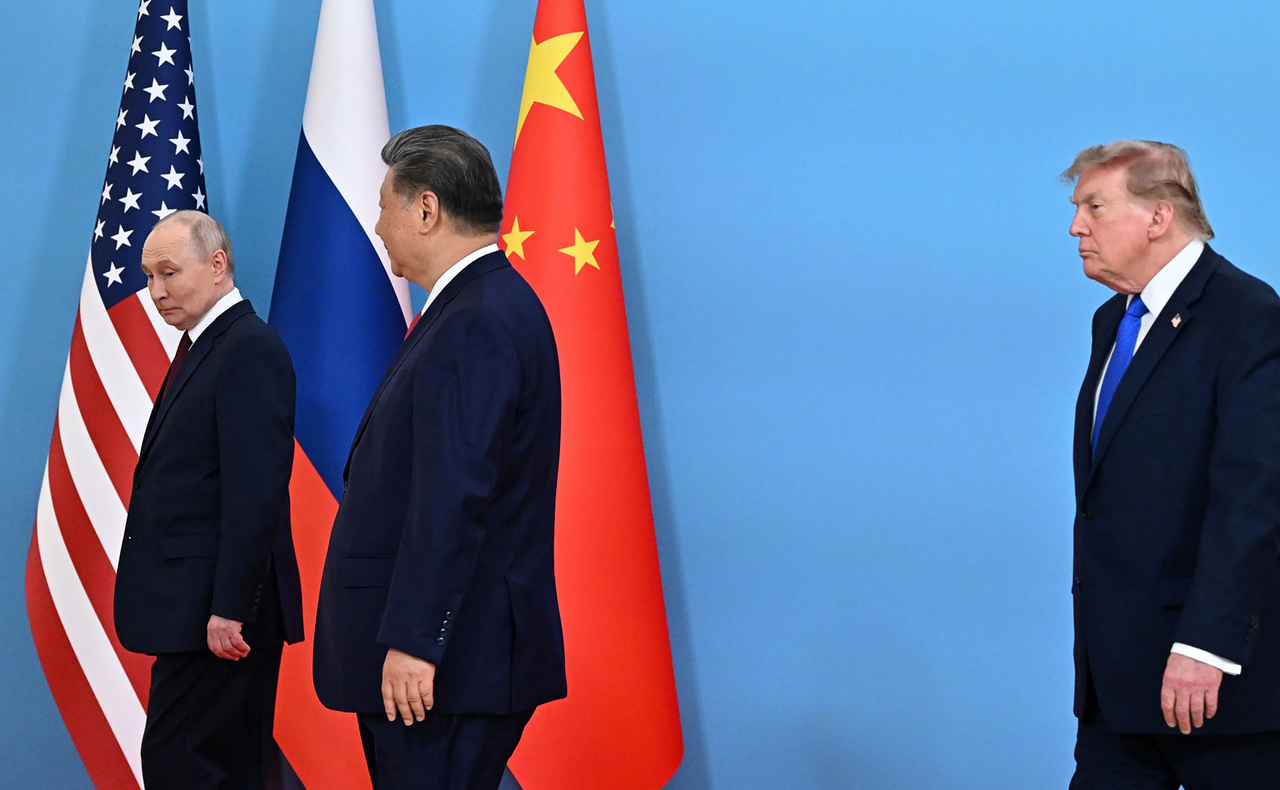
Through the trilateral summit, Trump sought to demonstrate that even the world's most adversarial leaders could be won over by personal rapport — but whether that charm can translate into concrete concessions from China and Russia is an entirely different question.
Xi and Putin have consistently behaved as though they are willing to entertain Trump's overtures while giving him none of what he actually wants, the Post said.
The Post also noted that Trump's display of friendship came at a moment when his administration's national and geopolitical goals are being undermined by both countries — pointing to the US easing semiconductor and other regulations in the face of China's rare-earth export controls, and to Trump's apparent reluctance to raise the "Jensen Huang scandal" with Xi.
CNN, too, criticized Trump's personal diplomacy for failing to produce "any meaningful breakthrough."
The Ukraine war remains unresolved, the dispute over rare-earth exports continues to strain US-China relations, and both China and Russia are still providing Iran with support and technology, CNN said.
In addition, Xi and Putin have long been bound together by a shared conviction that the global balance of power is shifting in their favor as the East rises and the West declines — and that the era of American superpower dominance is drawing to a close, CNN said.
CNN said Xi and Putin "have achieved something they can use as new and landmark evidence for that view — an unprecedented trilateral summit with Trump."
mokiya@heraldcorp.com