District presents 'Igongsango PILOT' strategy built on four principles and five pillars to drive AI adoption across all administrative functions
Experts and staff to refine plan before final blueprint is released in January; goal is for residents to feel the change in daily life
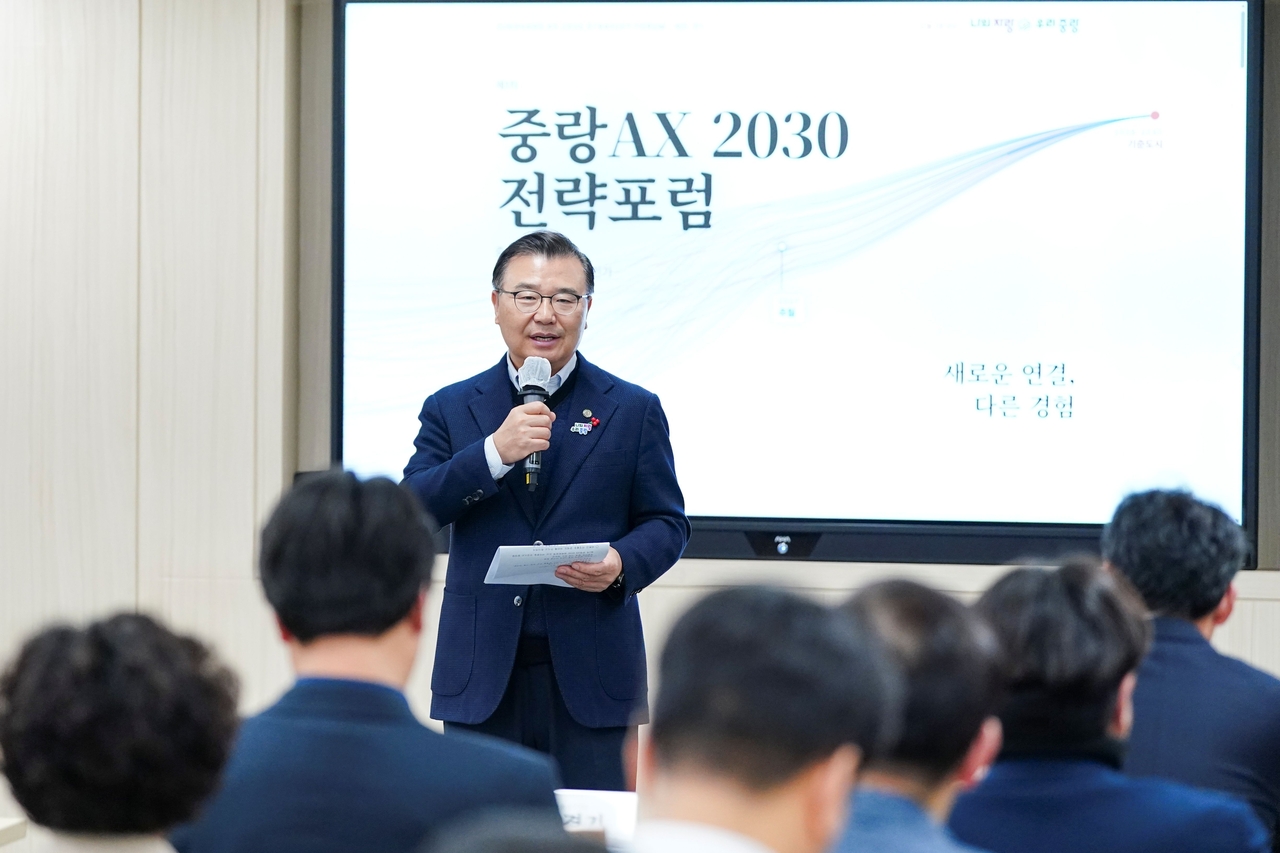
Jungnang-gu has unveiled its medium- to long-term blueprint for administrative transformation through artificial intelligence, becoming the first Seoul district to publicly lay out such a plan. The district aims to integrate AI across all administrative functions by 2030 and establish itself as a benchmark city for public-sector AI transformation.
The district held its first Jungnang AX 2030 Strategy Forum at the district office Thursday, presenting the initial draft of its Jungnang AX 2030 Strategy. About 70 people attended, including senior district officials, staff members, and experts in public administration and AI, who discussed the direction of the initiative and key tasks for implementation.
The strategy's core vision is to become "a public AX benchmark city that changes residents' lives." The district plans to carry out the AI administrative transition in three phases through 2030. This year marks the "catch-up" phase, focused on learning to use AI and building a record of successful cases. In 2027, the district will enter the "overtake" phase, developing an administrative innovation model unique to Jungnang-gu. From 2028 to 2030, the "benchmark city" phase will focus on producing results that residents can feel in their daily lives and sharing the model with other local governments.
The policy brand introduced to drive the strategy is "Igongsango PILOT." The "Igongsango" component encodes four guiding principles — connection, sharing, collaboration and openness — while "PILOT" signals the district's commitment to steering AI adoption in the right direction rather than chasing performance metrics. The emphasis falls on connecting with residents, ensuring administrative accountability and maintaining transparency throughout the process of change, rather than on technology adoption for its own sake.
The forum featured expert presentations on domestic and international public-sector AI transformation cases and challenges, followed by a panel discussion. Panelists included Kim Jong-jin, director of the urban housing bureau at Incheon's Seohaegu; Park Jong-yun, a director at Silent Service; Won Seong-muk, head of the Local Government Innovation Research Institute; and Ju Seong-hwan, head of the AI innovation business division at the Seoul AI Foundation. They discussed priority tasks for 2027, the scope of work that could be delegated to AI, the roles that must remain with people, and criteria for measuring outcomes.
The district plans to incorporate feedback from experts, staff, residents and other stakeholders to refine the strategy before releasing the final Jungnang AX 2030 Master Plan in January.
Earlier, Jungnang-gu laid the groundwork for the initiative by establishing a dedicated Jungnang AI Innovation Team on Oct. 1 and launching "AI Partners," a group of 38 staff members. The district also runs a staff training program called the Jungnang AX Thursday Class and has introduced an AI assistant called "Geuljuim" to help officials draft official greetings and correspondence.
"The starting point of this plan is the principle that AI assists while people make the judgments and bear the responsibility," District Mayor Ryu Gyeong-gi said. "We will faithfully reflect the views of experts and staff to refine the plan into one that lets residents feel the difference in their daily interactions with the district."
seouldream01@heraldcorp.com