CFC, Joint Chiefs hold C5ISRT senior conference at Camp Humphreys in Pyeongtaek
Jin Young-seung calls for faster decision-making than the enemy through combined forces
Brunson says data must reach the right place at the right time
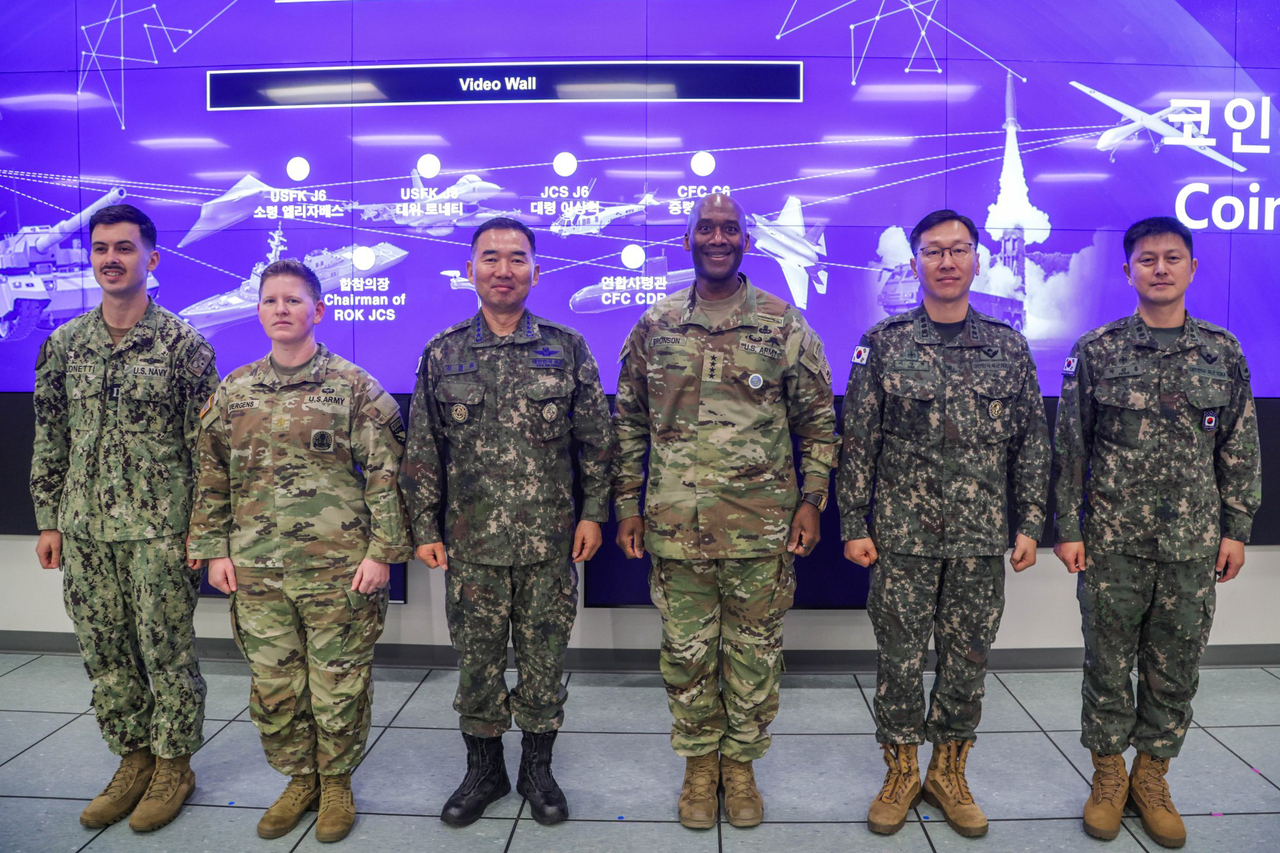
South Korean and US military leaders discussed ways to share intelligence in real time across all operational domains — ground, maritime, air and cyber — and agreed to jointly advance an AI-based command-and-control system.
The Combined Forces Command and the Joint Chiefs of Staff held the 2026 ROK-US C5ISRT Senior Conference at Camp Humphreys in Pyeongtaek, Gyeonggi Province, on Wednesday. The conference was co-chaired by CFC Commander Gen. Xavier T. Brunson and Joint Chiefs Chairman Gen. Jin Young-seung. About 340 senior officials from the CFC, the Joint Chiefs, USFK and their component commands attended.
C5ISRT stands for command, control, communications, computers, cyber, intelligence, surveillance, reconnaissance and targeting. The concept covers the entire flow of information from detecting an enemy to making a decision and executing a strike.
The theme of this year's conference was "Efforts to Ensure Interoperability for Realizing Combined Joint All-Domain Operations (CJADO)." The CFC's communications and electronics staff opened the session with a briefing on progress toward implementing Combined Joint All-Domain Command and Control (CJADC2). US Indo-Pacific Command and the Joint Chiefs then each presented their approaches to developing combined command, control and communications systems and ensuring interoperability, followed by discussion.
"We must rapidly share all information collected across every domain of the modern battlefield to guarantee faster decision-making than the enemy and deploy overwhelming combined forces to ensure victory," Jin said. Jin went on to say that South Korea and the United States would "advance an AI- and advanced science and technology-based command-and-control system while ensuring interoperability through close bilateral coordination."
Brunson said "speed is the decisive factor on the Korean Peninsula." He added that the alliance must "continuously pursue attribute-based access control so that data reaches the right place at the right time." Attribute-based access control automatically grants information access based on a user's position, mission and security rating.
CFC Deputy Commander Gen. Kim Seong-min said ensuring interoperability is essential to the CFC's "Fight Tonight" readiness posture and to realizing CJADO. Kim called on both sides to continue joint efforts, including building a shared data-centric environment and introducing an AI-based decision-support system.
The conference was first held in 2012 as the ROK-US C4I Senior Conference to build consensus on the direction of combined C4I development. From 2021, its scope expanded to include cyber, intelligence, surveillance, reconnaissance and targeting, and the name changed accordingly. The forum has since met annually to discuss information-sharing across the full spectrum of surveillance, decision-making and strike operations.
rimsclub@heraldcorp.com