Concerns over exam integrity are mounting after AI-assisted cheating was detected in national professional certification tests. But the deeper question looming over educators is what studying and testing will even mean if AI advances to the point of connecting directly to the human body and brain.
As the merging of humans and AI moves closer to reality, a growing debate is emerging over whether the current model of memorizing knowledge and measuring ability through exams can survive.
D. Scott Phoenix, an American technology entrepreneur, addressed that threshold in a TED talk in Vancouver, Canada, in April. "We are on the cusp of the next major transition — the merging of humans and AI," he said, adding that the process of drawing technology ever closer to the human body had already begun.
People once memorized phone numbers; now they store them in their phones. Computers moved from the desktop to the pocket. Smartwatches wrap around the wrist; smart glasses sit on the face. Phoenix sees this gradual transfer of memory and processing to machines as the very essence of human-technology integration.
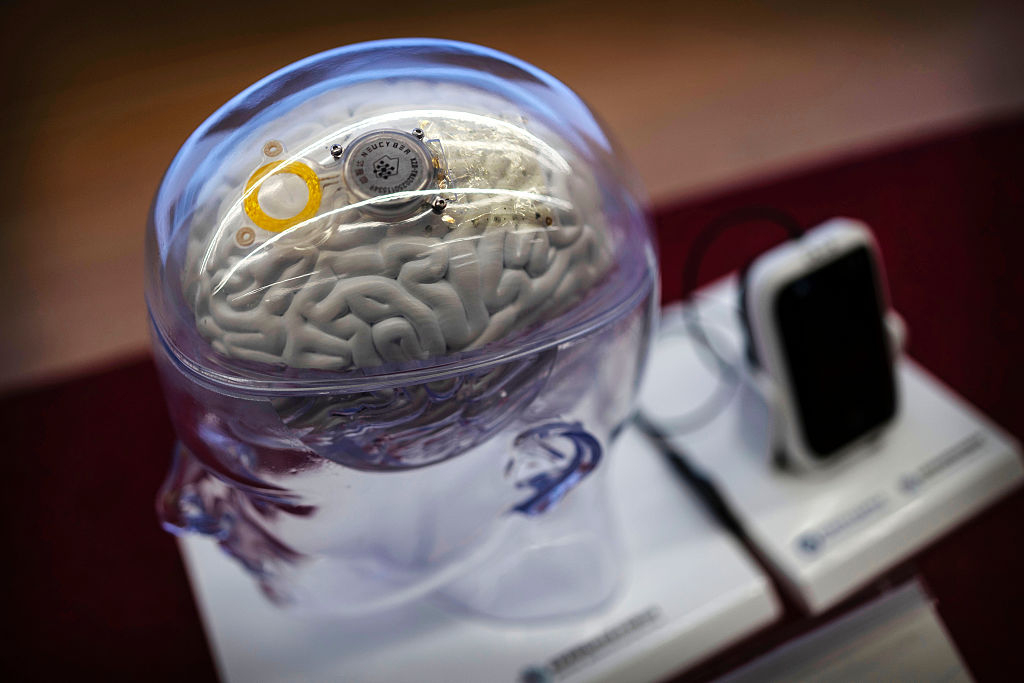
The next step is a direct link between the brain and a computer. The future Phoenix envisions is striking: learning a new language in a single afternoon, mastering a new skill overnight, and sharing memories with other people.
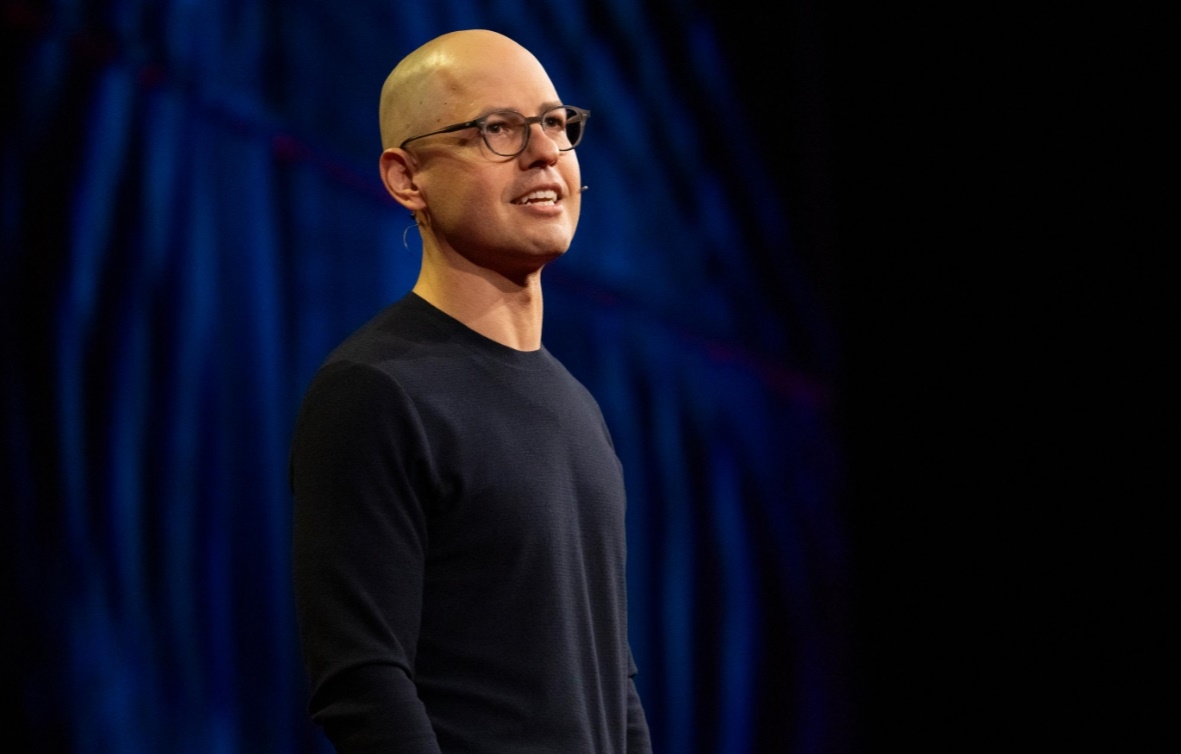
"A colleague at work will get the chip first," Phoenix said. "You'll hold out for a while, just like you did with the smartphone — but ultimately you won't. The advantages that come from merging with AI will be hard to compete with."
OpenAI CEO Sam Altman has long spoken of a future in which humans and AI merge. In a 2017 blog post, he wrote that such a merger "is probably the best-case scenario we can hope for."
Even then, Altman believed the process had already started. "Our phones control us and tell us what to do and when," he wrote. "Social media feeds decide how we feel" — pointing to smartphones and social media as early examples of technology shaping human behavior and thought.
He went on to say that the merger could take the form of electrodes connected to the brain or of humans forming an extremely close bond with chatbots. His argument: when superintelligent AI arrives, humans and AI competing as separate species would lead to conflict, but becoming one team would allow both to survive.
Brain-computer interface technology has in practice been advancing consistently. Current BCI systems focus mainly on restoring lost functions — communication and movement — for paralyzed patients, but the technology for reading brain signals to control external devices is progressing through clinical trials and research.
Noland Arbaugh, the first clinical participant at Neuralink — the brain-computer interface company founded by Elon Musk — moved a cursor on a computer screen using only his thoughts, via a chip implanted in his brain. He described the experience as "like using the Force."
Smart contact lenses that measure biometric data from tears or display digital information are also under development. AI is moving beyond the smartphone screen and drawing ever closer to the human body.
With the prospect of AI connecting directly to the human brain — not merely being used as a tool — voices in education are calling for a fundamental rethink of how students study and are tested.
In their book "The End of Study," French surgeon Laurent Alexandre and economist Olivier Babeau wrote that "the republic's promise — that studying hard at school would make you irreplaceable and guarantee a good job — has lost its force." The traditional model of acquiring knowledge and entering the labor market on the strength of it, they argue, is crumbling.
Kim Hyun-chul, a professor and physician-turned-economist, has written of "the end of rote learning and exams." "No matter how much you tighten supervision, you cannot stop it — the technology will only advance further," Kim said, adding that the college entrance exam, which tests factual knowledge, "is ultimately a test that must disappear." Monitoring exam halls to prevent AI use, Kim argued, cannot keep pace with technological progress.
So what should be taught and assessed in the age of AI? In a 2025 report, UNESCO said conventional memorization-and-correct-answer assessments alone are insufficient to gauge students' actual abilities in the AI era.
The report instead called for evaluating critical thinking, creative problem-solving and ethical judgment — for instance, having students critique AI-generated writing, identify errors or biases, or review answers produced by AI. As it becomes harder to distinguish AI-generated work from human work, the report said, the focus must shift to students' thought processes and problem-solving abilities.
Andreas Schleicher, director of education and skills at the OECD, also named critical thinking, ethical judgment and creativity as the core competencies education must cultivate in the AI age. As AI takes over repetitive and routine tasks, he said, students need to develop the ability to make judgments on problems that data alone cannot resolve.
"As machines take on more and more routine tasks, education must focus ever more intensively on the capabilities that only humans can provide," he said.
bbo@heraldcorp.com