Average monthly rent for Seoul row houses, multi-family units reaches 684,000 won
1 million-won monthly leases emerge in Hongeun-dong, Sillim-dong
Non-apartment building permits fall 10.1% despite government supply push
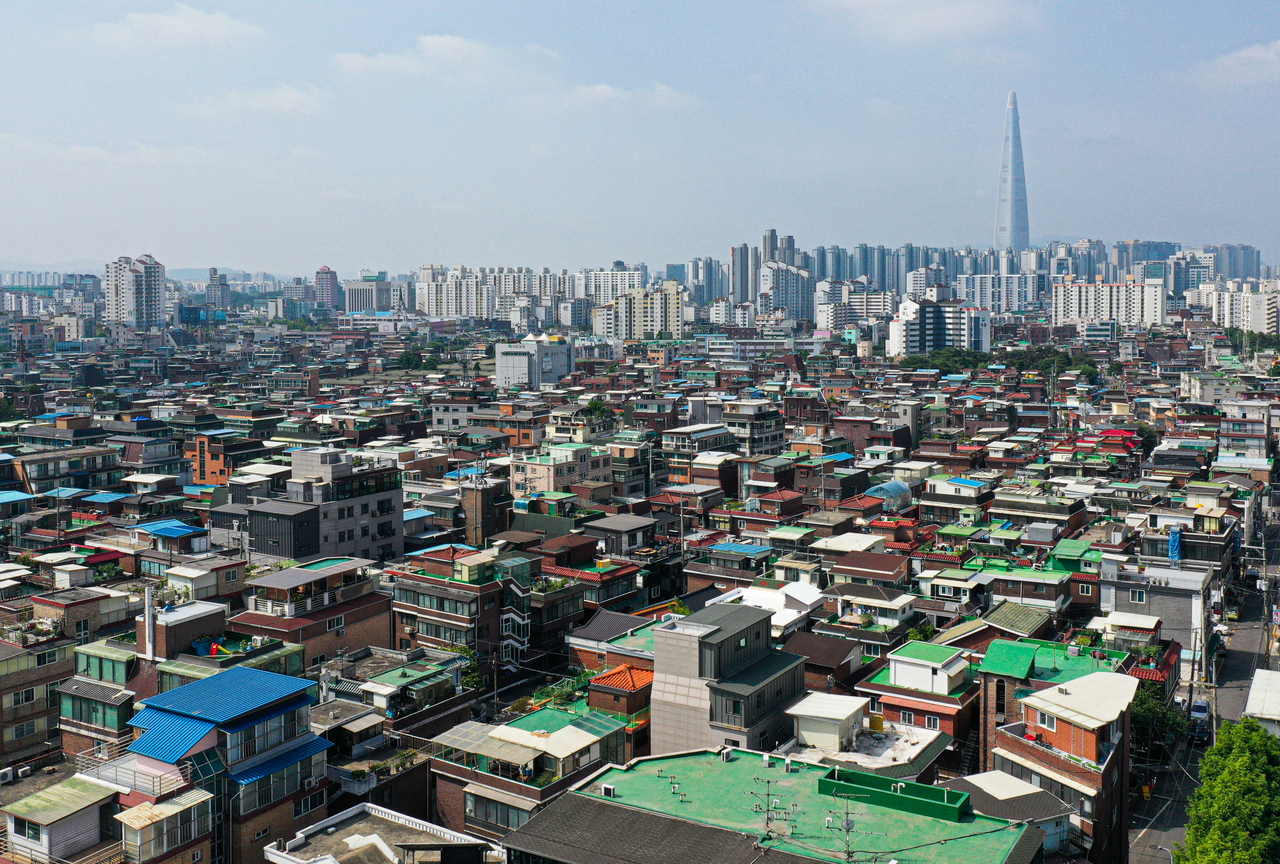
More than six months after the government unveiled a supply plan for non-apartment housing, the monthly rent price index for row houses and multi-family units across Seoul has hit its highest level since records began. Monthly rent contracts topping 1 million won ($750) are now appearing in areas well outside Gangnam, and analysts warn that tenants will continue to face heavy housing costs until new supply actually reaches the market.
'Affordable' Hongeun-dong, Sillim-dong no more as 1 million-won rents take hold
According to the Korea Real Estate Board, the monthly rent price index for Seoul row houses and multi-family units stood at 102.19 in October (June 2026 = 100) — the highest since the index was first compiled. All five of Seoul's sub-regions topped the 100 baseline: the northeast led at 102.84, followed by the southwest at 102.80, the city center at 102.25, the northwest at 101.94 and the southeast at 101.68.
Every sub-region crossing the 100 mark means monthly rents for row houses and multi-family units have risen broadly across the city in just four months since June. The trend is not confined to any single neighborhood — upward rent pressure is being felt across Seoul's entire non-apartment rental market.
Average rent levels reflect the same picture. The average monthly rent for Seoul row houses and multi-family units came to 684,000 won in October, with the southeast sub-region posting the highest figure at 961,000 won.
The citywide average stood at around 642,000 won at the end of last year. In just 10 months it climbed nearly 42,000 won to 684,000 won, setting a new all-time high. The southeast sub-region also rose by nearly 50,000 won over the same period, from 912,000 won to 961,000 won.
Rents are climbing outside the southeast as well. In the city-center sub-region, where demand from workers seeking short commutes is strong, the average monthly rent rose more than 60,000 won — from 814,000 won at the end of last year to 875,000 won last month. Over the same period, the northwest sub-region moved from 563,000 won to 598,000 won, the northeast from 551,000 won to 589,000 won, and the southwest from 554,000 won to 587,000 won.
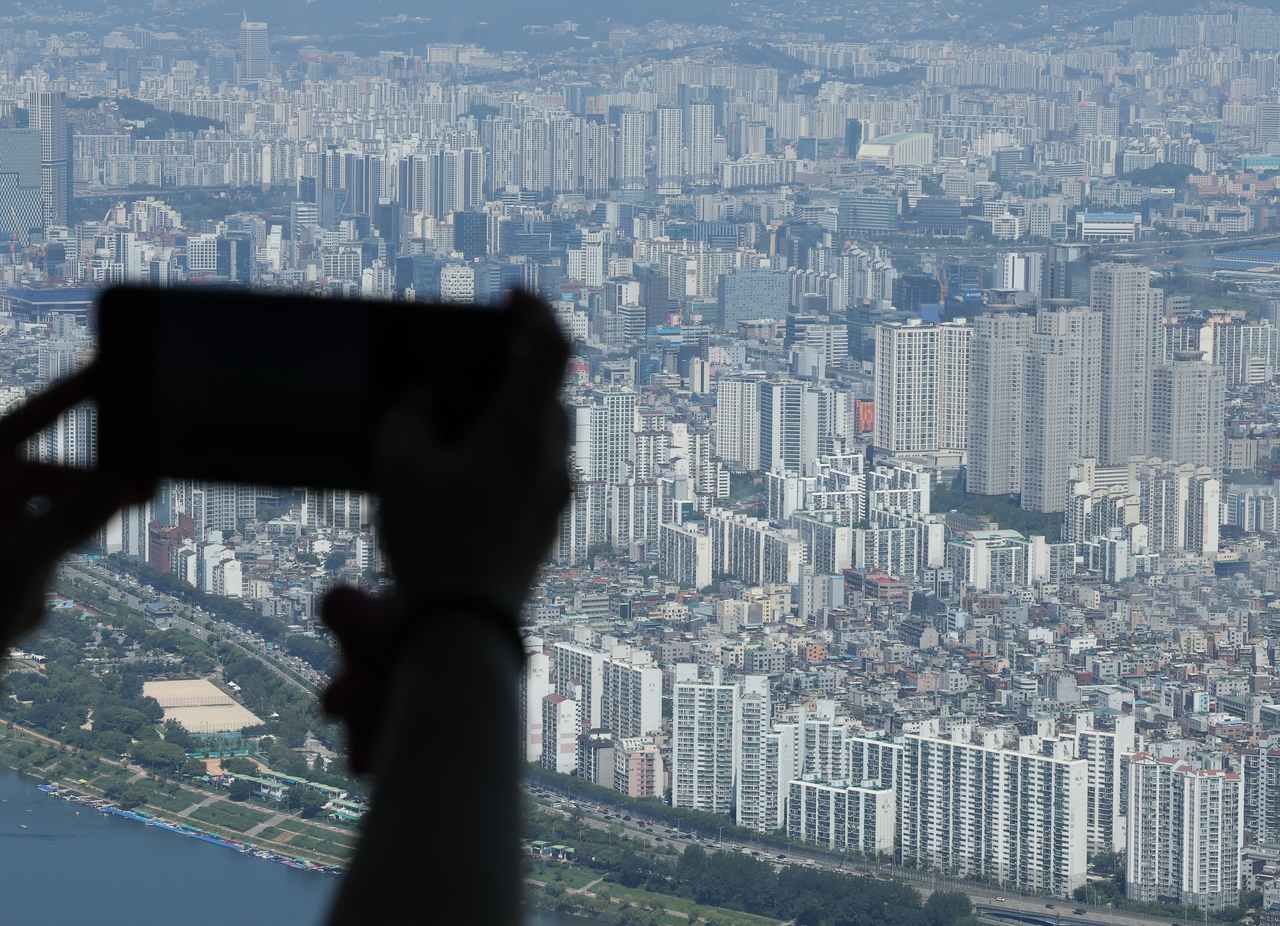
On-the-ground transactions confirm that monthly rents for villas on Seoul's outskirts are reaching 1 million won. According to the Ministry of Land, Infrastructure and Transport's actual transaction price disclosure system, a 38-square-meter unit at Semyeong Green Ville in Seodaemun-gu's Hongeun-dong was leased Friday on a contract of 10 million won deposit and 1 million won monthly rent.
Similar cases have emerged in Gwanak-gu's Sillim-dong, an area traditionally popular with university students and office workers for its relatively affordable rents. A 29-square-meter unit at Sinsa Town Ville was leased with a 50 million won deposit and 1 million won monthly rent. The appearance of 1 million-won monthly rent contracts even for small villas on Seoul's outskirts signals a growing housing cost burden for non-apartment tenants.
A real estate agent near Sillim-dong said: "For a one-and-a-half-room unit, the standard market rate was originally a 10 million won deposit with combined rent and maintenance fees of at least 650,000 won. But lately, contracts are being signed even when the monthly rent is listed at 1 million won."
Non-apartment building permits nationwide down 10.1% through September
Analysts attribute the rising rent burden in non-apartment housing to a shift in demand: as jeonse deposits and monthly rents for apartments have climbed, tenants have moved toward non-apartment units where housing costs are relatively lower. The lingering fallout from jeonse fraud — which has made many tenants wary of jeonse contracts for villas — and a broader shift from jeonse to monthly rent arrangements are also cited. With more landlords preferring monthly rent over jeonse, and tenants increasingly making the same choice, demand for monthly-rent units has become concentrated.
The government has been pushing to expand supply to stabilize the non-apartment rental market. In May it announced a plan to deliver 41,000 non-apartment units — including urban-lifestyle housing and officetels — in the Greater Seoul area by next year, and 110,000 units nationwide by 2030. The initiative was premised on the view that a shortage of newly built non-apartment housing was fueling instability in the jeonse and monthly rent market. The government also announced plans to actively purchase non-apartment units over the next two years and convert them into public rental housing.
Supply indicators, however, have yet to improve. The cumulative number of non-apartment building permits issued nationwide through September stood at 21,598 units, down 10.1 percent from 24,025 units in the same period a year earlier. Despite the supply expansion measures, the number of permits — a leading indicator of new housing supply — has actually declined.
Observers note that a time lag between policy announcements and actual delivery to the rental market makes it difficult to ease the immediate rent burden. With a shortage of non-apartment supply compounding the shift from jeonse to monthly rent, tenants are likely to keep feeling the squeeze for some time.
Kim Deok-rye, head of the housing research division at the Korea Housing Industry Research Institute, wrote in a report on policy directions for expanding housing supply that the root cause of the contraction in non-apartment supply is not a disappearance of demand but a blockage in the institutional channels for stock circulation. "The task for housing policy now is to stop viewing non-apartment housing through the lens of apartments, rebuild it as a separate housing system in its own right, and restore the circulation structure within it," Kim wrote.
hss@heraldcorp.com