Contract signed with Rebellions Industries
Success diversifies global reach beyond Middle East
Pilot export to test market ahead of larger rollout
Radar designed to counter drones and small unmanned aircraft
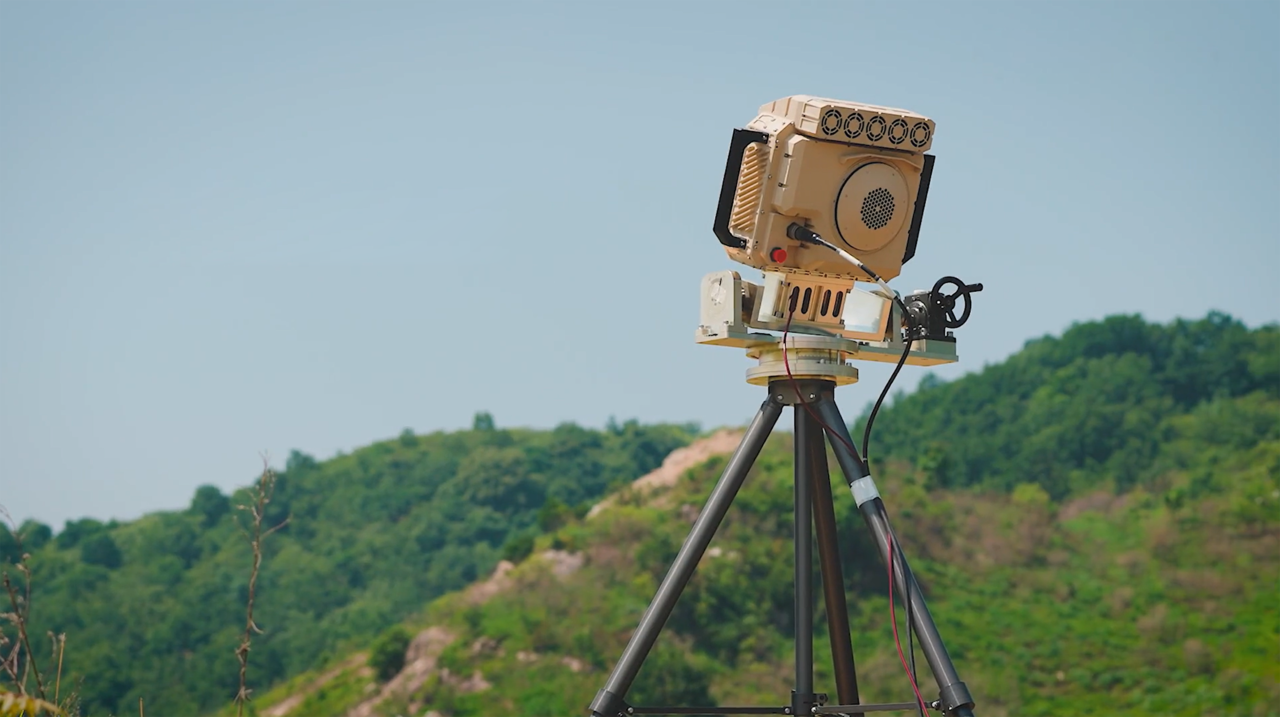
Hanwha Systems has broken into the US market with its radar technology, following earlier success in the Middle East.
Hanwha Systems said Wednesday it recently signed an export contract with US advanced defense company Rebellions Industries to supply short-range Active Electronically Scanned Array, or AESA, radars.
Hanwha Systems had previously signed a supply contract with Boeing in December last year for a large-area multifunction display, a digital avionics system. This marks the first time the company has exported a radar to the US market.
The contract was structured as a pilot export, with the quantity and value kept confidential. A pilot export involves shipping a small volume of products to a target market ahead of a large-scale rollout to gauge market response and verify local suitability.
Hanwha Systems plans to deliver the short-range AESA radars to Rebellions Industries in stages through early next year. The two companies are also in ongoing discussions about a follow-on contract for large-scale additional supply within the United States.
The exported radars will initially be deployed in civilian infrastructure in the US, including oil refineries, corporate data centers, logistics centers and large stadiums. The two companies plan to jointly explore ways to expand their defense and commercial business globally through strategic cooperation.
The short-range AESA radar is designed specifically to defend against drones and small unmanned aerial vehicles. Hanwha Systems' model features an integrated structure combining the antenna, main unit and power supply into a single compact body, giving it an ultra-lightweight and ultra-compact profile. It can be installed easily on ground and naval weapons systems such as tanks, armored vehicles and small warships, as well as on civilian facilities and vehicles.
The radar also incorporates AI technology to significantly enhance target identification. It can accurately detect and identify living creatures and various airborne objects even in conditions such as fog, dust and electromagnetic interference.
With global demand expected to grow across both defense and commercial sectors, Hanwha Systems plans to expand its short-range AESA radar lineup. In addition to the 10-kilometer detection-range model being exported now, the company plans to develop 5-kilometer and 1-kilometer variants by early next year. It also plans to introduce automated production lines at its Gumi facility and elsewhere to build a mass-production system.
"We are receiving strong interest in the short-range AESA radar not only from the United States but from various other overseas markets," a Hanwha Systems official said. "We expect this achievement to establish the radar as another powerful K-defense export item, following the multifunction radar."
yeongdai@heraldcorp.com