National Assembly forum held on labor exemptions for super-regional special zones
Social dialogue sought to balance corporate competitiveness and workers' right to health
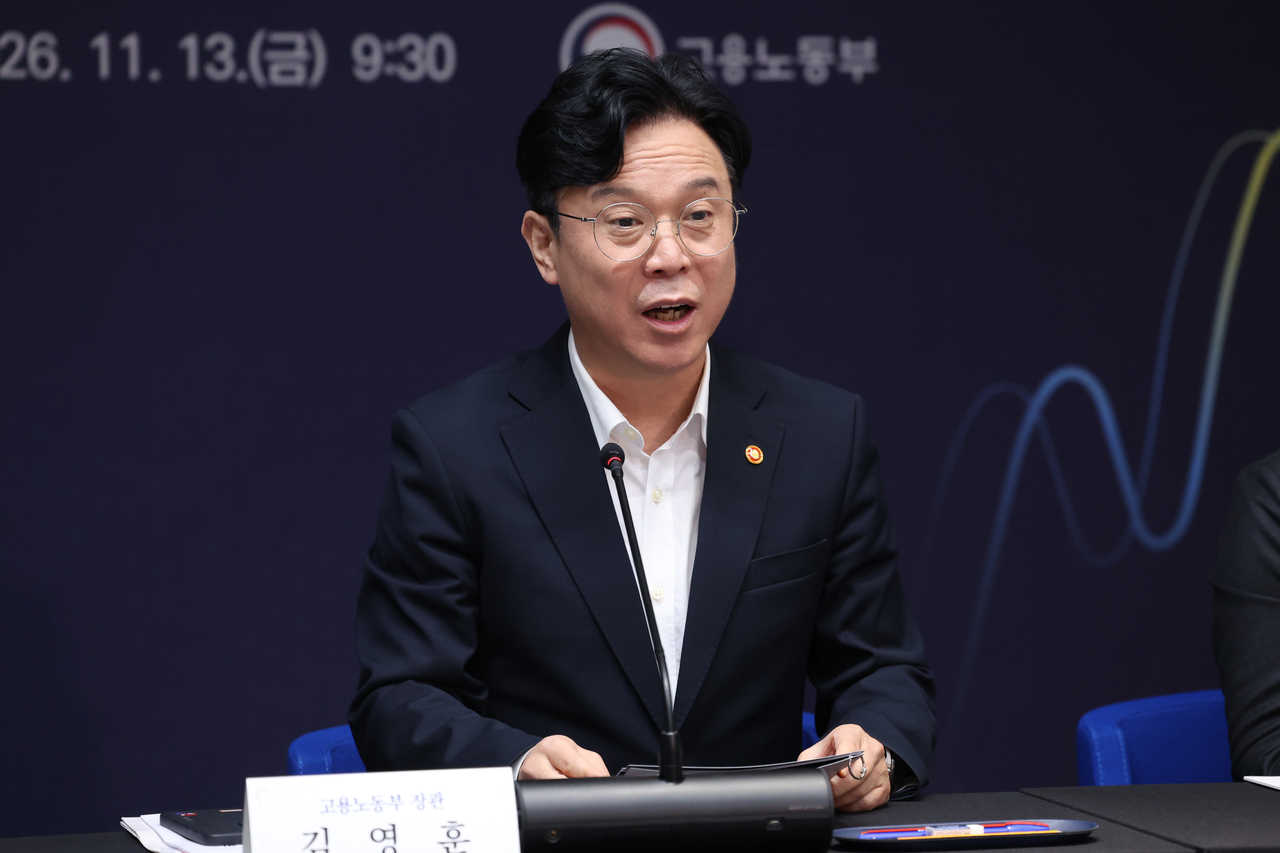
Minister of Employment and Labor Kim Young-hoon said Wednesday that "sustainable innovation can only be achieved on the foundation of quality jobs," weighing in on the debate over labor exemptions — including the easing of working-hour regulations — for super-regional special zones.
Kim made the remarks in a congratulatory address at a labor forum held at the National Assembly. While acknowledging the need for institutional reform to strengthen the competitiveness of advanced industries, he said sustainable growth requires that workers' right to health and fair compensation be guaranteed.
The forum was convened to discuss the legislative direction of labor exemptions, one of the central issues in the bill on super-regional special zones.
"The government's vision for a successful super-regional special zone is clear," Kim said. "The zone should serve as a hub for advanced industries competing in global markets, providing quality job opportunities for youth, allowing workers to settle in the region and work in a healthy and safe environment, and ensuring that the zone's achievements translate into locally driven, sustainable growth."
"Sustainable innovation can only be achieved on the foundation of quality jobs," he said. "Good jobs are created when companies grow, and innovation endures when workers are healthy and fairly compensated. That is what genuine growth alongside labor looks like."
The remarks were widely interpreted as a response to business community calls for relaxing working-hour regulations and other labor rules to boost industrial competitiveness in the special zones — with Kim laying down a principle that workers' health and working conditions must be considered alongside those demands. Rather than framing corporate growth and worker protection as competing values, he presented them as goals to be pursued together.
Kim particularly stressed the importance of attracting and developing talent to secure the global competitiveness of advanced industries such as semiconductors. "The ultimate source of global competitiveness in semiconductors and other advanced industries lies in nurturing great talent," he said. "We will find solutions that allow both the industry's competitiveness and the people who create it to grow together."
Kim also made clear that the government would not arrive at the labor exemption discussions with a predetermined conclusion. "These discussions must also proceed on the basis of these principles," he said. "The government will not fix a conclusion in advance but will engage in vigorous debate grounded in concrete evidence and real-world cases."
Given the wide gap between labor and management on the issue, the remarks were seen as signaling that the government intends to conduct a comprehensive review of both the on-the-ground need for exemptions and their potential impact on workers, rather than pushing through unilateral changes.
Kim also cited this year's tripartite agreements on reducing actual working hours, strengthening the retirement pension system, and improving workplace safety at small businesses, saying, "Based on the trust we have built through that process, I believe we can find answers this time as well."
He also said the outcomes of social dialogue must be reflected in the legislative process. "I will faithfully report to the National Assembly what has been discussed and agreed upon in the dialogue," Kim said. "I ask that you ensure the efforts and achievements of social dialogue are given full consideration in the legislative process."
The National Assembly passed a resolution on Nov. 5 to establish a special committee on super-regional special zones. A single-agenda social dialogue on the zones, which began in September, has since expanded to cover specific topics including residential support, workforce development, industrial safety and working hours.
However, the gap between labor and management over labor exemptions remains wide. Business groups are calling for relaxed working-hour regulations and special provisions on fixed-term and dispatched workers, arguing that flexible workforce management is essential in semiconductor and other advanced industry research and production settings. Labor groups, meanwhile, warn that such exemptions could lead to longer working hours and an expansion of precarious employment.
At the ninth working-level consultative meeting held Tuesday, discussions on working hours and workers' health focused only on reviewing existing positions from both sides and examining the current working-hour system and its usage. No concrete progress was made on key sticking points such as exemptions from the 52-hour workweek cap.
The National Assembly's special committee on super-regional special zones is mandated to operate until the end of January next year, making the gap between the legislative timeline and the pace of social dialogue an added pressure. Labor, management and government are set to hold the 10th working-level consultative meeting on Tuesday to continue discussions. How the principle Kim emphasized — innovation built on quality jobs — will be translated into the actual legislative process for labor exemptions is expected to be a key point of contention going forward.
fact0514@heraldcorp.com