- Institute unveils 65 initiatives across 4 areas on its 33rd anniversary
- Plans to establish AI semiconductor research institute, train 1,400 chip designers
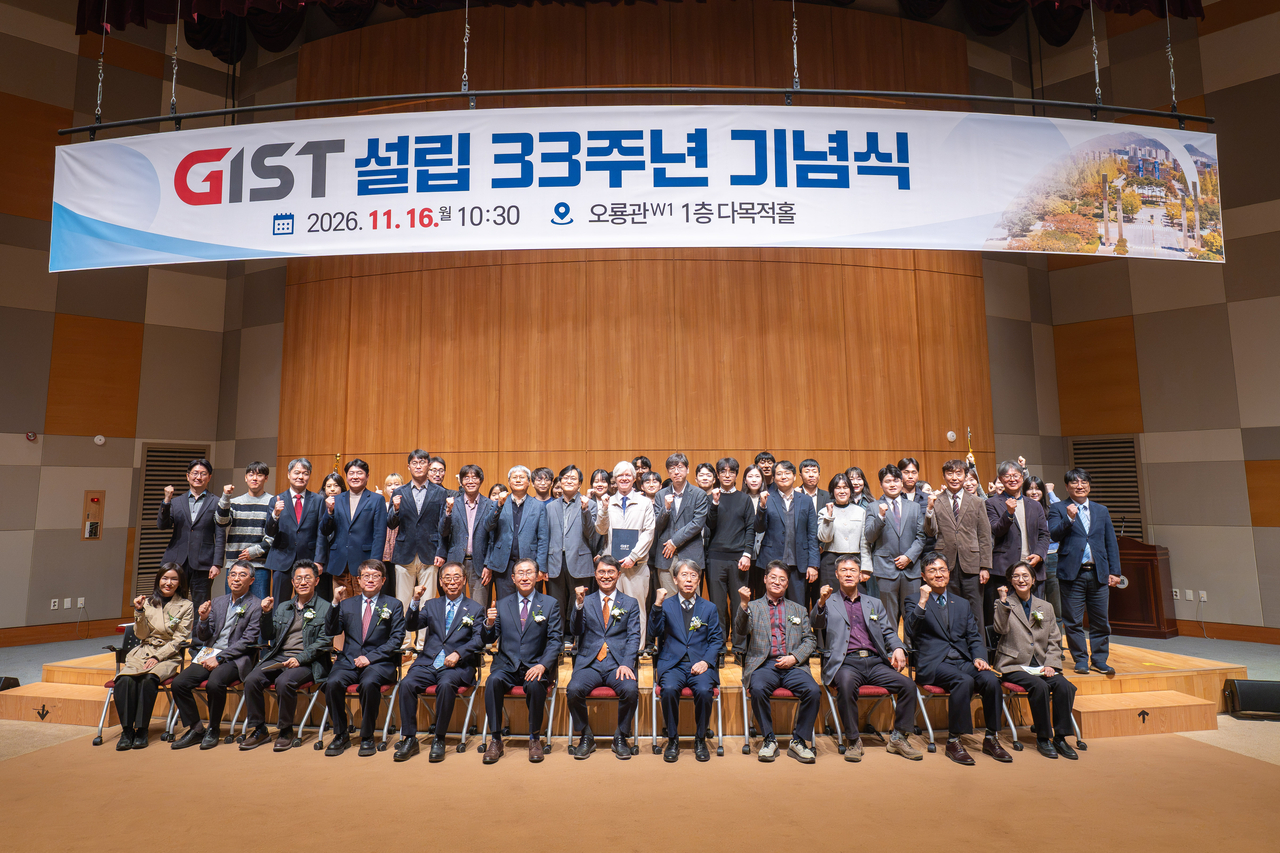
The Gwangju Institute of Science and Technology (GIST) has set its sights on breaking into the world's top 100 research universities by 2035, with plans to strengthen advanced research capabilities in AI, semiconductors and quantum technology while expanding technology commercialization and startup activity.
Marking its 33rd anniversary, GIST held a ceremony Monday at its Oryonggwan hall on campus and announced "GIST Vision 2035," a 10-year development strategy, the institute said Tuesday.
Built around the goal of becoming a "future technology-leading research university," the vision sets out 16 objectives and 65 initiatives across four areas — education, research, value creation and ESG. It serves as a mid-term development strategy that gives concrete shape to "Vision 2053," a long-term plan announced in 2023.
On the education front, GIST will make foundational AI literacy a required course and introduce an integrated fast-track program spanning bachelor's, master's and doctoral degrees to strengthen its pipeline of advanced science and technology talent. In research, the institute will expand ambitious projects and international collaborations centered on strategic technologies including semiconductors, quantum and laser.
GIST also plans to promote technology commercialization and laboratory-based startups. It will deepen industry-academia ties to ensure research outcomes translate into business growth and job creation, while pursuing AI-driven administrative innovation and greater autonomy for research organizations.
GIST will concentrate its efforts on AI semiconductors to bolster the competitiveness of advanced industries in the region.
At the anniversary ceremony, GIST President Lim Ki-chul outlined three priorities: building a talent development pipeline stretching from an AI gifted school through continuing education for industry professionals; establishing an AI semiconductor research institute called GIANTS; and leading the regional innovation economy.
GIANTS is being developed as a research hub covering the full semiconductor value chain — from design and packaging to testing and validation — with the aim of linking AI semiconductor technology development to real-world industrial applications.
GIST is also accelerating the training of specialized semiconductor design professionals. Through the GIST-Arm School, a collaboration with global chip design company Arm, the institute plans to produce 1,400 semiconductor design specialists over the next five years, including 400 master's and doctoral graduates.
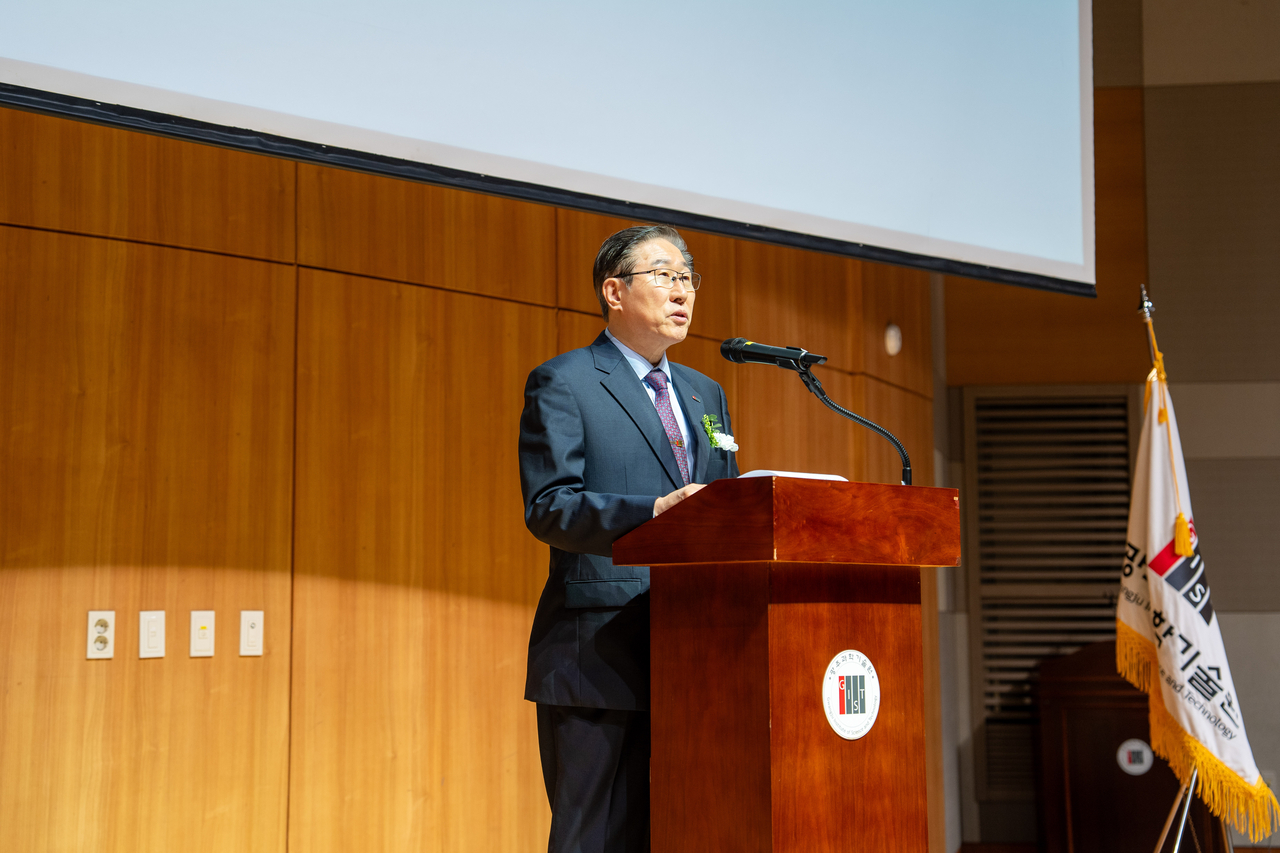
"A semiconductor city does not emerge simply because factories move in — it takes people," Lim said in his address. "If the first semiconductor success story was written in the Greater Seoul area, then South Korea's second AI semiconductor success story must be written by our own hands in Gwangju and South Jeolla Province."
"When patents from our laboratories lead to startups, and startups lead to good local jobs, the semiconductor cluster will truly belong to our region," he added.
With the vision announcement, GIST is shifting its development strategy from quantitative growth to qualitative advancement. The institute aims to raise its education and research competitiveness while expanding the industrial application of research outcomes and its global influence, with the ultimate goal of entering the world's top 100 research universities by 2035.
Founded in 1993, GIST has to date produced 9,364 science and technology graduates — 2,228 doctoral, 5,480 master's and 1,656 bachelor's degree holders. Cumulative startups founded by faculty, researchers and students have reached 122 companies.
nbgkoo@heraldcorp.com