Banks launch second rounds of special fixed-deposit sales after hitting initial limits
Fixed-deposit balances at five major banks up 46.76 trillion won in six weeks
Move seen as preemptive funding push ahead of expected Bank of Korea rate hike
Deposit competition raises concerns of spillover into higher lending rates
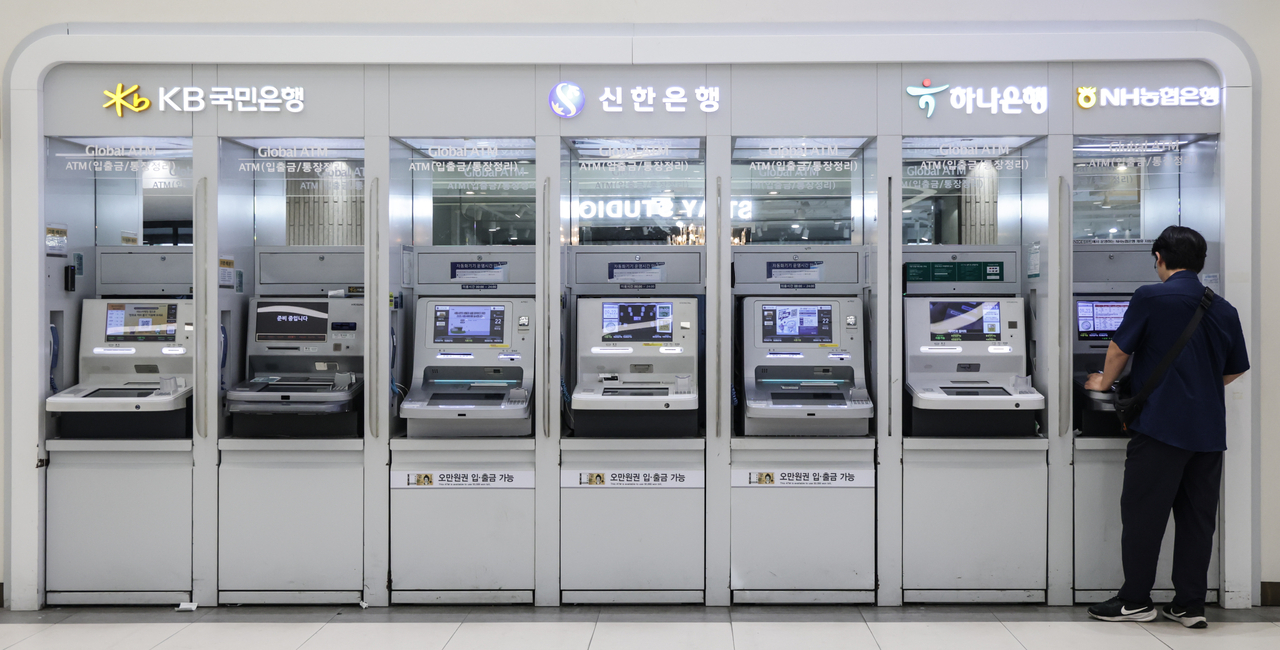
South Korean banks are competing aggressively to offer high-yield special fixed deposits with rates approaching 4 percent per year as the country's stock market correction drags on. Even after selling out their initial allotments, banks have been continuously launching additional rounds. Analysts say the moves reflect a push to lock in funding before borrowing costs rise ahead of an expected Bank of Korea benchmark interest rate hike.
Woori Bank expanded the sales limit on its "Woori 369 Fixed Deposit" by 1 trillion won ($749 million) and extended the sales period through the end of this month, after the product's original 2 trillion won limit was exhausted. The product carries a maximum annual interest rate of 3.80 percent.
Cases of banks launching additional rounds after selling out special-offer limits have been coming in rapid succession. Shinhan Bank allocated an additional 500 billion won tranche through year-end after its first-round limit for the "Super SOL Fixed Deposit" — which offers a maximum annual rate of 4 percent — was sold out. NH NongHyup Bank is also running a second special-offer round for its "NH All One Bank 10th Anniversary Fixed Deposit," which carries a maximum annual rate of 3.9 percent.
The prolonged stock market correction has been a primary driver behind the string of sellouts. Growing concerns over AI investment and a sweeping Democratic Party victory — a "blue wave" — following US midterm elections have spread policy uncertainty, analysts say, prompting some investors to shift back into fixed deposits in what is being called a "reverse money move."
The combined fixed-deposit balance at the five major banks — KB Kookmin, Shinhan, Hana, Woori and NH NongHyup — stood at 1,045.41 trillion won as of Tuesday, up 46.76 trillion won from 998.64 trillion won at the end of September.
Year-end is typically a period when maturing fixed deposits are rolled over, meaning balances tend to rise even without special marketing efforts. With stock market volatility added to the mix, analysts forecast that the natural increase in deposits this year could exceed that of previous years.
Even so, the Bank of Korea's expected benchmark interest rate hike is seen as the key reason banks are pressing ahead with special-offer competition. Markets widely expect the central bank to raise rates at year-end or in early next year, and banks appear to be racing to attract as much funding as possible before rising rates push up their borrowing costs.
Funding demand is also substantial. Banks must continue supplying credit next year in line with the government's productive-finance policy direction. A decline in liquidity regulatory indicators has also been pushing banks to expand deposits. This year, a sharp increase in corporate deposits — which tend to show greater inflow-and-outflow volatility — contributed to a drop in the average liquidity coverage ratio at the four major banks, from 106.14 percent at the end of the second quarter to 104.76 percent at the end of the third quarter.
The deposit competition could also push up lending rates. The new-business COFIX — the benchmark for variable-rate loans — reflects banks' funding costs, including deposit rates. According to the Korea Federation of Banks, the new-business COFIX stood at 3.62 percent in October, up 0.19 percentage points from the previous month, the highest level since February 2024. The rise in banks' deposit rates is seen as a key factor behind the upward trend in COFIX.

hyuk@heraldcorp.com