Second installment follows last year's 'Battery Dad'
Lee teams up with producer Oh Sun-hwa for musical writing debut
'Parents are imperfect humans who grow alongside their children'
Production looks beyond the working-mom vs. stay-at-home divide to explore solidarity in caregiving
Every morning between 6 and 7 a.m., the day begins with an alarm. Before heavy eyelids have fully opened, the rush is already underway — breakfast to make, a child to coax out the door and off to daycare. It is a small daily war, repeated without pause. No heroic cape, no fanfare. Yet to a child, a mother is always the one who never runs out of power.
"My mom can do anything. Whenever I'm bored or sick, she's always the first one there. Mom is the bravest battery in the world."
These are the opening lines of the picture book "Battery Mom," a declaration of a child's unconditional faith. Singer Lee So-eun says she lingered over those words for a long time. They stirred a question she could not easily shake: if children believe in their mothers so completely and without doubt, why is it so hard for mothers to believe in themselves the same way?
"On the outside I may seem confident, but I actually doubt myself a lot," Lee said. "That leads to frustration. Parents tend to think only about their children's growth, but I'm also growing as a human being — and that comes with its own struggles. I wanted to show that honestly."
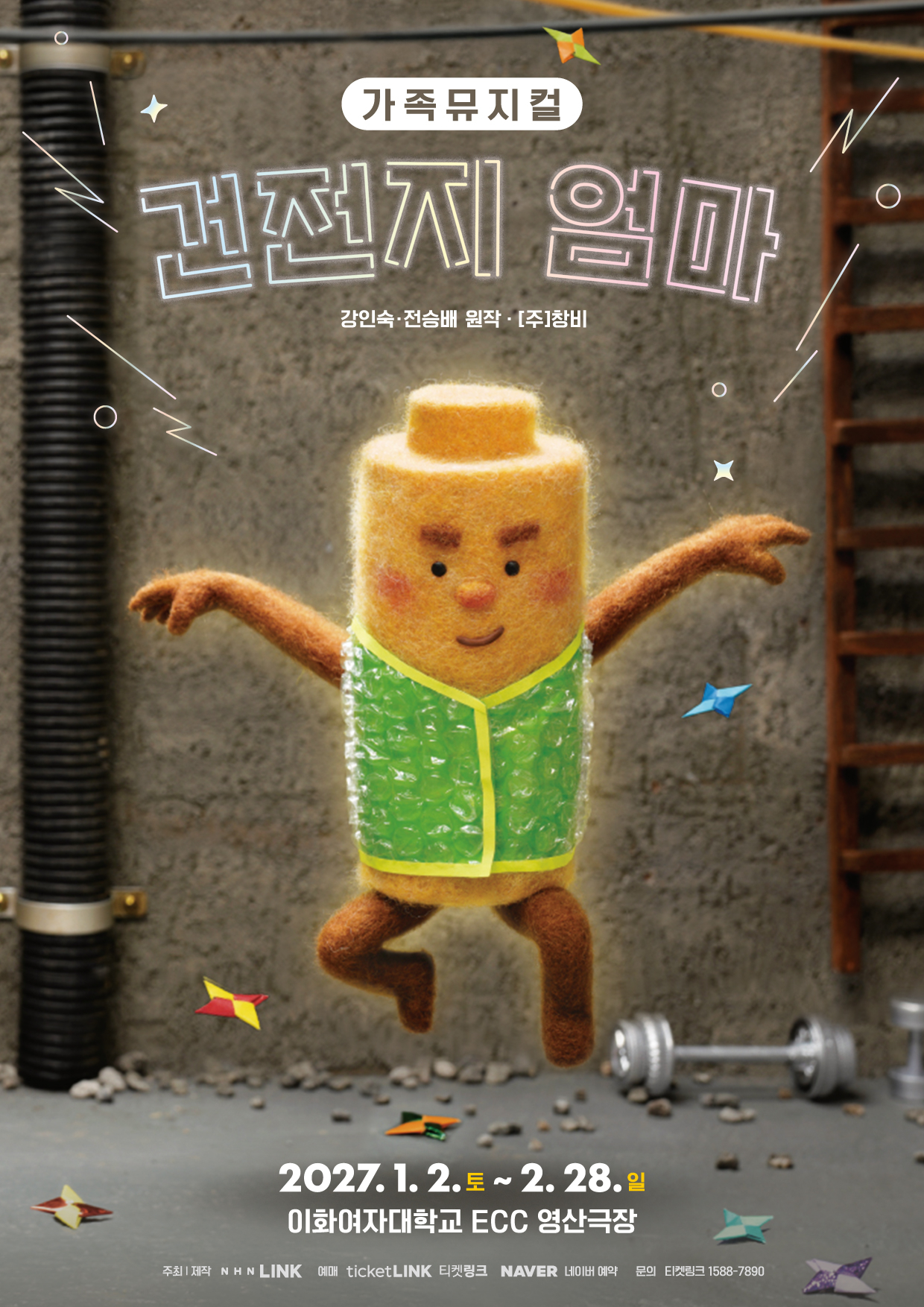
Lee rose to fame as a teenage pop singer, then crossed the Pacific to earn a law degree before working as an attorney in New York. Now she has taken yet another turn, making her debut as a musical playwright. Her first credited work is the family musical "Battery Mom," opening Jan. 2, 2027, at Ewha Womans University's ECC Yeongsan Hall. Based on the picture book of the same name, it is the follow-up to last year's "Battery Dad." Lee wrote both the script and the lyrics.
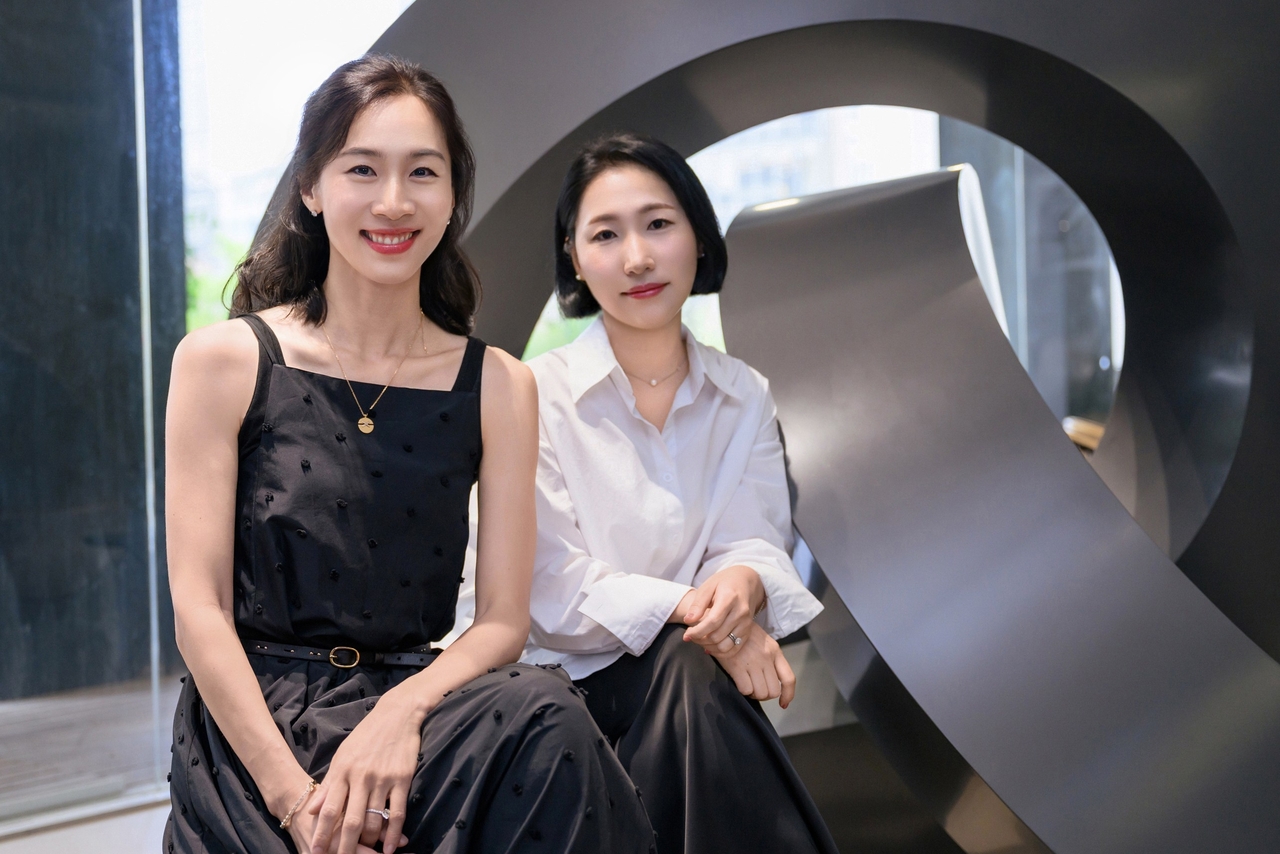
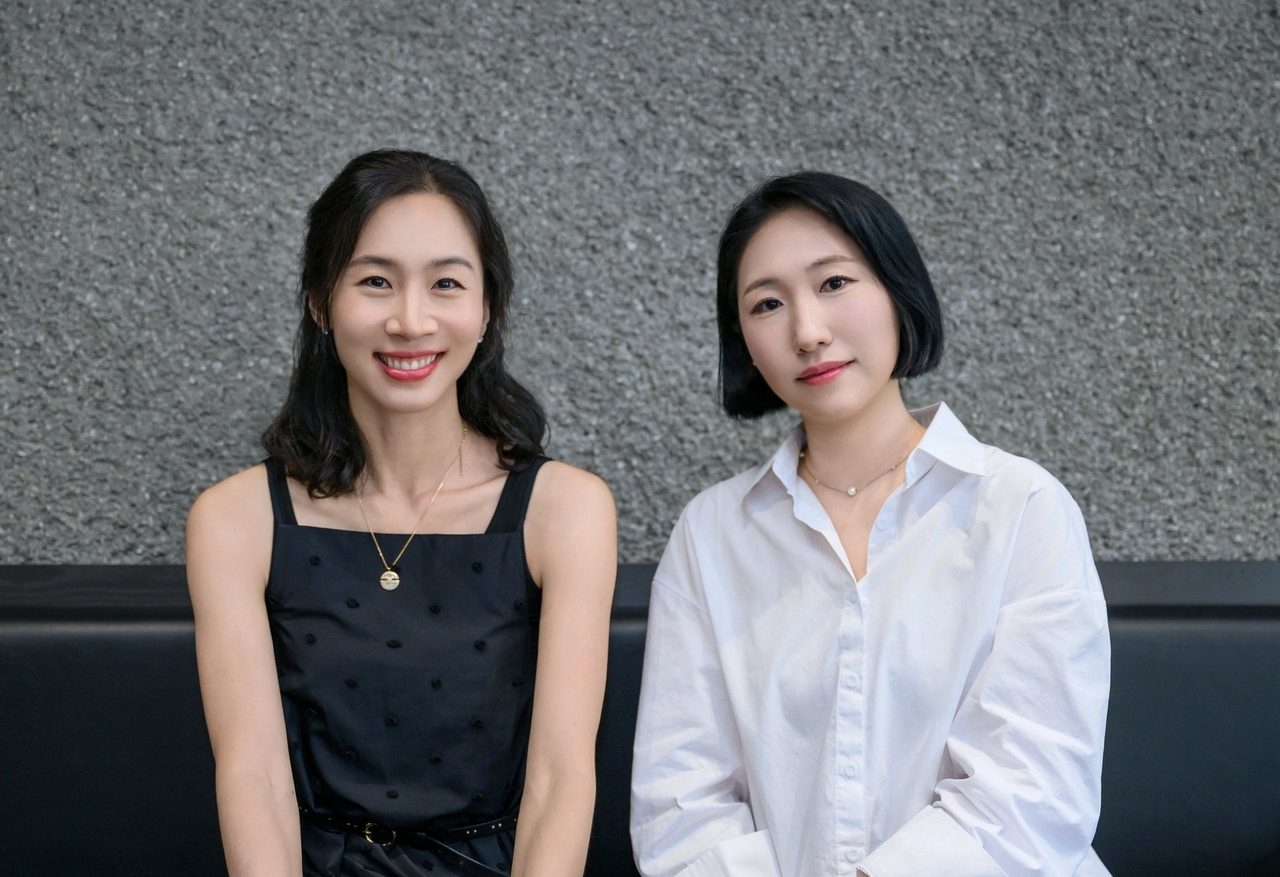
The stage unfolds two parallel stories inside a single daycare center: the daily grind of Dong-gu's mother, a teacher there, and the unseen labor of the battery mom who keeps the whole place running. Lee and producer Oh Sun-hwa, head of NHN Link's concert project team, joined forces to champion "a day in the life of mothers" — and both are young mothers themselves, balancing careers and child-rearing. When the two met recently at a café in Gwanghwamun, Seoul, they were clear on one point: "Supermoms may look like the ideal, but there is no such thing as a perfect mother."
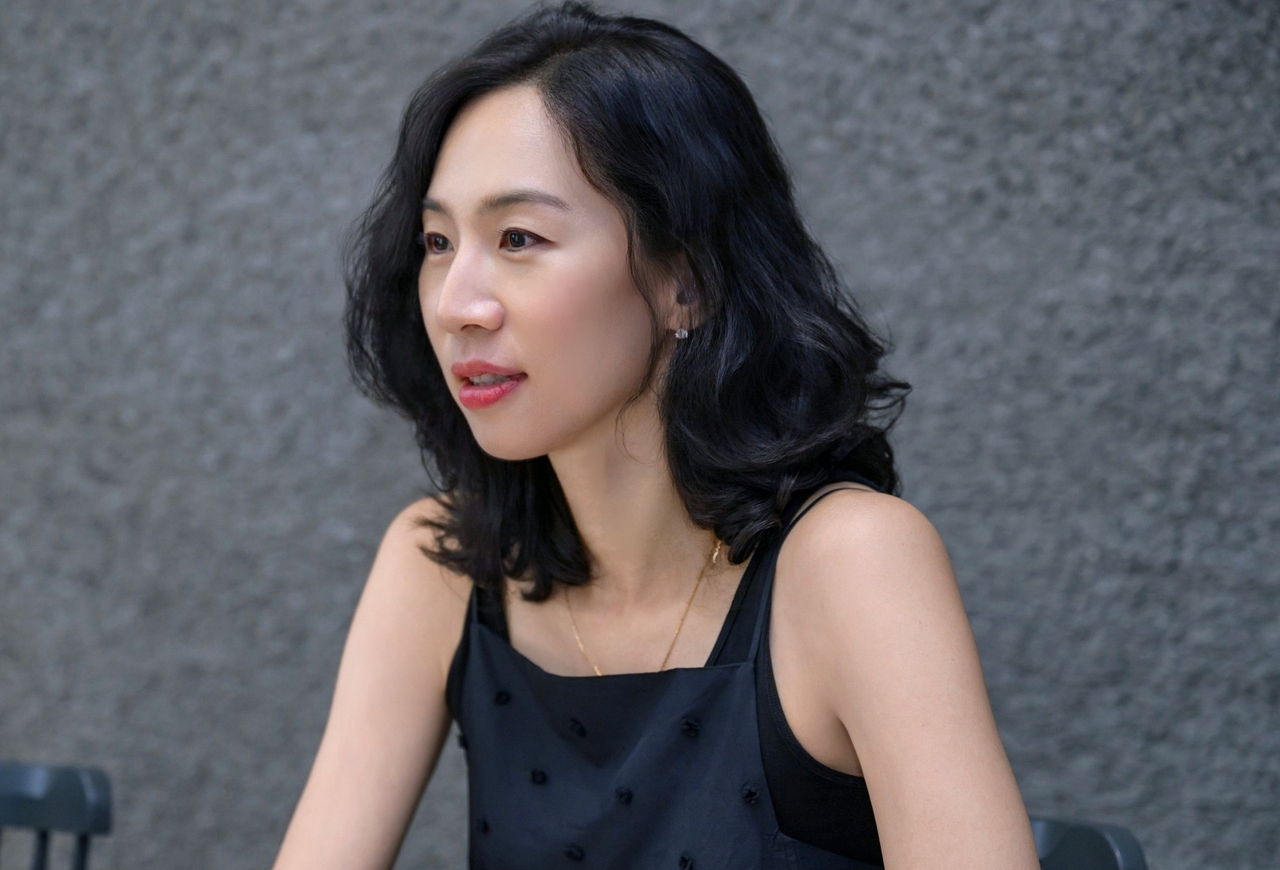
A stage born from 16 years of friendship: 'I didn't want a seat handed to me by a friend'
The two go back 16 years. Before Lee finished law school and took her first steps as an attorney, she shared one last performance stage with Oh. Their paths and physical distances diverged after that, but when they became mothers around the same time, they naturally grew into steadfast confidantes, trading worries about parenting and life without reserve.
The seed of "Battery Mom" was planted around 2024. While Lee was in Korea for three weeks to record a children's album, Oh handed her copies of the picture books "Battery Dad" and "Battery Mom" — a warm gift, she said, for Lee to read to her daughter who loved picture books. Oh quietly added a wish: that if "Battery Mom" ever made it to the stage, she hoped Lee, as both a mother and a musician, would write the songs.
The next day, Lee called Oh and said she wanted to write the script herself. "It may have sounded like an offhand remark, but I never say things I don't mean," Lee said. "I had something I really needed to say with this story."
Oh was delighted, but she did not say yes on the spot. As a producer before a friend, she believed the decision had to be made objectively alongside the rest of the creative team. Instead, she proposed that Lee start by writing a treatment — a preliminary script outlining the story. For Lee, it was a familiar kind of test.
"When I was a singer, the agency paved the way for me. But when I was working as a lawyer in the United States, no door opened unless I pushed it myself," Lee said. "That's when I learned that if you want something, you have to hustle for it."
In the spring of 2025, Lee sent a treatment she had spent two to three solid months on — and heard nothing from Oh for a long while. Oh was deep in preparations for the premiere of "Battery Dad." That summer, Lee watched "Battery Dad" from the audience and said she was struck by how closely her treatment, written with no prior knowledge of the production, resembled what she saw on stage.
It was not until autumn that Oh finally reached out to say she liked it. But another hurdle remained: the director's judgment. That was exactly how Lee had wanted it.
"I didn't want a position handed to me just because I was someone's friend. I wanted to earn it fair and square," Lee said. After four more months of revisions, her involvement was confirmed in early winter of that year. Oh described Lee as someone who "never does anything half-heartedly," adding that she "takes feedback on board and uses it to lift the work to the next level."
Lee wrote the lyrics alongside the script. Years of performing made it instinctive to sense where a song needed to break through. The challenge, given the family musical's target audience, was crafting words "that a child could grasp immediately without making the adults watching feel talked down to."
"Children understand far deeper things than we give them credit for. You don't need to dumb it down for them," Lee said. "What was hard was finding simple language to express something complex."
'The working-mom vs. stay-at-home divide is meaningless': Battery moms who fill each other's gaps
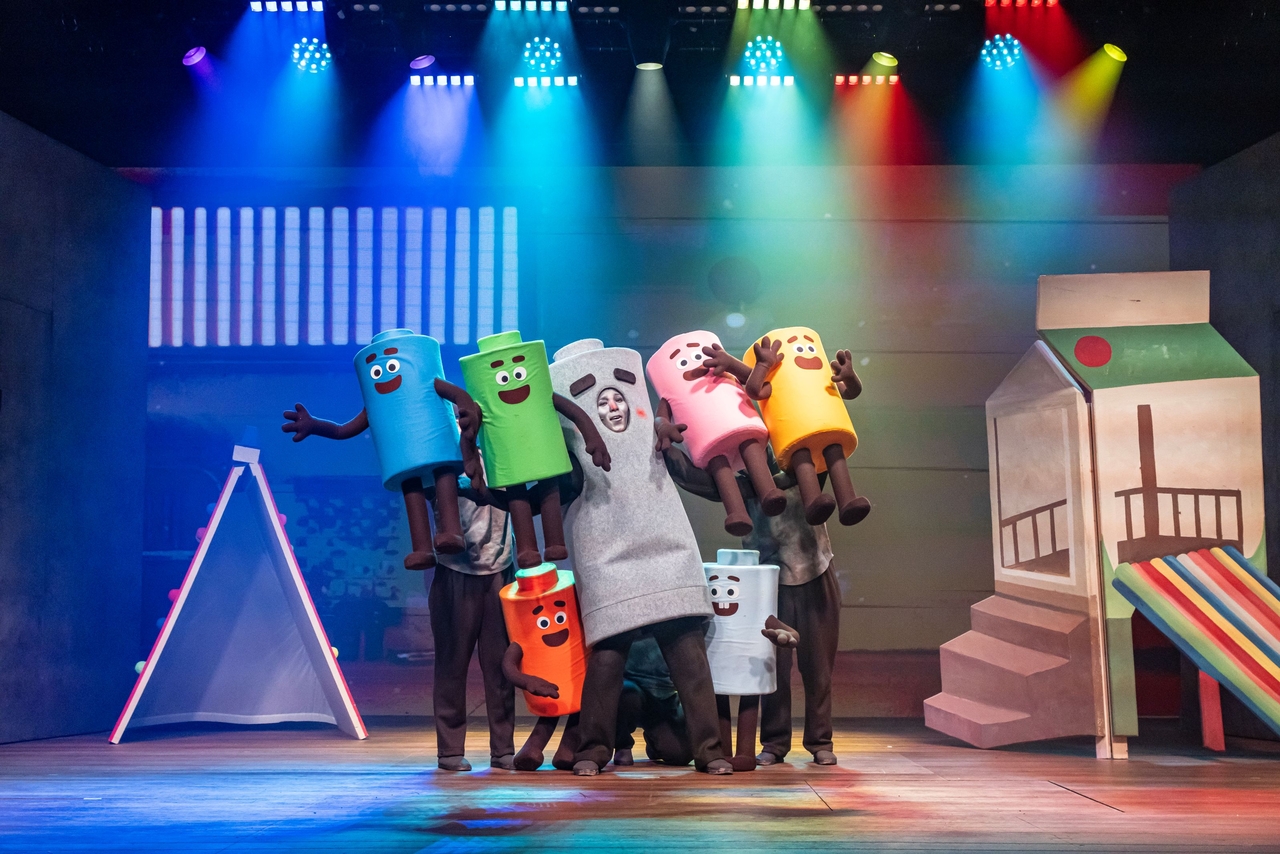
For parents, it is the first place they entrust their child to someone else's care. For children, it is where friendship, hellos and goodbyes all arrive at once. The stage is a daycare center.
"Dong-gu's mom is both a daycare teacher and a mother herself. We can't raise children the way a whole village once did, but I kept thinking — actually, we still are raising them together," Oh said.
In the predecessor "Battery Dad," the mother was a faint presence. The father's exhaustion took center stage while the mother's role stayed in the shadows. That was by design. Oh said the team "agonized over gender roles from the very beginning of production."
"Even in 'Battery Dad,' Dong-gu's mom was a working mother who went into the daycare center on weekends, and the father was the one looking after Dong-gu," Oh said. "Given the constraints of a family musical — just over an hour on stage — we told the father's story in full and deliberately saved the story only a mother could tell for the next production, from the outset."
In telling a story about mothers, the two said there were two things they were most careful to avoid. The first: this musical was never meant to celebrate the myth of the heroic supermom.
The very first page of the source picture book describes a mother who "can do anything" and calls her "brave" — phrases the creative team wrestled with at length. Oh recalled thinking hard about what bravery actually means from a mother's perspective.
"Saving children is something a father or a teacher can do too. Anyone can do it when it comes from love," Oh said. "A mother's bravery, I came to think, is in the everyday itself — tending to even the smallest things, getting through a hard day, and then getting through the next one."
The second thing they were careful to avoid was the division between "working moms" and "stay-at-home moms." Oh said she believes "the terms themselves are wrong," arguing that labeling mothers at home as stay-at-home moms sets them up as a comparison class against working moms, when in fact they too are sustaining the lives of their children and families.
And the support mothers provide extends well beyond their own children. Oh said the solidarity among mothers was another foundation of the production. "When I was stuck in a meeting, a video of my child's recital — one I didn't even know was happening — would arrive in the group chat, passed along by other mothers," she said. "Every time, I'd reply: 'Battery moms, thank you so much.'" It was other mothers who stepped in to fill the gap left by a mother who had gone to work.
There is no supermom: 'A life of running down and recharging — that itself is courage'
What allowed the two to dismantle the myth of the all-powerful supermom was the raw material of their own experience as mothers.
During the COVID-19 pandemic, Oh took two years away from work and spent many sleepless nights wrestling with whether to return. "Whatever choice you make takes courage, and I came to realize there is no perfect mother and no right answer," she said. Through trial and error, she learned to recharge by telling her children honestly, "Mom needs some time alone right now."
Lee, for her part, carries close to her heart her own mother's advice: do not sacrifice yourself for your child. "I believe that when I'm happy, I can pass good energy on to my child," Lee said. "Rather than unconditional self-sacrifice, I'm finding my own way to be the kind of mother that is true to who I am."
When her daughter begs her to play, Lee does not simply give in — she tells her specifically, "Mom's back hurts right now," and explains why she needs to say no. That honesty found its way naturally into the narrative of the battery mom on stage. The shared parenting philosophy of the two — that it is better to acknowledge your limits and connect with your child than to always put on a brave face — became the story of a mother on stage who sometimes runs out of power, grows worn out, yet finds a way to recharge and press on toward tomorrow.
Lee said she cried more than once while writing the lyrics. The moment that moved her was when a child who had been listing all the good things about a mother ultimately comes to understand even the mother who loses her temper and grows weary. "Kids cry because they're scared when their mom gets angry, but they forgive easily and love again," Lee said. "I know I shouldn't take that for granted, but I was so grateful for it."
Lee, who says she is "completely drained" each time she comes to Korea and packs in as much as possible, does not keep the battery as a metaphor for mothers alone.
"Happiness, unhappiness, overflowing energy — none of it lasts," Lee said. "It all rises and falls and repeats, and that accumulation becomes a life. You store up energy, spend it when you need to, and when you run out, you find a way to recharge and give it your best again. Aren't we all just batteries, living that way every single day?"
shee@heraldcorp.com