Malware bypasses SAT screen lock to feed AI-generated answers to test-takers; four students caught
Program sold openly on social media; College Board sues developer
UK records 2,225 smart-device cheating cases — 44.3% of all exam violations
France's baccalauréat hit by spreading AI cheating; detectors and tougher penalties deployed
"A guaranteed way to get a perfect SAT score."
Malware has emerged that uses AI to feed real-time answers to students sitting the SAT, the US college admissions exam. The program bypasses the test screen's security features, transmits questions to an AI chatbot and displays the chatbot's answers directly on the test-taker's screen. With similar abuses of smart devices and AI surfacing in the United Kingdom and France, education authorities around the world are now waging war against AI-assisted cheating.
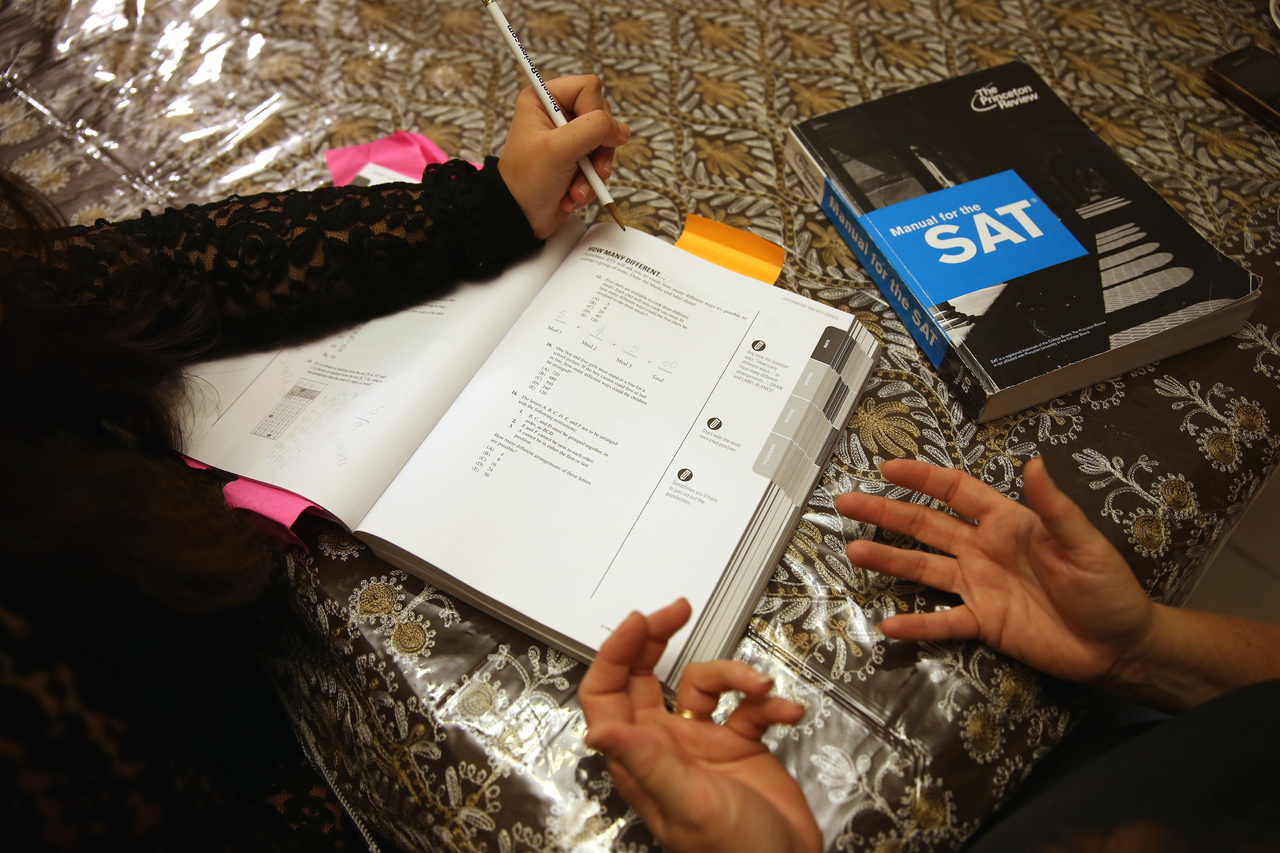
According to The New York Times on Nov. 6 (local time), the College Board — which administers the SAT — caught four students using malicious software called "Auto SAT" during the March exam.
The program was designed to circumvent the screen-lock function of the digitally administered SAT. While the test was under way, it accessed questions in real time, relayed them to an AI chatbot and displayed the chatbot's answers on the student's computer screen.
For multiple-choice questions, it marked the correct answer with a small dot; it also provided responses to open-ended questions. Students could check the AI-supplied answers without picking up a phone or opening a separate window.
More alarming still, the program was sold openly on social media.
Auto SAT marketed itself with the tagline "a guaranteed way to get a perfect SAT score" and was priced at $499, with payment accepted in cryptocurrency only.
After discovering the program on social media, the College Board purchased it and analyzed how it worked. It then modified the exam system's design and code to prevent the malware from functioning and filed a lawsuit against its developer.
A series of additional security measures has followed.
The College Board formally banned smart glasses from SAT testing centers in March. In July, it expanded the prohibition to cover all eyewear capable of connecting to the internet or AI services, and proctors were authorized to inspect the glasses of any student wearing them.
Some testing regions have also begun tracking students' keystrokes and mouse movements to detect and preempt cheating that exploits the nature of digital exams.
The College Board is also addressing question leaks that exploit time-zone differences — a practice in which students who sit the exam earlier in one country pass questions to those taking it later elsewhere. To counter this so-called time-zone cheating, it plans to introduce a new SAT testing schedule sometime in 2027.
AI- and smart-device-assisted cheating is not a problem confined to the United States.
According to Ofqual, the UK's exam regulator, cheating involving mobile phones and smart devices reached 2,225 cases in major qualification exams held last summer, accounting for 44.3 percent of all student cheating incidents.
Ofqual warned that cheating using advanced smart devices is becoming an increasingly serious threat, saying the rapid pace of technological development means the risk must not be underestimated and that a swift response is needed.
France is also seeing AI cheating spread, particularly in the baccalauréat, the country's university entrance qualification exam.
According to France's Ministry of Education, cheating violations detected last year totaled 1,208 cases — an increase of 273 from the previous year. Of the 833 cases referred to baccalauréat disciplinary committees, 55.04 percent involved smartphones, smartwatches or other smart devices.
AI-assisted cheating accounted for 8.5 percent of all cases referred to disciplinary committees, marking the emergence of AI itself — not just smart devices — as a tool threatening exam integrity.
French education authorities have deployed mobile phone detectors at every school district to combat cheating. The devices are installed at random in exam venues during written tests to catch students using internet-connected devices.
Students caught face severe sanctions. A confirmed violation results in the exam being voided, and the student may be barred from sitting any baccalauréat exam for up to five years.
Cheating discovered after an exam has concluded is also harder to escape. France's education authorities amended a ministerial decree last February to strengthen procedures allowing disciplinary action even when violations come to light after the test has ended.
sjy@heraldcorp.com