Pact covers semiconductors, critical minerals and energy; Germany, EU set to join next week
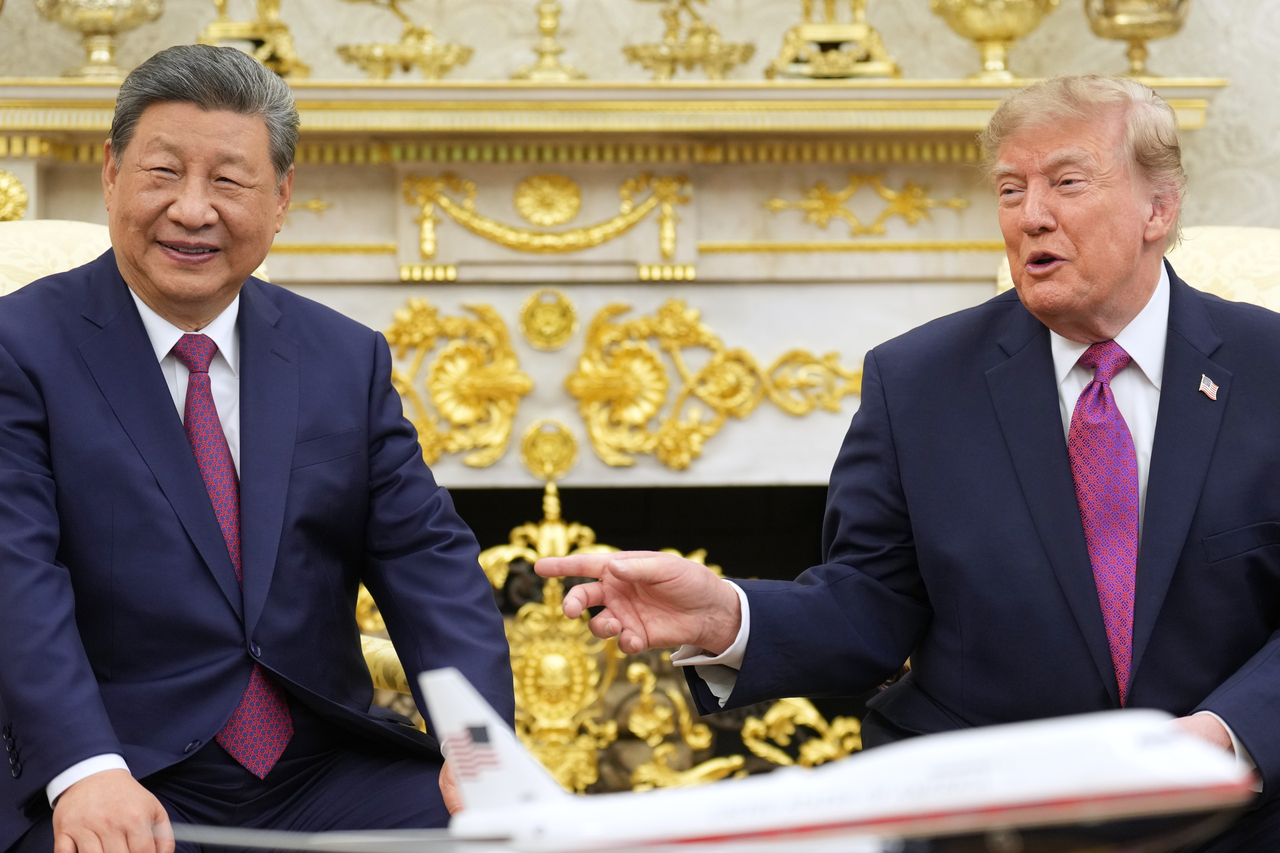
Nine countries, including the United States, South Korea and Japan, have agreed to jointly protect critical AI technologies and supply chains in response to China's growing influence. The initiative aims to reduce dependence on China in strategic sectors underpinning the AI industry — semiconductors, critical minerals and energy — while deepening economic security cooperation. The agreement signals an expansion of the US-led technology containment front against China, coming ahead of a summit between President Donald Trump and Chinese President Xi Jinping.
The nine countries — the US, South Korea, Japan, Australia, Israel, the United Kingdom, India, Qatar and the UAE — signed the "San Francisco Declaration," committing to jointly identify AI-related critical technologies and supply chains in need of protection, the Financial Times reported Sunday (local time). Germany, Sweden, the Netherlands and the European Commission are expected to join next week.
The declaration is part of "Pax Silica," a US-led initiative to build resilient AI supply chains. The framework is designed to strengthen supply chain resilience across the AI industry — spanning semiconductors, critical minerals and energy — and to mount a coordinated response to China's economic pressure.
Jacob Helberg, the US under secretary of state for economic affairs, told the FT that "the know-how to design chips, the machines to make chips, and the ports to ship chips can all be in different countries," adding that "the reason the San Francisco Declaration is historic is that Pax Silica partners have agreed to treat the security of these technologies and infrastructure as a shared responsibility."
Participating countries agreed to jointly identify sensitive AI-related technologies and critical infrastructure requiring protection on national security grounds, and to expand information sharing on areas where supply chain diversification is needed. They will particularly strengthen safeguards for advanced technologies whose theft or illicit transfer could give a rival a significant advantage in military and intelligence domains.
The declaration states that "economic security is the foundation of national security" and that "no country can be safe without protecting its core systems and technologies from those who seek to undermine them."
The agreement was reached ahead of a summit between Trump and Xi, scheduled to take place on the sidelines of the Asia-Pacific Economic Cooperation forum in Shenzhen, China, on Thursday.
The US has criticized China for failing to fully honor the terms of a trade war truce the two leaders agreed to late last year. Tensions between the two countries have persisted particularly over rare earth minerals, a sector in which China wields strong influence over global supply chains.
Ahead of the summit, the US is pressing China to expand rare earth exports to the US, Japan and other allies. At the same time, Washington is intensifying efforts to diversify critical mineral supply chains away from China through cooperation with allies and to reduce technological and industrial dependence on Beijing.
Helberg said the declaration would help countries develop a shared understanding of the sensitive technologies and critical infrastructure essential to AI development, enabling them to identify areas where supply chain diversification is most urgent and to share relevant information.
The Department of State said "the era of Pax Silica is entering a new phase," adding that "no country can secure the foundations of the industrial revolution alone, and the prosperity it brings can only last as long as the supply chains and infrastructure that support it."
Participating countries plan to establish working groups to discuss concrete cooperation measures for strengthening AI supply chains. Building economic hubs to attract AI-related investment was also included among the key priorities.
sjy@heraldcorp.com