Port development to be added to 2027–2031 regional action plan
Ministry of Oceans and Fisheries, UNESCAP to sign port AI cooperation agreement
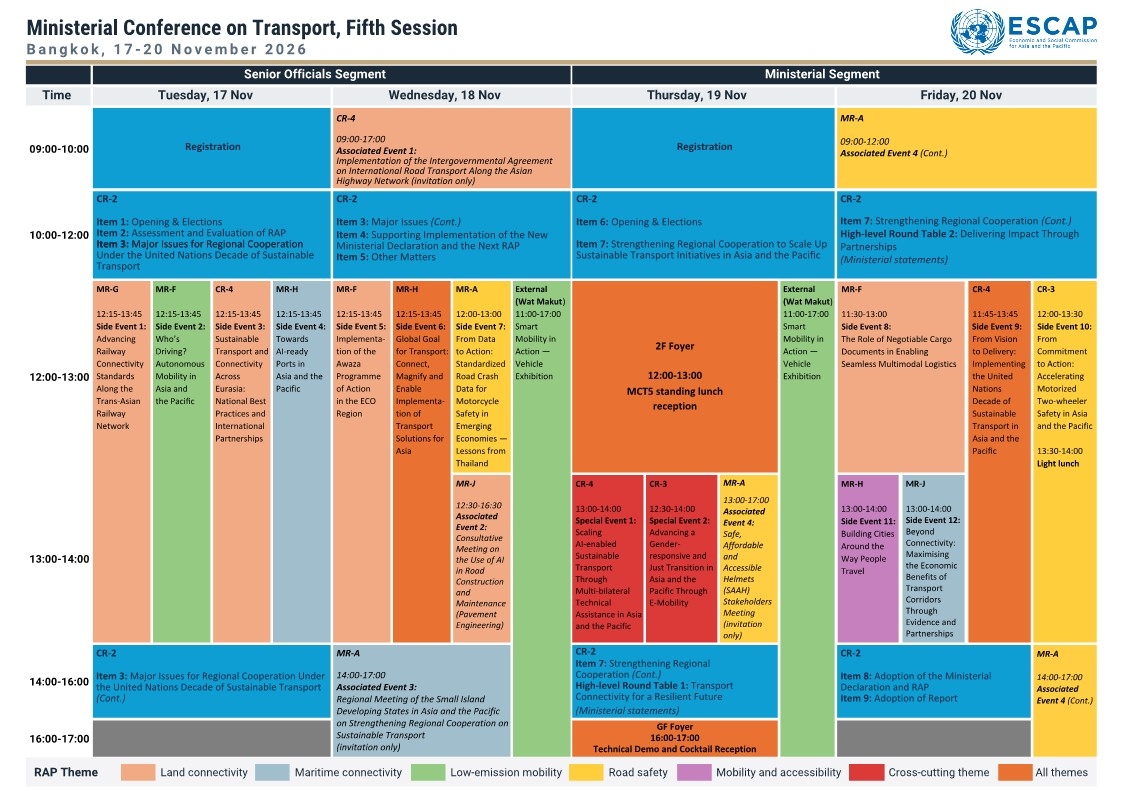
Port development is set to be added as a new item on the Asia-Pacific regional transport cooperation agenda. South Korea plans to use the opportunity to share its smart port technology and AI experience with countries in the region and expand cooperation to help developing nations build port infrastructure.
South Korea's Ministry of Oceans and Fisheries announced Monday it will attend the Fifth Ministerial Conference on Transport of the UN Economic and Social Commission for Asia and the Pacific, to be held Tuesday through Friday at the UN Conference Centre in Bangkok, Thailand.
The conference will adopt a Regional Action Plan for Sustainable Transport Development in Asia and the Pacific covering 2027 to 2031, along with a ministerial declaration on transport. The regional action plan is a joint implementation framework that UNESCAP member states draw up every five years to improve transport connectivity and build sustainable transport systems.
The next action plan will add "maritime connectivity and port development" as a new area of cooperation, going beyond the existing focus on "maritime and interregional transport linkages." The inclusion of port development as a major item on the regional transport cooperation agenda marks a significant shift.
The ministry plans to emphasize at the conference that ports are not merely cargo-handling facilities but critical infrastructure connecting the region's maritime transport networks. It will also present concrete proposals for cooperation, including the expansion of smart port technology and support for developing countries.
AI-driven port operations will also be a key topic. At a side event co-hosted by the ministry and UNESCAP — titled "Toward AI-Ready Ports in Asia and the Pacific" — South Korea will introduce its port policies and approach to AI adoption. The Korea Maritime Institute and Busan Port Authority will share relevant research and operational experience.
The ministry also plans to sign a memorandum of agreement with UNESCAP on AI cooperation in the port sector. The two sides will use the agreement as a basis for exchanging information on AI technology and policy and expanding joint research. They also intend to identify cooperation projects tailored to the needs of member states in the Asia-Pacific region.
Support for small island developing states, which are particularly vulnerable to climate change, will also be on the agenda. The ministry will participate in a related regional meeting to discuss technical and fiscal support measures for strengthening port infrastructure and climate resilience with development cooperation partners.
A meeting with UNESCAP Executive Secretary Armida Salsiah Alisjahbana is also scheduled. The two sides will review progress in existing maritime transport and port cooperation and discuss ways to expand policy and technology exchanges with a focus on port development.
UNESCAP is one of five regional commissions under the UN Economic and Social Council and serves as an international body supporting economic and social development across the Asia-Pacific region. It has 61 member states.
"I hope this conference will see port development take its place as a major item on the Asia-Pacific transport cooperation agenda and mark a step forward in AI-based port cooperation," Minister of Oceans and Fisheries Hwang Jong-woo said. "We will share South Korea's experience in port development and smart ports with member states and work with UNESCAP to identify practical cooperation projects suited to each country's conditions and needs."
adastra@heraldcorp.com