Budget for 2027 NIP inclusion cleared welfare committee, heads to budget panel; import dependence deepens
Sanofi's 500,000-dose cut triggered pediatric supply crunch, yet government imposed no penalties
Domestic vaccine commercialization still years away; experts urge phased rollout starting with highest-risk groups
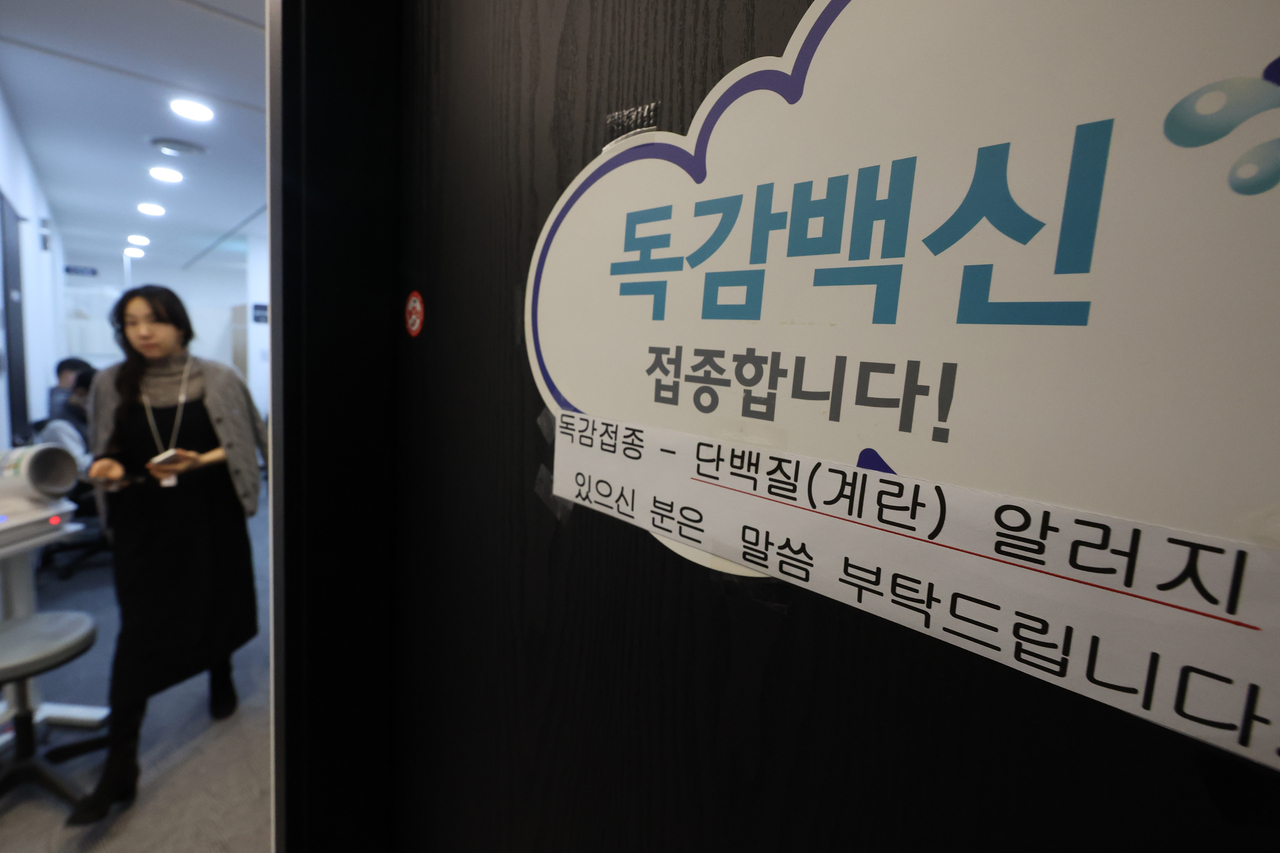
Momentum is building in the National Assembly to include high-immunogenicity influenza vaccines in the National Immunization Program for older adults, but experts warn that rushing a full rollout while the country relies entirely on imports could trigger vaccine supply instability, drain public funds overseas and crowd out budgets for other essential immunizations — making a phased approach tied to domestic production capacity the more prudent path.
The National Assembly's Health and Welfare Committee boosted the 2027 national immunization budget to fund the introduction of high-immunogenicity flu vaccines. The move follows the Korea Disease Control and Prevention Agency's proposal in July, submitted in a presidential briefing, to prioritize replacing standard flu vaccines for adults 75 and older with high-immunogenicity alternatives under the NIP. With the budget review now under way, the policy push has entered its formal track.
High-immunogenicity flu vaccines address "immune senescence" — the decline in vaccine effectiveness that accompanies aging — by increasing antigen content or adding adjuvants. There is broad agreement on the goal of reducing the disease burden on older adults as South Korea enters a super-aged society, but medical and pharmaceutical circles have raised concerns about supply chain stability and the risk of deepening import dependence.
Every high-immunogenicity flu vaccine currently available in South Korea is an imported product from multinational companies, including Sanofi and CSL Seqirus. Analysts warn that folding these vaccines into the NIP without diversifying the supply chain would leave the national immunization program vulnerable to production disruptions or unilateral price demands from foreign manufacturers.
Those concerns are not hypothetical. During the 2026–2027 flu season government procurement drive, Sanofi delayed deliveries and cut roughly 500,000 doses from its contracted volume, causing significant disruption at medical facilities. The government scrambled to redirect doses earmarked for domestic companies' private-market distribution to fill the gap — a move that has left the private vaccine market short-supplied to this day, with pediatric and adolescent clinics facing a particularly acute supply crunch.
A similar shortage affecting the far larger elderly population could impose social costs the country would struggle to absorb. The episode also drew criticism after the government imposed no meaningful penalties or sanctions on Sanofi for the volume cut, fueling accusations of preferential treatment and official inaction.
Fiscal efficiency and a thin evidence base present additional obstacles. High-immunogenicity vaccines carry a significantly higher unit price than standard-dose products. A full NIP rollout could funnel hundreds of billions to trillions of won in public funds directly into the revenue of foreign companies, while the fixed national health budget would face a "balloon effect" — squeezing allocations for other essential childhood immunizations or support for serious illnesses.
The US Centers for Disease Control and Prevention recommends high-immunogenicity flu vaccines for adults 65 and older, and Germany's Standing Committee on Vaccination recommends them for those 60 and older. However, rigorous cost-effectiveness analysis and real-world evidence accumulation targeting the Korean population remain at an early stage.
Experts therefore recommend a phased introduction calibrated to the progress of domestic vaccine development and the accumulation of local data. The KDCA has also acknowledged the need to strengthen national vaccine development capacity and build an integrated production-to-approval pipeline to reduce import dependence and prevent supply delays.
Domestic vaccine developers are accelerating efforts to localize production and eventually enter the NIP. GC Biopharma is currently the furthest along among Korean companies. In September, the Ministry of Food and Drug Safety approved GC Biopharma's investigational new drug application for a Phase 2/3 clinical trial of "GC3114B," a high-dose candidate with elevated antigen content, to be tested in adults 65 and older against an active comparator. The company aims to secure product approval within three years and in July signed a CMO MOU with Korea Vaccine to build a prefilled syringe production and supply chain.
SK Bioscience is developing "NBP607B," which applies an adjuvant to its cell-culture flu vaccine Skycelflu. The company submitted an IND for a Phase 1/2 trial in July last year and aims to produce interim results by 2027. Alongside this, SK Bioscience is conducting basic research and preclinical work on a microneedle-patch high-immunogenicity flu vaccine in collaboration with global partners.
However, with domestic pipelines still at the Phase 1/2 or Phase 2/3 entry stage, near-term commercialization faces clear physical constraints.
"For a high-immunogenicity flu vaccine regime to take hold successfully in the field, precise market supply-and-demand forecasting must come before any rollout, and a management framework that includes strict penalties for pharmaceutical companies that cause supply disruptions must be established," one industry official said.
Another official advised that rather than an immediate full rollout, the government should first run a pilot program targeting the highest-risk groups — such as residents of long-term care hospitals and nursing facilities, and the oldest elderly with underlying conditions — to verify effectiveness, while pairing that effort with meaningful institutional support for domestic companies, including R&D funding and expedited approval pathways to accelerate vaccine self-sufficiency.
silverpaper@heraldcorp.com