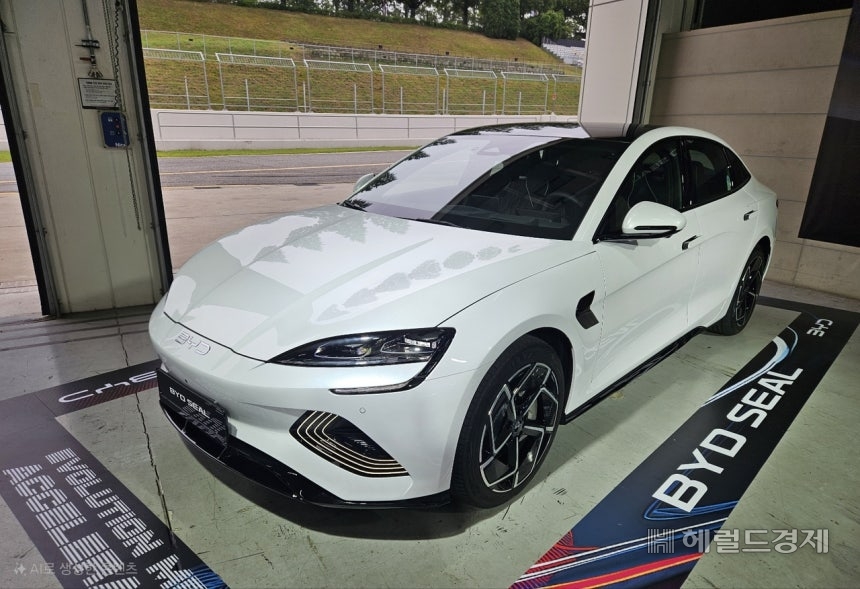
Chinese EV exports to South Korea reached $3.36 billion in the first nine months of this year, nearly doubling from a year earlier, making South Korea China's largest EV export destination in Asia and fourth largest globally. Lawmakers from both the ruling and opposition parties are pushing to include electric vehicles in a domestic production tax credit as Chinese automakers flood the market with competitively priced models backed by massive state subsidies.
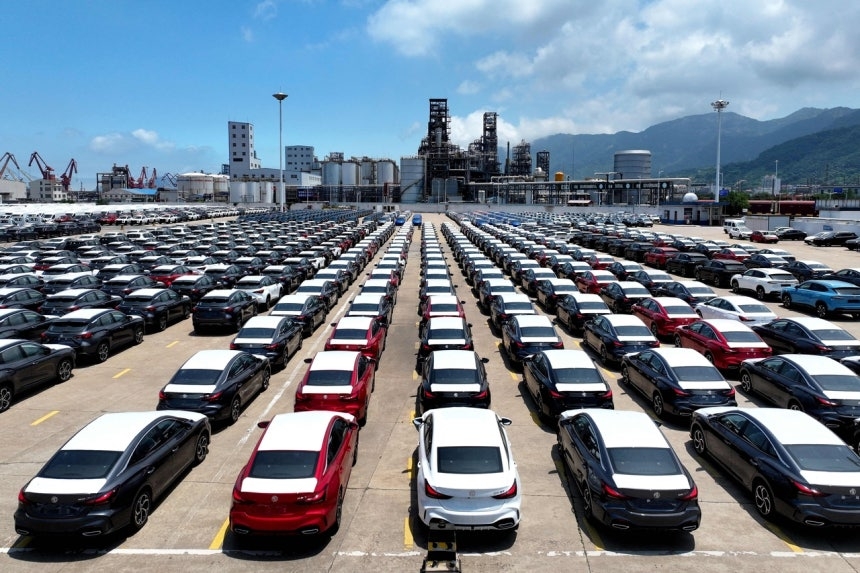
South Korea has emerged as China's largest electric vehicle export market in Asia and its fourth largest in the world, as Chinese automakers struggling with weak domestic demand redirect surplus production overseas. The rapid influx of Chinese EVs is accelerating pressure on South Korea's auto industry, prompting lawmakers to move faster on measures to protect domestic manufacturers.
According to the Korea International Trade Association, China exported $3.36 billion worth of electric passenger vehicles — including hydrogen fuel-cell cars — to South Korea in the first nine months of this year, up 99.2 percent from the same period a year earlier. Among the top 10 destinations for Chinese EV exports over the same period, Belgium led with $5.84 billion, followed by Australia at $4.64 billion, the United Kingdom at $3.75 billion, South Korea at $3.36 billion, Thailand at $2.51 billion, Germany at $2.18 billion, Brazil at $2.17 billion, Spain at $1.27 billion, Colombia at $1.14 billion and Slovenia at $891.87 million.
Only three countries — Belgium, Australia and the United Kingdom — received more Chinese EV exports by value than South Korea. The volume of Chinese EVs flowing into South Korea has grown consistently in recent years. China's EV exports to South Korea jumped from $12.32 million in 2020 to $2.14 billion in 2025, a roughly 174-fold increase in five years, with a compound annual growth rate of 180.6 percent. This year, the $3.36 billion recorded through September alone has already surpassed last year's full-year total.
The trade deficit in the EV category with China has also widened sharply. After swelling from a $12.22 million deficit in 2020 to $2.14 billion in 2025, the gap reached $3.36 billion in just the first nine months of this year.
Industry officials point to two factors behind South Korea's rise as a key destination for Chinese EVs: the strong price competitiveness of Chinese models backed by massive government subsidies, and the absence of effective domestic policy tools to counter them.
The Center for Strategic and International Studies estimated that the Chinese government provided $230.9 billion in support to its domestic EV industry between 2009 and 2023. Fueled by that support, China's EV sector grew rapidly — but as production capacity far outpaced domestic demand, manufacturers have turned to a strategy of pushing surplus vehicles into global markets at low prices.
Data from the China Passenger Car Association show that China's auto production capacity grew from about 19.46 million units in 2020 to about 29.67 million units in 2025, an increase of roughly 10.21 million units. Over the same period, domestic sales rose by only about 4.45 million units, from roughly 19.29 million to about 23.74 million. A separate survey by British market research firm Benchmark Mineral Intelligence found that domestic EV sales in China fell 12 percent year-on-year in October.
Against that backdrop, calls within South Korea to protect the domestic auto industry have grown louder. A telling example came during this year's national audit, which wrapped up last month, when lawmakers from both the ruling and opposition parties agreed that electric vehicles should be added to the list of products eligible for the domestic production tax credit.
People Power Party lawmaker Ahn Sang-hun raised the issue at the Finance and Economy Planning Committee's comprehensive audit of the Ministry of Economy and Finance on Oct. 22. "Looking at major advanced economies, they are deploying tariffs, tax deductions and subsidies all at once to protect their domestic EV industries — there is virtually no country that has managed to defend its market without an active response," Ahn said.
Democratic Party of Korea lawmaker Moon Jin-seog also said the government's current proposal appeared to be "pushing domestic automakers — who must compete against Chinese manufacturers with strong price competitiveness — to the edge of a cliff," and called for electric vehicles to be made eligible for the domestic production tax credit regardless of whether facilities investment has been made.
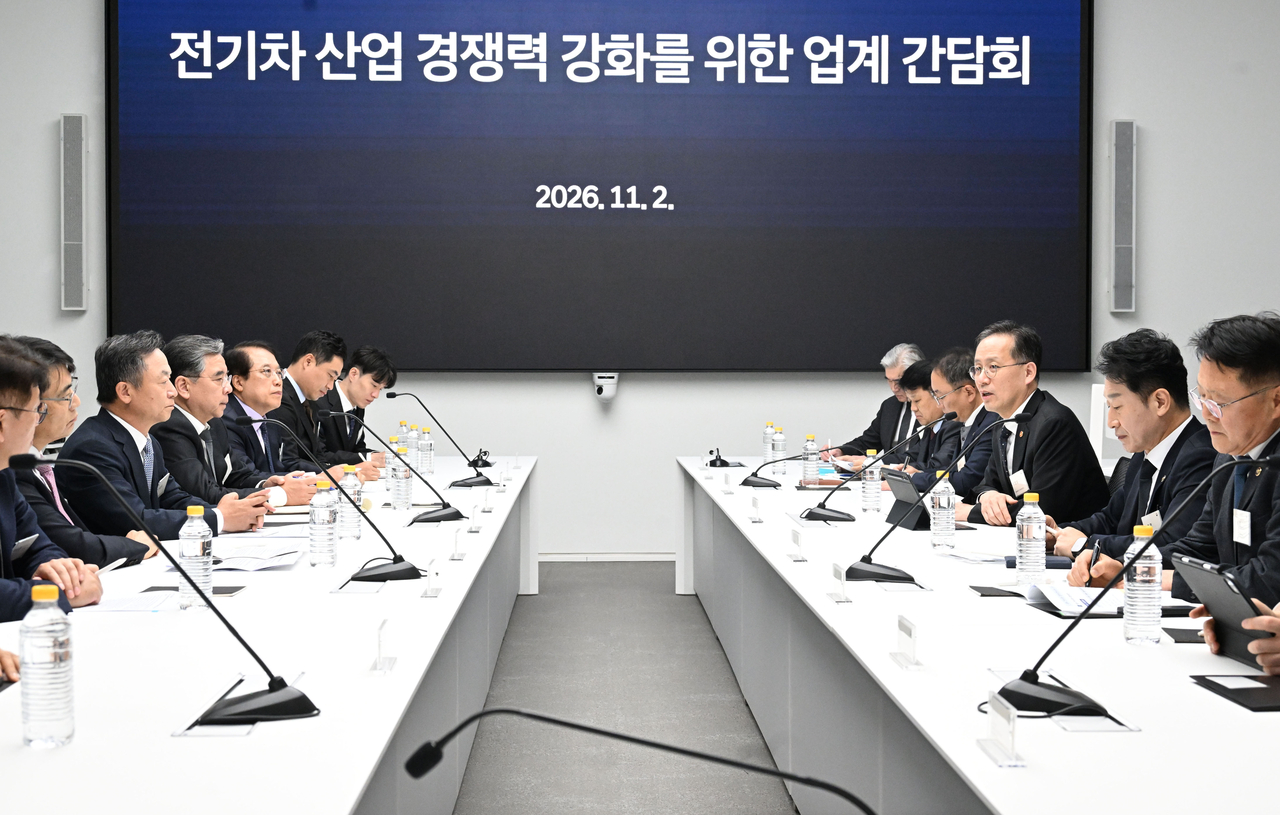
Since the 22nd National Assembly convened, a total of 24 bills have been introduced to amend the Restriction of Special Taxation Act to include electric vehicles and other next-generation vehicles in the domestic production tax credit. On Nov. 2, Deputy Prime Minister and Minister of Economy and Finance Lee Hyeong-il, speaking at an industry roundtable on strengthening EV competitiveness held at Hyundai Motor and Kia's research center in Hwaseong, Gyeonggi Province, said the government would actively participate in and engage in in-depth discussions during the National Assembly's deliberations on a production tax credit for EVs.
The measure is widely expected to be taken up in earnest when the Finance and Economy Planning Committee's tax subcommittee reviews proposed tax law amendments this month.
Automakers agree that electric vehicles are the product most aligned with the intent of the domestic production tax credit, given the criteria the government has set for eligibility — importance, growth potential and necessity.
According to the Korea Automobile Manufacturers Association, the auto industry accounted for 14.1 percent of total domestic manufacturing output in 2024. Including upstream and downstream sectors — vehicle and parts manufacturing, sales, maintenance and logistics — the industry supports about 1.56 million direct and indirect jobs.
Korea Automobile Manufacturers Association President Jeong Dae-jin said in a recent interview that introducing a production tax credit for EVs "would not benefit only automakers — the gains would flow through to consumers and parts suppliers, and ultimately strengthen the domestic production base."
In terms of growth potential, the auto industry is already transitioning toward EVs, AI, autonomous driving and robotics, positioning it as a key driver of the government's twin national policy goals of green transformation and AI transformation.
An industry official expressed concern that "as the shift to electrification accelerates, Chinese EVs are absorbing a significant share of growing domestic EV demand, preventing the expanding home market from translating into increased domestic production."
The official added that the domestic production tax credit "is not a system designed to support industries in need of restructuring or companies running at a loss," and said policy should focus on "identifying core strategic industries that underpin the nation's future growth and economic security, and providing concentrated support to maintain and expand their domestic production base."
likehyo85@heraldcorp.com