Hybrids and EVs dominate as automakers discontinue diesel models; Europe sees similar decline
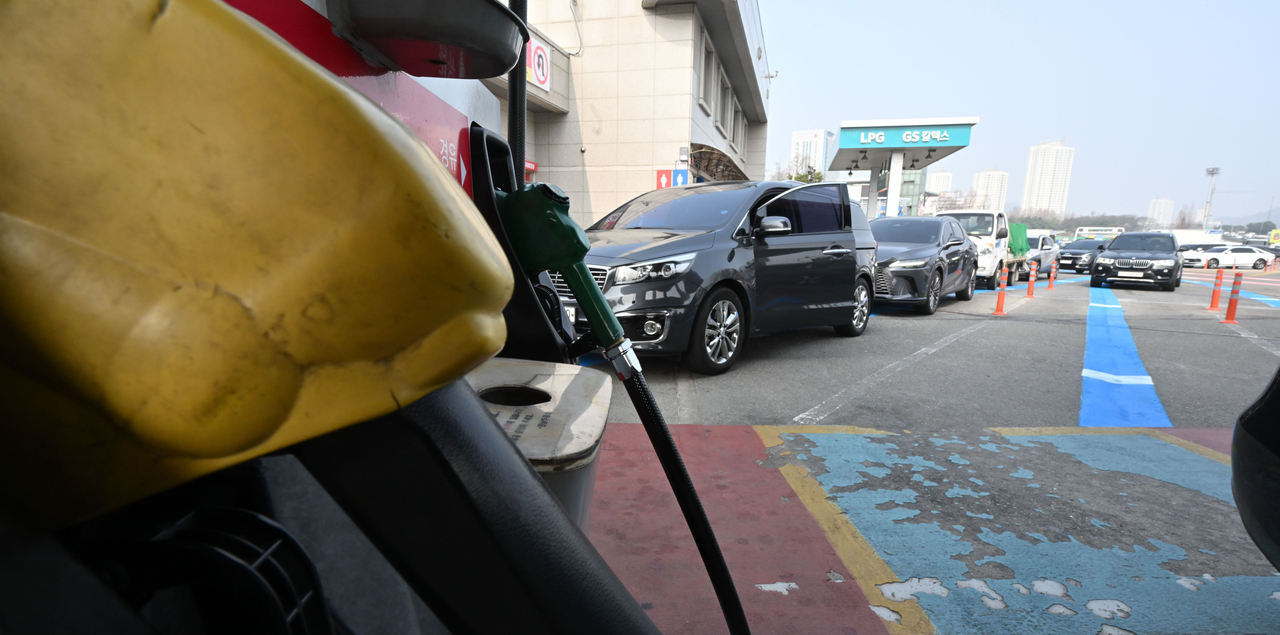
Diesel passenger cars are rapidly disappearing from Korean roads. In September, only about 4 out of every 1,000 newly registered passenger cars ran on diesel — an average of just 17 vehicles a day.
According to vehicle registration statistics from the Ministry of Land, Infrastructure and Transport, 515 of the 116,107 passenger cars newly registered in September were diesel-powered, accounting for 0.4 percent. When vans, trucks and special-purpose vehicles are included, diesel vehicles made up 3,055 of the 130,621 total new registrations, or 2.3 percent.
The trend holds over a longer period. From January through September this year, diesel passenger cars numbered 6,466 out of 1.10 million newly registered passenger cars, a share of just 0.6 percent. Among all newly registered vehicles — 1.24 million in total — diesel accounted for 30,840 units, or 2.5 percent.
Hybrids and electric vehicles are filling the gap. Of all new vehicle registrations in the first nine months of the year, hybrids accounted for 423,943 units, or 34.1 percent, while EVs reached 297,478 units, or 23.9 percent. Together, the two categories made up 58 percent — roughly 6 in 10 new vehicles. Gasoline-powered cars came in at 391,480 units, or 31.5 percent.
The total number of diesel vehicles on Korean roads is also shrinking. Registered diesel vehicles fell from about 9.99 million at the end of 2020 to about 8.36 million as of the end of June this year — a decline of about 1.63 million units, or 16.3 percent. Over the same period, diesel's share of all registered vehicles dropped from 41.0 percent to 31.3 percent.
Automakers are discontinuing diesel models. Once popular in the SUV market for their fuel efficiency and driving performance, diesel passenger cars have been fully phased out by Hyundai Motor and Kia this year. As recently as 2022, the two companies sold diesel variants across 15 models, including the Kona, Tucson, Santa Fe, Sportage and Sorento. Production of the last remaining diesel model — the Sorento — was halted in August. Hyundai Motor and Kia now produce diesel engines only for commercial vehicles such as heavy trucks and buses.
GM Korea discontinued its diesel lineup with the Malibu in 2015, and Renault Korea did the same with the QM6 in 2022. Among domestically produced passenger cars, only two diesel models remain: KGM's Musso and Rexton. European brands including Mercedes-Benz, BMW, Audi and Volkswagen still sell diesel models in Korea, though in limited numbers.
The shift is playing out in Europe as well. According to the European Automobile Manufacturers' Association, the share of diesel cars among newly registered passenger vehicles in the EU fell from 31.6 percent in 2019 to 7.3 percent in the January–August period this year.
"As international regulations on diesel vehicle emissions have tightened in response to the climate crisis, manufacturers are scaling back production," a Ministry of Land, Infrastructure and Transport official said. "Consumers are also gravitating toward eco-friendly or fuel-efficient vehicles, which appears to be driving stronger sales of EVs and hybrids over diesel cars."
However, demand for diesel engines persists in the commercial vehicle segment, where the transition is slower than in passenger cars. Of the 30,840 diesel vehicles newly registered from January through September this year, passenger cars accounted for 6,466 units, or 21.0 percent, while the remaining 79.0 percent were vans, trucks and special-purpose vehicles.
andy@heraldcorp.com