From 11,315 tons to 141 tons: a near-total collapse over 25 years
Rising sea temperatures push squid northward as replacement aquaculture remains in trial phase
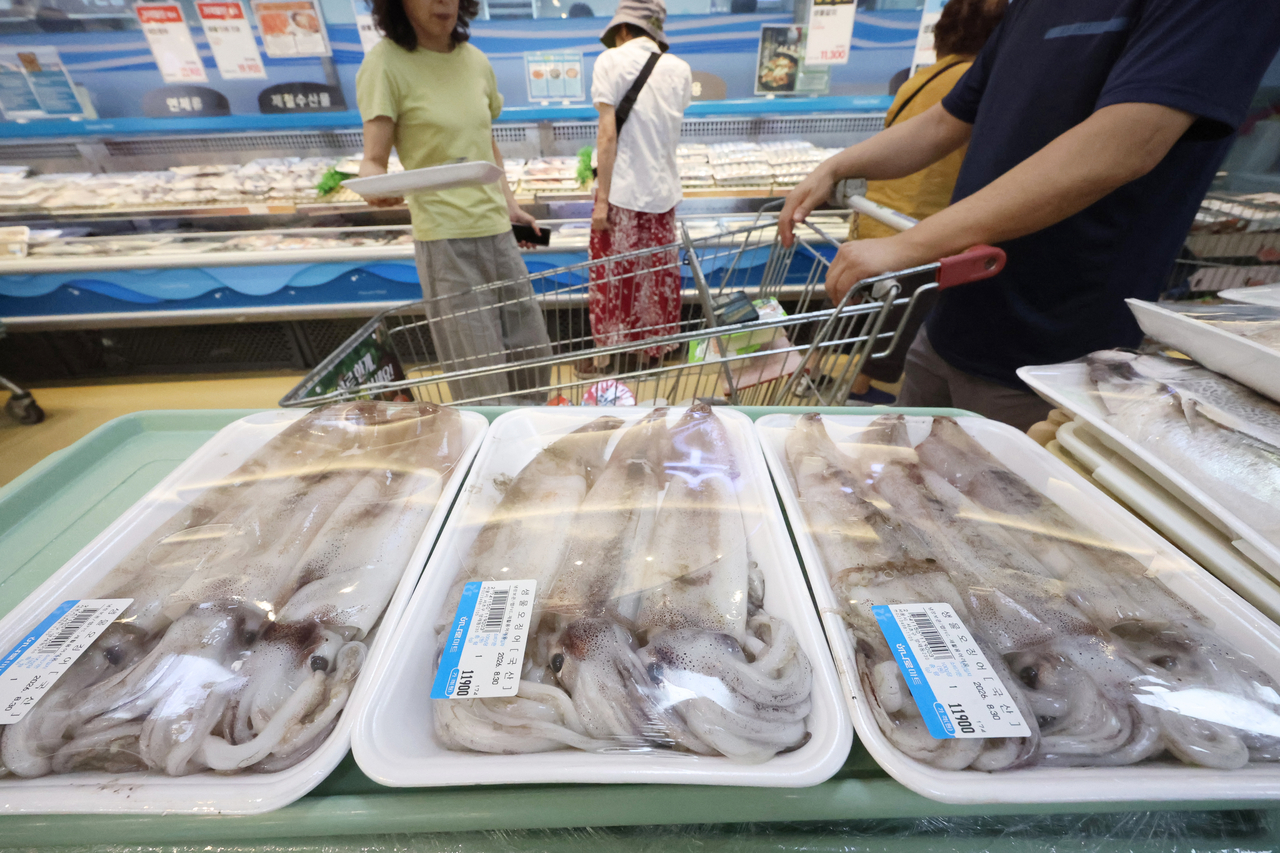
Squid catches off Ulleungdo have fallen by nearly 99 percent over the past 25 years, threatening the survival of a fishery that once underpinned the island's economy.
According to Ulleung-gun and the Korea Institute of Ocean Science and Technology's Ulleungdo-Dokdo Ocean Research Station, squid catches in the area dropped from 11,315 tons in 2000 to 1,852 tons in 2015 and 1,172 tons in 2020. By 2025, the figure had fallen to just 141 tons — roughly 1.2 percent of the 2000 level. This year, only 54 tons were caught in the first nine months.
Researchers point to several causes: shifts in the food chain driven by rising sea temperatures, overfishing and Chinese fishing vessel activity. The National Institute of Fisheries Science found that average water temperatures at a depth of 50 meters in the southern East Sea — the squid's primary habitat — have risen above historical norms, as have surface temperatures. The warming has pushed squid that would otherwise grow in Korean waters northward toward Russia and other higher-latitude areas.
The fallout has been severe for Ulleungdo. More fishing boats have abandoned squid fishing, and related industries have contracted. Efforts to find alternative income sources have yet to bear fruit. Ulleung-gun began a trial rockfish aquaculture project last month, but it remains at the pilot stage. Previous attempts to farm shrimp, red sea cucumbers and Korean rockfish also failed to take hold at a scale that could replace squid.
North Gyeongsang Province Assembly member Jeong Yun-tae called for a comprehensive Ulleung-specific fisheries transformation plan, saying North Gyeongsang Province's "Great Fisheries Transformation" initiative — which will invest 560 billion won ($420 million) through 2030 — lacks concrete support measures for Ulleung-gun. Ulleung-gun Mayor Nam Han-kwon said finding new sources of income is critical "as local fisheries struggle amid climate change and the decline in squid catches."
andy@heraldcorp.com