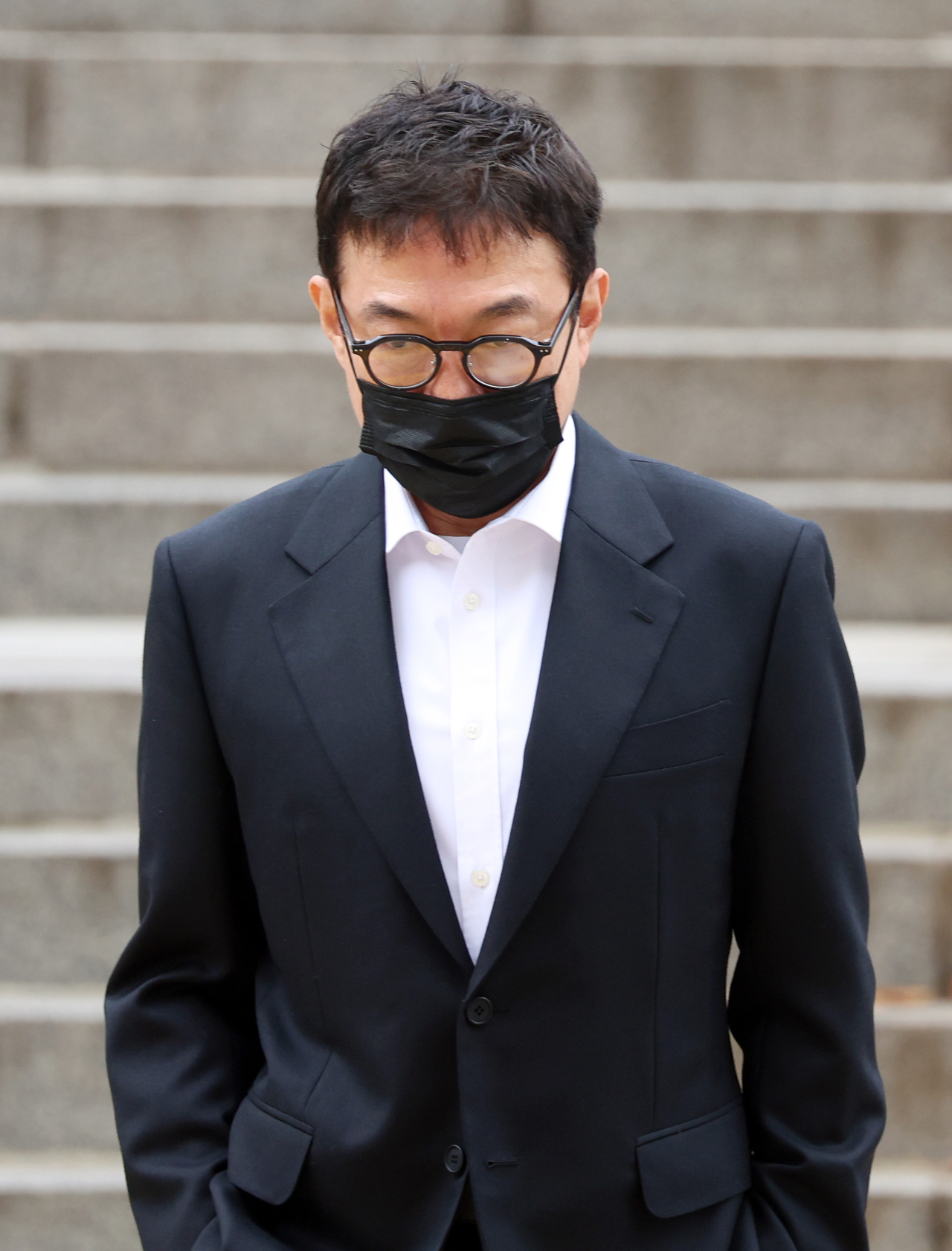
Actor Lee Jae-ryong (62), who faces charges of hit-and-run driving and deliberately drinking more alcohol after an accident to obstruct a breathalyzer test, has drawn public criticism after arriving at court with both hands stuffed in his pockets.
Seoul Central District Court Judge Lee Jae-wook presided over the first hearing Friday in the case against Lee, who was indicted on charges of failing to take necessary measures after an accident and obstructing a blood alcohol test under the Road Traffic Act.
Lee appeared at the courthouse wearing a black mask and a black suit. When reporters approached with questions, he walked into the building without a word, his hands buried in his trouser pockets. Critics said the display showed no sign of remorse for appearing before the public after committing a crime.
At the hearing, Lee admitted to the hit-and-run charge — failing to take required action after an accident — but denied deliberately drinking more alcohol to obstruct the breathalyzer test, saying he had no intention of making the alcohol measurement difficult.
Lee was indicted without detention in August on charges of crashing into a median barrier and fleeing the scene while driving near Cheongdam Station in Gangnam-gu, Seoul, at around 11 p.m. on March 6. He was arrested at an acquaintance's home about three hours after the accident, having attended another drinking session in the interim. Lee initially denied driving under the influence but later reversed his statement during a police investigation, saying he had drunk four glasses of soju before driving and thought he had only grazed the median barrier.

Prosecutors, however, determined that Lee's blood alcohol concentration at the time of driving could not be clearly established as 0.03 percent or above, and therefore did not apply a drunk driving charge. Critics note it is hard to believe that Lee — who once boasted on television of being able to drink 14 bottles of soju — caused an accident after only four glasses, or that his blood alcohol level was below 0.03 percent.
Instead of pursuing a drunk driving charge, prosecutors applied the Road Traffic Act provision on obstructing a blood alcohol test, concluding that Lee had consumed more alcohol after the accident to dilute his blood alcohol level and impede measurement — a practice colloquially known as "sool-tagi," or alcohol dilution.
Under the current Road Traffic Act, anyone who consumes alcohol or medication with the intent to obstruct a blood alcohol test faces between one and five years in prison or a fine of 5 million won ($3,750) to 20 million won. The provision was introduced following the 2024 case of trot music singer Kim Ho-joong and has been in effect since June last year.
paq@heraldcorp.com