About 1.296 million cases eligible; payments begin mid-November
Non-farm income ceiling raised from 37 million to 47 million won
Total payout falls 5.5 billion won despite wider eligibility
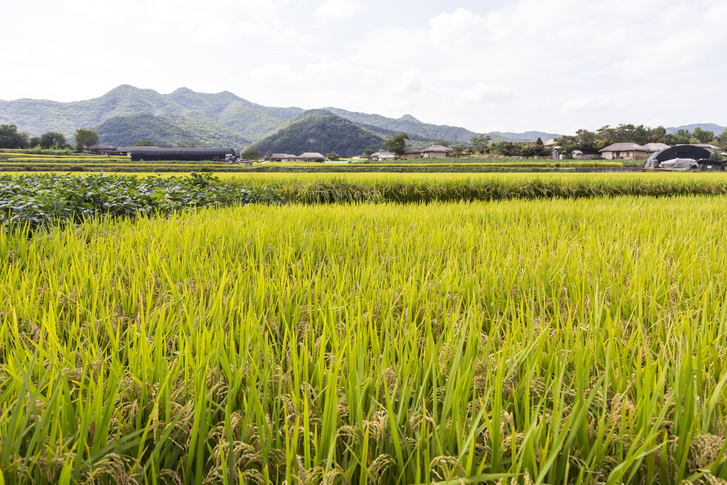
South Korea will begin disbursing 2.38 trillion won ($1.77 billion) in basic public-interest direct payments to farmers and farming households starting mid-November. The government eased its non-farm income threshold for the first time in 17 years, expanding the pool of eligible recipients by 11,000 cases compared with last year. However, a reduction in eligible farmland area trimmed the total payout by 5.5 billion won.
The Ministry of Agriculture, Food and Rural Affairs announced Thursday that it had finalized the recipients and amounts for this year's basic public-interest direct payments and would disburse the funds to local governments on a rolling basis starting mid-November.
A total of about 1.296 million cases — covering farming households, individual farmers and agricultural corporations — are eligible this year. The payment area has been set at 1.032 million hectares, with a total disbursement of 2.38 trillion won.
Breaking down the payments by type: the small-farm direct payment, which goes to small-scale farming households meeting certain requirements, will be paid to 544,000 households totaling 706.1 billion won, covering 159,000 hectares. The area-based direct payment, calculated according to farmland size and other factors, will go to 752,000 farmers and agricultural corporations totaling 1.67 trillion won, covering 873,000 hectares.
Dividing the area-based payment total by the number of recipients yields an average of about 2.22 million won per case. Actual amounts received will vary depending on farmland area, the applicable unit rate and any deductions.
The most significant policy change this year is the relaxation of the non-farm comprehensive income threshold. The government amended the Act on the Operation of the Direct Payment System for Promoting the Public Functions of Agriculture and Rural Areas on May 12, raising the non-farm income ceiling that determines eligibility from 37 million won to 47 million won — an increase of 10 million won. It was the first such adjustment in 17 years.
The revised threshold takes effect Friday and applies to those who registered for area-based direct payments this year. As a result, the number of eligible cases rose to about 1.296 million this year from about 1.285 million last year, an increase of 11,000. The ministry said the eased non-farm income standard was among the factors driving the expansion in eligible recipients.
Despite the broader eligibility, the total payout fell. The payment area this year stands at 1.032 million hectares, down 13,000 hectares from 1.045 million hectares last year, due to farmland conversion and eligibility verification. As a result, the total disbursement declined from 2.3843 trillion won last year to 2.3788 trillion won this year — a reduction of 5.5 billion won.
The government accepted a total of about 1.332 million subsidy applications from March through May this year. After cross-checking resident registration records, agricultural management entity registration data, land registers and non-farm income information, authorities disqualified about 36,000 cases from receiving payments.
Compliance checks required for payment were also conducted. Inspections covering 16 items — including maintaining the shape and function of farmland, safe use of pesticides and completion of public-interest function training — found violations in 17,255 cases. The resulting deductions amount to about 3.2 billion won.
The number of cases subject to deductions rose by 6,163 from 11,092 last year. The ministry said the increase partly reflects a larger inspection sample, and that the total amount deducted remained similar to last year's level because the amount flagged per case was lower.
The ministry plans to transfer subsidy funds to local governments by Friday. Local governments will then verify recipient details and account information and disburse payments on a rolling basis from mid-November through the end of December. The actual deposit date may vary depending on each local government's schedule.
Kang Dong-yun, the ministry's director general for rural income and energy policy, said the government had worked to ensure more farmers could benefit from the public-interest direct payment system this year through measures such as raising the non-farm income threshold to a more realistic level. "We will continue to actively reflect the voices from the farming community, improve the system on an ongoing basis, and strive to ensure that the public-interest direct payment system makes a genuine contribution to income stability for farmers and to enhancing the public functions of agriculture and rural areas," Kang said.
adastra@heraldcorp.com