Work draws on studies in Sweden and over 20 years of research at Seoul National University to chart a path for Korea

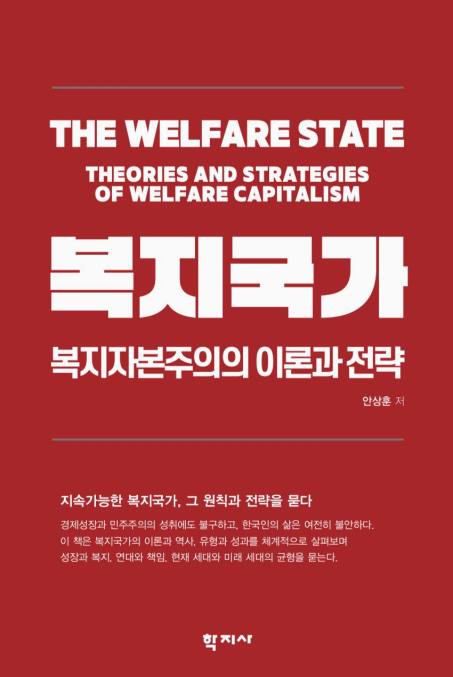
People Power Party lawmaker An Sang-hoon has published a new book outlining the direction South Korea should take in building a welfare state, titled "Welfare State: Theory and Strategy of Welfare Capitalism."
According to An's office, the book synthesizes research he conducted while studying welfare states in Sweden and teaching at Seoul National University for more than two decades.
Rather than debating whether to expand welfare spending, the book focuses on what kind of welfare state South Korea should build and how to sustain it — addressing new social challenges including the low birth rate, an aging population, growing inequality and AI-driven shifts in the labor market.
Organized into three parts and 13 chapters, the book examines the concept and ideology of the welfare state, its historical development, crises and restructuring, and analyzes welfare models and outcomes in major advanced economies. Building on that foundation, it proposes a Korean-style welfare state strategy suited to the demographic crisis and the Fourth Industrial Revolution.
An said the content and strategy of welfare spending matter as much as its scale. The book argues that strengthening income support for vulnerable groups while expanding social services — including child care, caregiving, education and employment — is essential to creating a virtuous cycle of growth and welfare.
"A welfare state is not a project that negates capitalism," An writes in the book. "It is an institutional correction and complement that allows the market economy and democracy to endure together by managing socially the risks and anxieties that capitalism produces."
An said that "a 'sustainable' welfare state is one that takes into account fiscal health, the economy and intergenerational equity," adding, "A welfare state must protect people's lives, but at the same time it must not pass on an unbearable burden to future generations."
"If we inflate the fiscal burden with populist policies designed to win immediate approval, the bill will ultimately fall on our children and future generations," An said. "What we must pass on to future generations is not an unmanageable debt, but a sustainable welfare state."
An added that he hopes the book will serve as "a solid introduction and core text for university students studying welfare policy, and a practical guide for citizens, politicians and officials who care about South Korea's future — one that helps them think together about the kind of welfare state we should aspire to build."
thanks@heraldcorp.com