District seeks to ease park and green space requirements, differentiate rental housing acquisition prices by region, and introduce public housing-based relocation support
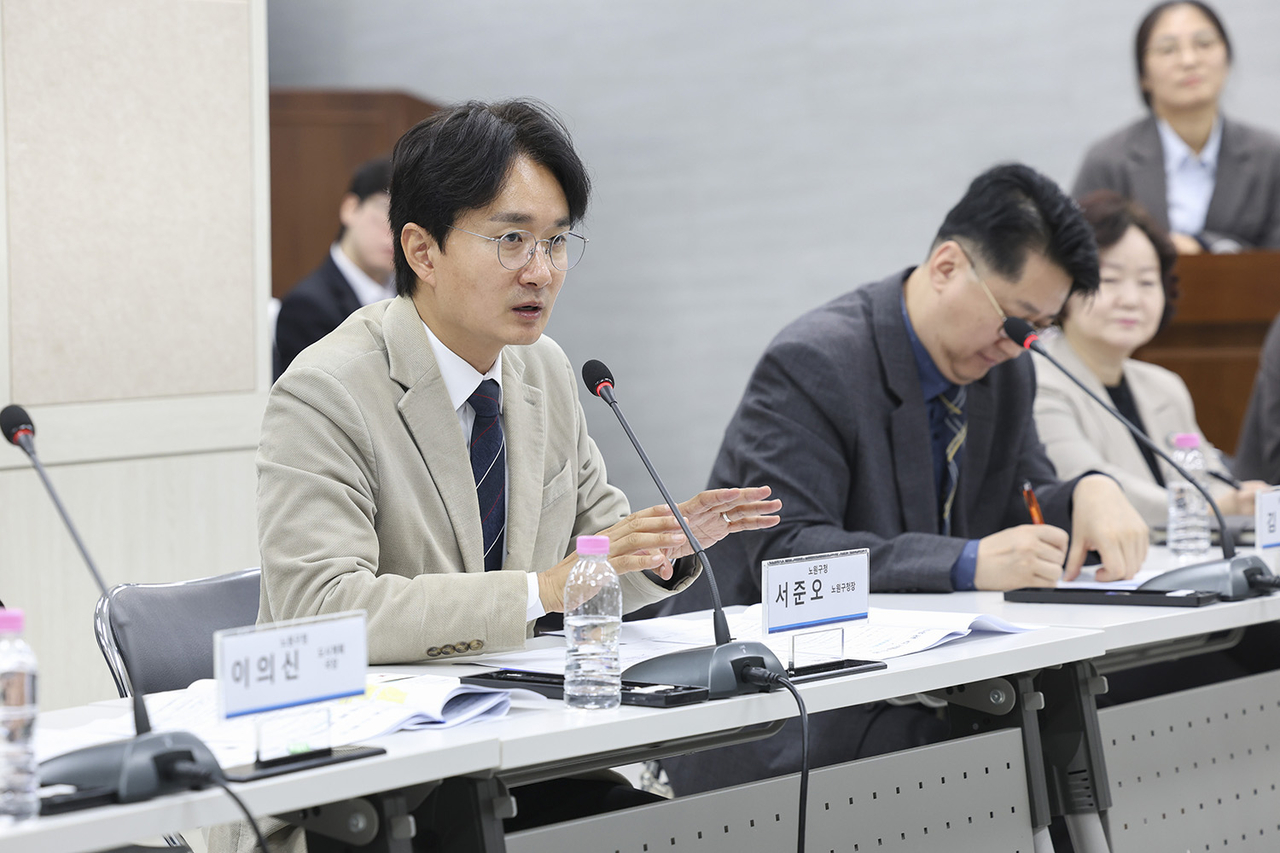
Nowon-gu in Seoul has moved to accelerate deregulation aimed at improving the viability of reconstruction and redevelopment projects in the district.
The district has asked the central government to further ease park and green space requirements, apply differentiated rental housing acquisition prices based on regional conditions, and establish a public housing-based relocation support system.
Nowon-gu said Wednesday it had formally submitted three regulatory reform proposals to the Ministry of Land, Infrastructure and Transport — proposals that District Mayor Seo Jun-o had first presented to the minister at the Sanggye District 2 redevelopment site on Oct. 30.
The three proposals cover easing park and green space requirements, adjusting rental housing acquisition prices to reflect market realities, and creating a relocation support framework using public housing. The district said the measures are intended to improve project viability and reduce the financial burden on association members and residents, thereby accelerating project timelines.
Park and green space standards eased — eligible sites to double from 6 to 12
The first proposal calls on the government to further relax park and green space requirements.
While the government's Aug. 13 real estate package partially eased the relevant standards, Nowon-gu said the scope and eligibility conditions remain too narrow for most project sites to benefit in practice.
Under current rules, projects building 1,000 or more units where at least two-thirds of all units are small homes with an exclusive use area of 60 square meters or less may reduce the required park and green space per unit from 3 square meters to 2 square meters.
Nowon-gu proposed exempting projects with fewer than 2,000 units from the park and green space obligation entirely, and lowering the small-unit supply requirement for projects of 2,000 units or more to at least half of all units.
The district also asked the government to abolish the temporary deadline for filing project implementation authorization applications, and to establish standards allowing the park and green space obligation to be waived or reduced when existing parks are already located near a project site.
If the proposals are adopted, the district projects that the number of eligible sites would double from six to 12.
Rental housing acquisition prices to reflect regional pre-sale prices
The second proposal concerns the regional differentiation of rental housing acquisition prices.
Under the Aug. 13 real estate package, rental housing acquisition prices are set to rise to 80 percent of the standard construction cost, but Nowon-gu said a uniform increase alone would not resolve the difficulties facing areas with low project viability.
Nowon-gu in particular faces lower general pre-sale prices compared with Gangnam and other high-value areas, while association members bear a relatively heavier financial burden, making it harder to push projects forward.
The district proposed that when a project site's general pre-sale price falls below the regional average, the shortfall be added on top of the 80 percent of standard construction cost to arrive at a differentiated acquisition price. It also asked the ministry to revise the relevant ministerial notice so that the same standard applies to urban renewal promotion projects.
LH and SH to support relocation — district proposes 'relocation support housing'
The third proposal focuses on establishing a public housing-based relocation support system for reconstruction and redevelopment projects.
Nowon-gu said that as multiple reconstruction and redevelopment projects in the district are set to move into full swing, large-scale relocation demand could concentrate in a short period, making systematic public-sector involvement essential.
To address this, the district proposed introducing a "relocation project operator" designation under the Act on the Improvement of Urban Areas and Residential Environments.
Drawing on a similar framework in the Special Act on the Improvement and Support of Aging Planned Cities, the proposal would allow public institutions such as Korea Land and Housing Corp. and Seoul Housing and Communities Corp., as well as private rental operators, to be designated as relocation project operators. They would be empowered to provide long-term low-interest resettlement loans, develop relocation complexes, supply rotation housing and public rental housing, and operate temporary accommodation facilities.
The district also proposed creating a new "relocation support housing" scheme for residents whose homes have been or are scheduled to be demolished under redevelopment projects.
The idea is to amend public housing legislation to supply public housing to landowners and tenants who meet certain income and asset thresholds, reducing housing instability during the relocation process and supporting stable resettlement.
Nowon-gu is pursuing "Reconstruction and Redevelopment Regulatory Reform 100" as a flagship initiative of the current district administration, with a goal of identifying and improving 100 unreasonable regulations within the mayor's term.
Including the latest submission, the district has formally proposed a total of 15 regulatory reform measures — six to the Ministry of Land, Infrastructure and Transport and nine to the Seoul Metropolitan Government — of which four have already been reflected in actual policy changes.
"Reconstruction and redevelopment is not simply about replacing old housing with new buildings — it is an important undertaking to improve residents' living conditions and prepare for the future of the community," District Mayor Seo said. "Based on the voices from the field, we will actively identify unreasonable regulations, work closely with the central government, and push for institutional reforms that reduce the burden on residents and expand housing supply."
seouldream01@heraldcorp.com