Elementary students receive 3,933 won per meal, 620 won less than Seoul peers
Per-meal gap of up to 940 won based on school size
Four Songdo elementary schools each enroll more than 1,500 students
Lawmaker calls for full review of meal cost calculation standards
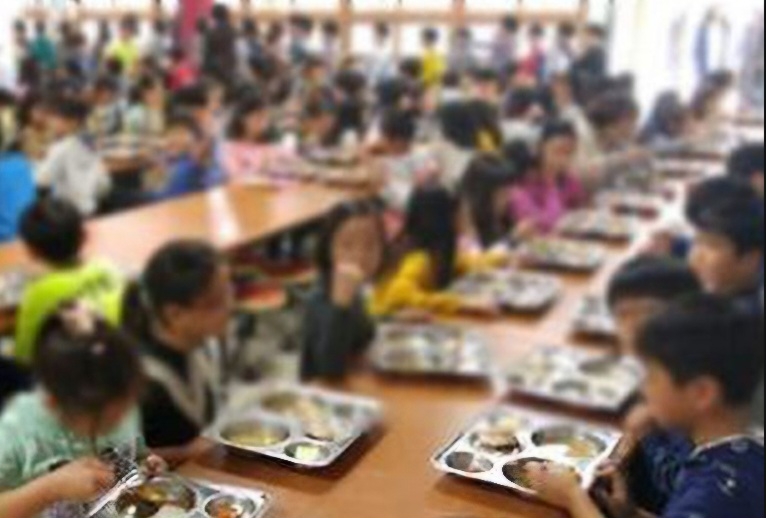
School meal food budgets for students in Incheon rank among the lowest in the country.
The situation stirs controversy over the fairness of the city's meal funding formula, as per-meal support rates have been found to vary by as much as 940 won depending on school size.
Concerns have been raised at the Incheon Metropolitan Council that the current tiered funding system particularly disadvantages students at large schools concentrated in Songdo International City, where many students receive a relatively lower per-meal food subsidy.
Cho Min-gyeong, a Democratic Party of Korea lawmaker on the Incheon Metropolitan Council's Industry and Economy Committee representing Yeonsu-gu District 4, raised the issue Wednesday during an administrative audit of the city's agriculture, fisheries and food bureau, questioning both Incheon's national standing on school meal food costs and the gap in per-meal support rates across schools.
According to national audit data Cho presented, the per-meal food cost per student in Incheon stands at 3,933 won for elementary school, 4,553 won for middle school and 4,873 won for high school — ranking 14th out of 17 cities and provinces nationwide across all three levels.
For elementary students, that figure is 620 won less than the 4,553 won per meal provided to students in Seoul.
Incheon has committed 284.6 billion won ($212 million) to school meal support this year, yet the food cost per student remains stuck near the bottom of national rankings.
The problem is compounded by wide disparities within Incheon itself: the food subsidy a student receives varies significantly depending on how many students are enrolled at their school.
Under the Incheon Metropolitan Office of Education's basic guidelines for school meals for the 2026 academic year, the per-meal food support rate for urban elementary schools is set at 4,140 won for schools with 100 or fewer students, but drops to 3,200 won for schools with 1,501 or more. That gap of up to 940 won is based solely on school size.
That funding structure weighs most heavily on Songdo, where large schools are concentrated.
Public school disclosure data show that the 16 elementary schools in Songdo-dong enrolled a combined 16,592 students last year.
Four of those schools — Incheon Cheomdan Elementary with 1,582 students, Misong Elementary with 1,554, Sinjeong Elementary with 1,519 and Eunsong Elementary with 1,502 — each exceeded 1,500 enrolled students.
About 75 percent of elementary students in Songdo attend schools with more than 901 students enrolled.
Given that the current system applies lower per-meal food support rates to larger schools, Cho argued that a substantial share of students are placed at a structural disadvantage.
Cho acknowledged that bulk purchasing may reduce ingredient costs at larger schools, but said objective verification is needed before using school size alone as the basis for cutting support rates.
In particular, Cho said, setting a differential of up to 940 won without comparing actual ingredient purchase prices between small and large schools calls into question the validity of the current per-meal support formula.
Cho called on the city to compare ingredient purchase costs and actual meal operating expenses across schools, and to determine whether any schools are covering shortfalls out of their own budgets because the allocated subsidy is insufficient.
The transparency of the rate-setting process also came under scrutiny. Incheon agreed at an education administration council meeting in 2023 to set meal rates in line with inflation.
Regarding that agreement, Cho urged the city to release the food cost increase rates, the per-meal rates requested by the Incheon Metropolitan Office of Education, and the rates actually confirmed over the past three years, so that compliance with the agreement can be verified.
Cho said the intent behind providing relatively higher support to smaller schools is not in question, but added that it must be confirmed whether setting lower food costs for larger schools solely because of their enrollment size reflects a rational standard grounded in actual ingredient purchase costs.
"With Incheon students' meal food costs already near the bottom nationally, the support system that creates gaps of up to 940 won based on school size must also be reformed," Cho said. "The 2027 school meal support plan should incorporate both a raise in the base food cost and an adjustment to the tiered per-student rate structure."
gilbert@heraldcorp.com