Average vacancy rate across Seoul's 6 major retail districts falls to 7.1%
K-beauty, large-format pharmacies drive leasing activity
Global brands anchor new flagship openings in Gangnam, Cheongdam
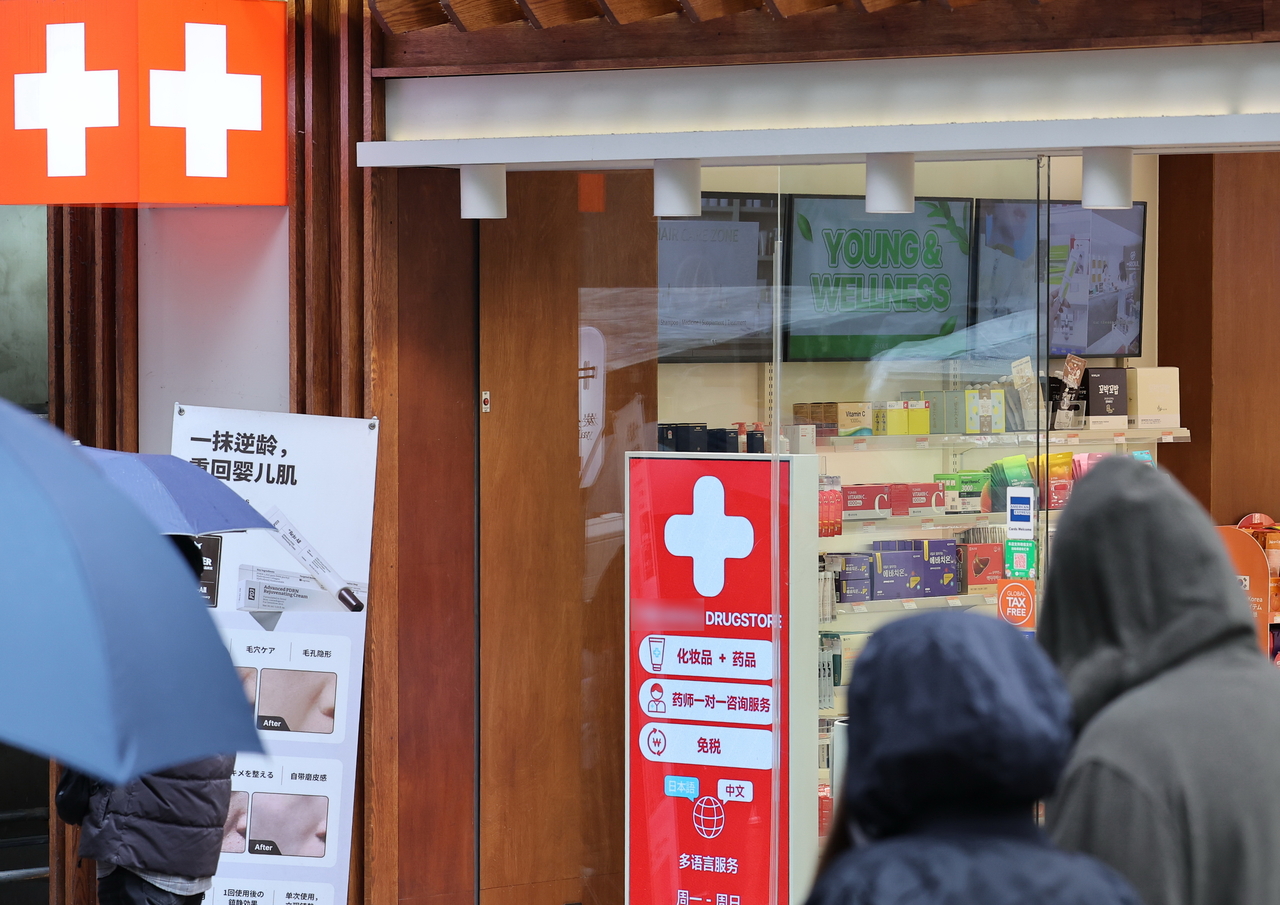
Vacancy rates across Seoul's major retail districts have fallen to single digits across the board, as a surge in foreign tourists accelerates the reshaping of commercial strips around medical, beauty and shopping businesses catering to visitors. In Myeong-dong and Seongsu, vacancy rates have dropped to the 3 percent range, putting both districts in effect at full capacity.
According to the "Seoul Retail MarketBeat" report released Tuesday by Cushman & Wakefield Korea, the average vacancy rate across Seoul's six major street retail districts — Myeong-dong, Gangnam, Hongdae, Hannam and Itaewon, Cheongdam, and Seongsu — fell to 7.1 percent in the third quarter of this year, down 1.4 percentage points quarter-on-quarter and 2.1 percentage points from the same period a year earlier.
Rising tourist arrivals have energized the retail market and quickened its transformation. According to the Korea Tourism Organization, about 6.4 million foreign visitors came to South Korea in the third quarter, and annual arrivals are expected to reach 20 million for the first time in history. Global brands scouting strategic locations have also played a role.
By district, Myeong-dong and Seongsu had almost no vacancies. Seongsu posted the lowest vacancy rate among the six districts at 3.7 percent, driven by the opening of large-format pharmacies stocking cosmetics that have capitalized on the K-beauty and medical tourism boom.
Myeong-dong was close behind at 3.9 percent, the second lowest. The district's shift toward tourism-oriented businesses is accelerating — in July, First Cabin, one of Japan's three major capsule hotel brands, opened at Noon Square, a prime mixed-use property in the heart of the area.
"Myeong-dong has no empty space left, so new demand is being absorbed through store replacements," Cushman & Wakefield Korea said. "For example, Salomon moved into the space previously occupied by Eider, and Wilson took over the spot Salomon vacated."
Gangnam's vacancy rate fell 4.3 percentage points quarter-on-quarter to 8.5 percent, driven by a wave of large flagship store openings along Gangnam-daero. Chipotle, for instance, chose Gangnam as its first location in Asia, opening during the quarter.
Cheongdam is cementing its status as a high-end retail hub as global luxury brands continue to converge on the district. Its vacancy rate dropped 2.5 percentage points quarter-on-quarter to 9.4 percent. Loca, a luxury multi-brand watch boutique under the Damiani Group, made its domestic debut there, and flagship stores for Rolex and Tiffany & Co. are expected to open soon.
Hongdae also saw its vacancy rate fall from 10.4 percent to 8.7 percent, as beauty-sector tenants led the charge. Musinsa Beauty opened its first standalone offline store, spanning four floors.
Hannam and Itaewon bucked the trend, with the vacancy rate rising 1.5 percentage points quarter-on-quarter to 8.5 percent. New brands including The Barnet and W Concept opened locations, but a simultaneous wave of store closures temporarily pushed vacancies higher.
"Seoul's retail market in the third quarter showed a clear recovery in key commercial districts, driven by foreign demand and large-scale openings by global brands," said Yoon Hwa-seop, managing director of the retail leasing group at Cushman & Wakefield Korea. "But since the types of businesses and brands driving demand differ by district, a selective approach tailored to location and target customer will be the key to leasing strategy going forward."
lucky@heraldcorp.com