Samsung SDI, SK On among companies joining ESG joint declaration
The South Korean government has moved to address difficulties facing Korean companies in Hungary after the country's new government tightened environmental regulations on battery manufacturing facilities.
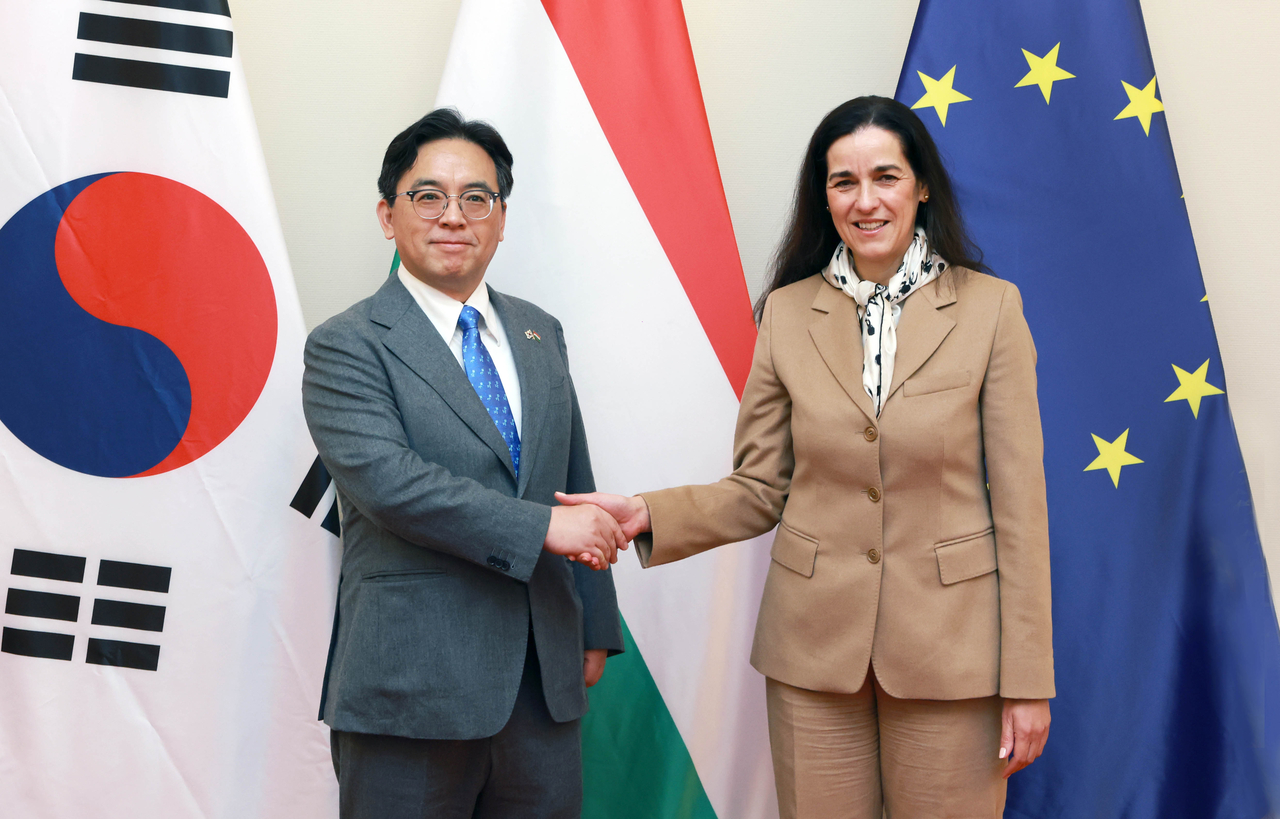
The Ministry of Trade, Industry and Energy said Park Jeong-seong, chief of the ministry's trade negotiation bureau, visited Hungary on Monday (local time) and held separate meetings with Deputy Prime Minister and Foreign Affairs Minister Anita Orban, Economy and Energy Minister Istvan Kapitany, and Regional Development Minister Viktoria Lorincz.
The visit came amid growing uncertainty over battery operations in Hungary following the tightening of environmental regulations after the new government of Prime Minister Magyar Peter took office in May.
Park told his counterparts that South Korea, as Hungary's largest Asian investor, has contributed to the country's economic development through job creation and supply chain strengthening in advanced manufacturing sectors including automobiles, batteries and electronics.
Park stressed the importance of the battery sector as a strategic industry for Hungary's carbon neutrality and renewable energy goals, and as a driver of synergies with related industries such as electric vehicles, urging Hungarian officials to ensure Korean companies can operate smoothly in the country.
Park also argued that Korean companies actively leveraging the production base and technological capabilities they have built in Hungary aligns with the intent of the EU's Industrial Acceleration Act, which favors locally produced goods, and would enhance Hungary's standing as a key production and supply hub within Europe.
On the EU Battery Regulation — which mandates carbon emissions reporting, the use of recycled materials and supply chain due diligence — Park requested that Korean companies be given sufficient preparation time and that the regime be administered reasonably.
Park then co-hosted a joint ESG management declaration ceremony with Korean battery companies operating in Hungary, the Korea Battery Industry Association, the South Korean Embassy in Hungary and KOTRA, reaffirming their commitment to voluntary compliance in environmental, health and safety matters and to building a mutually beneficial ecosystem.
"Companies such as Samsung SDI and SK On have invested more than $8 billion in Hungary, playing an important role in the economic and industrial development of both countries," Park said. "The government will actively support our companies so they can continue investing and operating in a stable environment while fulfilling their social responsibilities."
Hungary emerged as a major European production hub for batteries under former Prime Minister Viktor Orban's government, which focused heavily on attracting foreign direct investment to develop the sector. The policy direction shifted sharply after the new government took office and began tightening regulations.
Samsung SDI and SK On have both been fined for environmental regulation violations, adding to the mounting business risks the two companies face.
oskymoon@heraldcorp.com