Hydrogen fuel cell replaces diesel engine
Autonomous driving integrated; field trials and performance tests underway
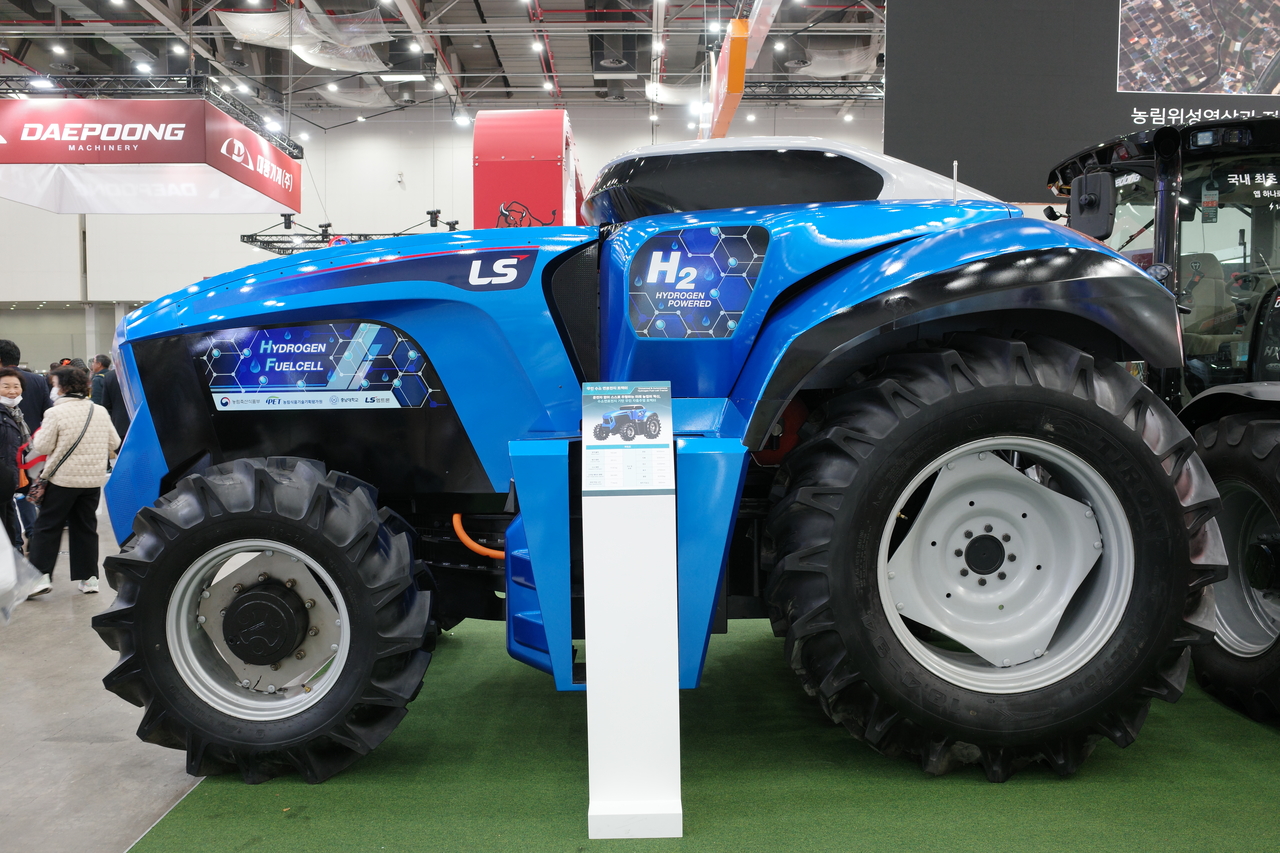
A large tractor that can perform farm work without a driver and runs on hydrogen instead of a diesel engine is under development. The 110-kilowatt unmanned tractor combines hydrogen fuel cell technology with autonomous driving and is currently being tested in actual farming environments for driving performance and unmanned operation.
The Korea Institute of Planning and Evaluation for Technology in Food, Agriculture and Forestry announced Monday that it showcased the hydrogen fuel cell-based unmanned tractor — developed under the Ministry of Agriculture, Food and Rural Affairs' eco-friendly power source agricultural machinery technology development project — at KIEMSTA 2026, held at Daegu EXCO from Wednesday through Saturday.
The tractor is being developed by a research team led by Professor Kim Yong-ju of Chungnam National University. It replaces a conventional diesel engine with a hydrogen fuel cell and integrates autonomous driving and unmanned operation control technology.
The tractor generates electricity through a chemical reaction between hydrogen and oxygen to power its motor. It uses a power supply system combining a hydrogen fuel cell and a high-voltage battery, ensuring sufficient output for large agricultural machinery. The system delivers stable power even as workloads fluctuate during farm operations.
With autonomous driving technology, the tractor can carry out farm work without anyone on board. The research team is currently testing driving performance and unmanned operation control functions in real agricultural settings to verify the technology's practical potential.
Hydrogen fuel cells produce no direct carbon dioxide emissions during operation. The institute expects that replacing diesel tractors with hydrogen-powered alternatives could help reduce greenhouse gas emissions from the agricultural sector. The unmanned operation technology is also drawing attention as a means of addressing labor shortages caused by rural population decline and aging.
However, the tractor unveiled this week is still in the development stage. The research team plans to conduct further verification of driving and farming performance as well as safety, and to pursue commercialization after obtaining relevant certifications and establishing a production system.
Park Hong-jae, president of the institute, said the development of the hydrogen-powered unmanned tractor "is a meaningful achievement that points the way forward for future agricultural machinery by combining eco-friendly power sources with unmanned technology." He added that the institute would "actively support the development of advanced agricultural machinery technology that reflects the needs of the farming sector, contributing to strengthening the technological competitiveness of the domestic agricultural machinery industry and spreading research outcomes into the field."
adastra@heraldcorp.com