80,000 rally as major unions warn of policy alliance collapse
Retirement age, labor exemptions, direct bargaining fuel standoff; business costs add pressure
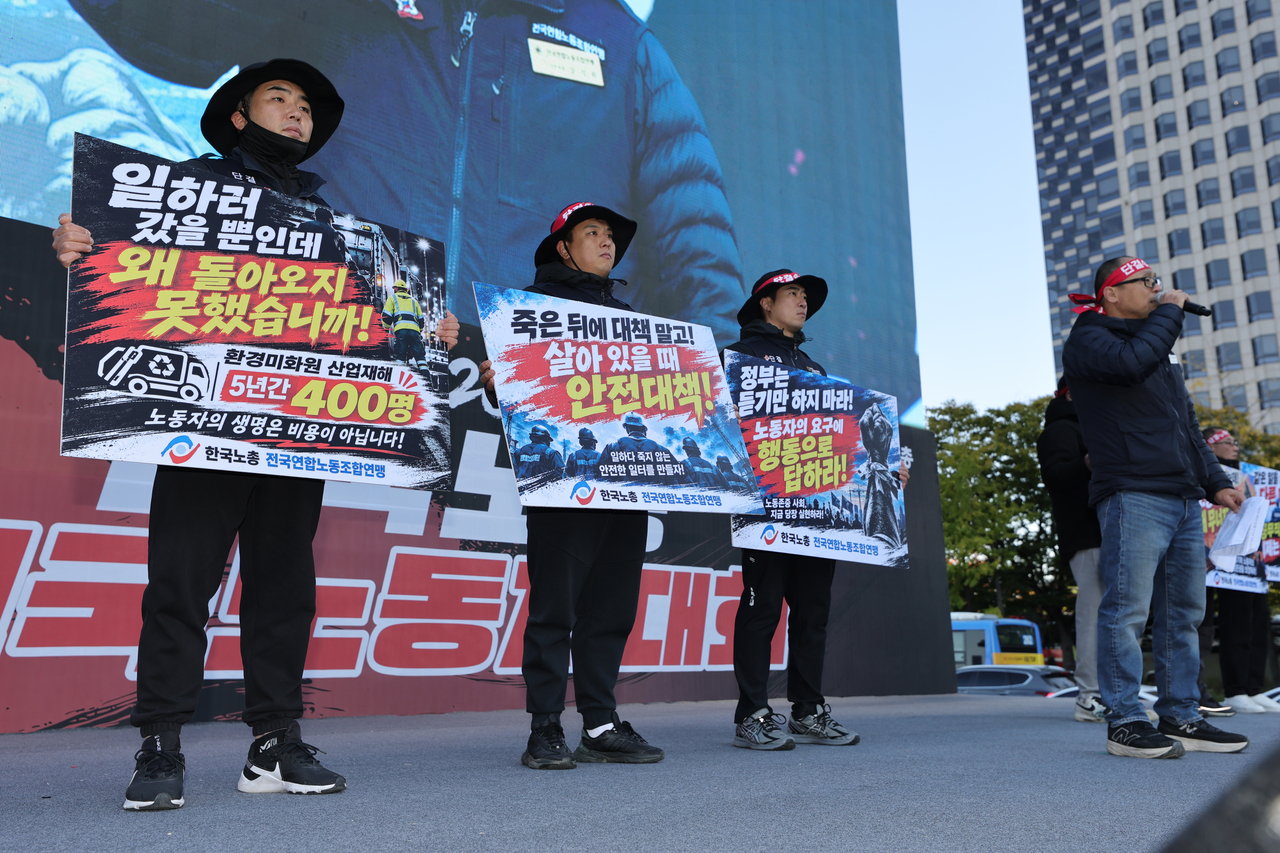
The Lee Jae-myung government, which built its early identity around cooperation with organized labor, faces a critical test in that relationship just over a year into its term. Delays in legislating a mandatory retirement age of 65, combined with disputes over labor regulation exemptions in so-called super-regional special zones and direct bargaining rights with primary contractors, have put the administration on the defensive. Even the Federation of Korean Trade Unions — which signed a policy alliance with President Lee Jae-myung during the presidential election — has raised the possibility of tearing up that agreement, deepening the government's predicament.
At the same time, the government cannot easily give in to labor's demands. Concerns over rising personnel costs for businesses, a potential chill on youth hiring, and the need for flexible working hours in advanced industries all complicate any straightforward accommodation.
According to labor circles, the Federation of Korean Trade Unions and the Korean Confederation of Trade Unions held separate national workers' rallies on Saturday — one in Seoul and one in Changwon, South Gyeongsang Province. Organizers estimated a combined turnout of 80,000. Both federations urged the government to legislate the retirement age extension, secure meaningful direct bargaining rights with primary contractors, and withdraw the proposed labor exemptions for super-regional special zones. Though their specific demands differ, the simultaneous outpouring of discontent over the government's labor policies drew wide attention.
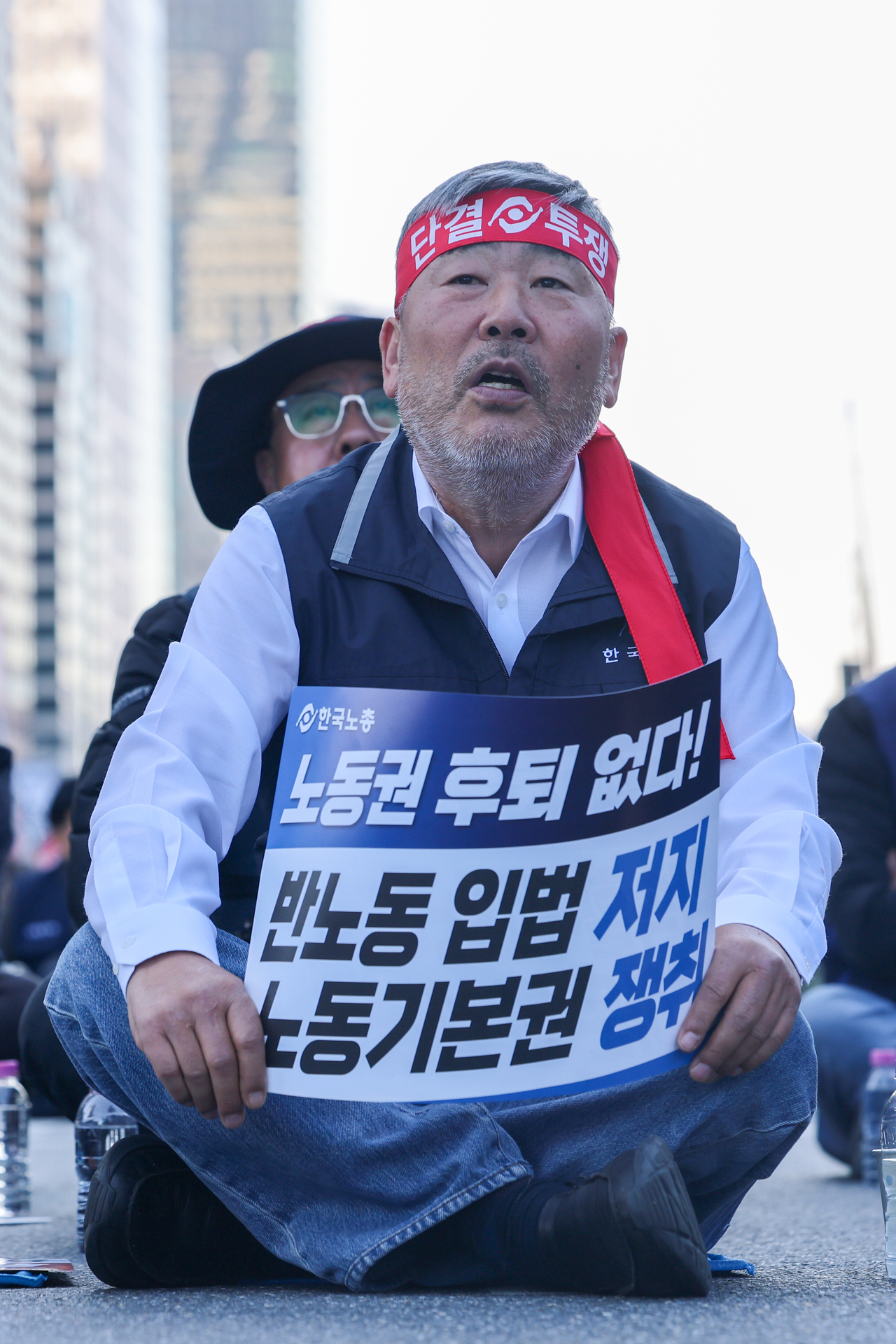
Particularly significant is the pushback from the Federation of Korean Trade Unions. Chairman Kim Dong-myung warned that "if no meaningful legislative progress — including on the retirement age extension — is made by year's end, we may tear up the policy alliance signed with President Lee Jae-myung and the Democratic Party of Korea." With even the government's primary labor partner signaling a hard line, the risk of a breakdown in trust with organized labor has grown considerably.
The central flashpoint is the proposed extension of the mandatory retirement age to 65. Labor groups are demanding legislation this year to close the income gap between the age at which workers must retire and the age at which they become eligible for national pension benefits. Business groups counter that raising the retirement age without first reforming the seniority-based wage system would drive up personnel costs and leave companies with less capacity to hire young workers. Small and medium-sized enterprises in particular may struggle to sustain the cost of retaining older employees, making complementary measures — such as wage structure reform and post-retirement rehiring schemes — necessary, industry representatives say.
The proposed labor exemptions for super-regional special zones are another flashpoint. Labor groups oppose provisions that would allow exceptions to the 52-hour weekly work limit and extend the permitted duration of fixed-term contracts, arguing these measures would lead to longer working hours and greater job insecurity. Proponents counter that industries such as semiconductors and research and development have workloads that concentrate at specific times of year, making flexible working-hour arrangements essential. The government must find a balance between stimulating regional investment and protecting workers' rights.
Disputes over direct bargaining with primary contractors, following the revised Trade Union Act taking effect, add further strain. The Korean Confederation of Trade Unions is demanding that subcontracted workers be guaranteed substantive bargaining rights, but industry groups warn that if the scope of primary employers' legal responsibility and the permissible bargaining agenda remain unclear, companies will face heavier labor-management burdens and greater operational uncertainty. If a stable bargaining structure fails to take hold, labor conflicts on the ground could drag on indefinitely.
The broader concern is that the standoff between the government and labor could ripple across economic and employment policy as a whole. Fully accommodating labor's demands risks raising business costs and rigidifying the labor market, while tilting toward deregulation risks alienating unions and making meaningful social dialogue impossible. The effectiveness of the social dialogue framework that Employment and Labor Minister Kim Young-hoon has championed is now squarely on the line.
fact0514@heraldcorp.com