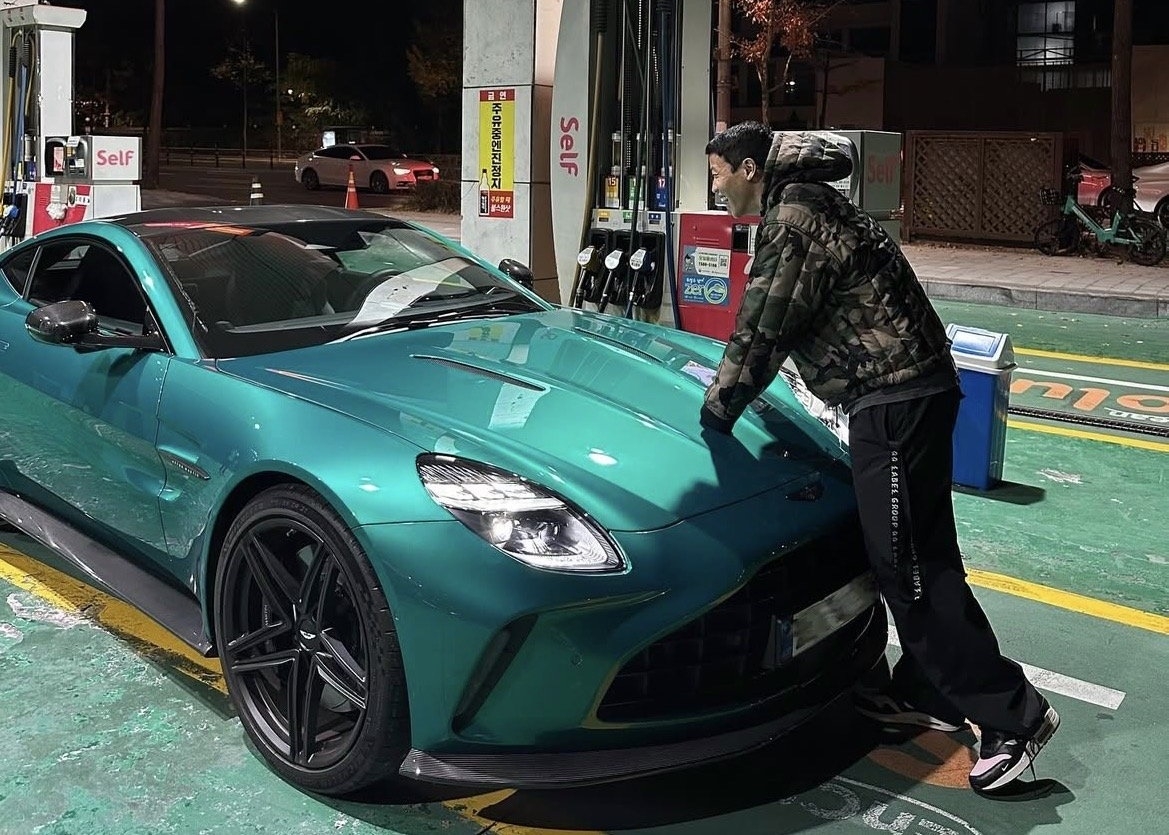
South Korean national team footballer Hwang Hee-chan, 30, has been sued on fraud charges after allegedly accepting 42 supercars and other vehicles under a promotional contract while never fulfilling the agreed promotional obligations. Legal experts say a criminal conviction will be difficult to secure.
A legal YouTube channel called "Gaebap Juneun Byeonhosa" recently covered the full background of the case and the legal issues at stake in a video.
Hwang was recently sued by Vahana, a VIP vehicle service company, on charges of fraud and joint intimidation, stemming from allegations that he failed to honor a promotional contract and made excessive demands for chauffeur services.
Vahana's representative said the company provided Hwang with a total of 42 vehicles — including supercars and VIP cars — over roughly 15 months, yet the brand promotion on social media that was a core condition of the contract was never carried out even once.
The representative also said Hwang repeatedly requested specific high-end models such as the G-Wagon, Urus, Huracán and Ferrari, and that frequent vehicle swaps and damage caused enormous losses. The representative pointed to the fact that Hwang's side had asked for the social media posting clause to be removed just before the main contract was signed, arguing that Hwang "had no intention of fulfilling the promotional obligation from the outset and fraudulently obtained the vehicles."
Hwang's side has denied all allegations. His agency said the other party had expressed gratitude at the time the contract ended, indicating the two sides had parted on good terms, only to make contradictory claims afterward. "We have secured sufficient objective evidence, including audio recordings from when the contract ended, and will make the facts clear," the agency said.
The YouTube channel said that the mere failure to fulfill a promotional obligation is unlikely on its own to constitute fraud. It noted that criminal intent — meaning Hwang had no intention of carrying out the promotion from the moment he accepted the vehicles — would need to be proven.
"This is closer to a civil breach-of-contract issue than criminal fraud," the channel said. "If it is true that he enjoyed the vehicle benefits without performing the promotional duties that were the core contractual obligation, it would be difficult to avoid liability for damages as a clear breach of contract."
On the question of whether criminal fraud charges could be established, the channel said: "For fraud to be established, it must be strictly proven that at the time the contract was signed, the accused had no intention or ability to carry out the promotion, yet fraudulently obtained the vehicles — that is, a deliberate intent to deceive."
The analysis also noted that criminal liability could hinge on whether the contracting party was Hwang personally or a family-run management agency, making a criminal conviction even less straightforward.
However, the channel said that regardless of legal liability, Hwang would find it hard to escape moral criticism as a public figure. "Renting a supercar for a single day costs millions of won. He continued to receive the benefits without paying the price for them," it said.
bbo@heraldcorp.com