AI use in US divorce, custody disputes surges
80% of attorneys report AI-drafted client documents
148 rulings flag AI-generated errors including fake case citations
Florida court halts man who filed 145 AI-assisted motions
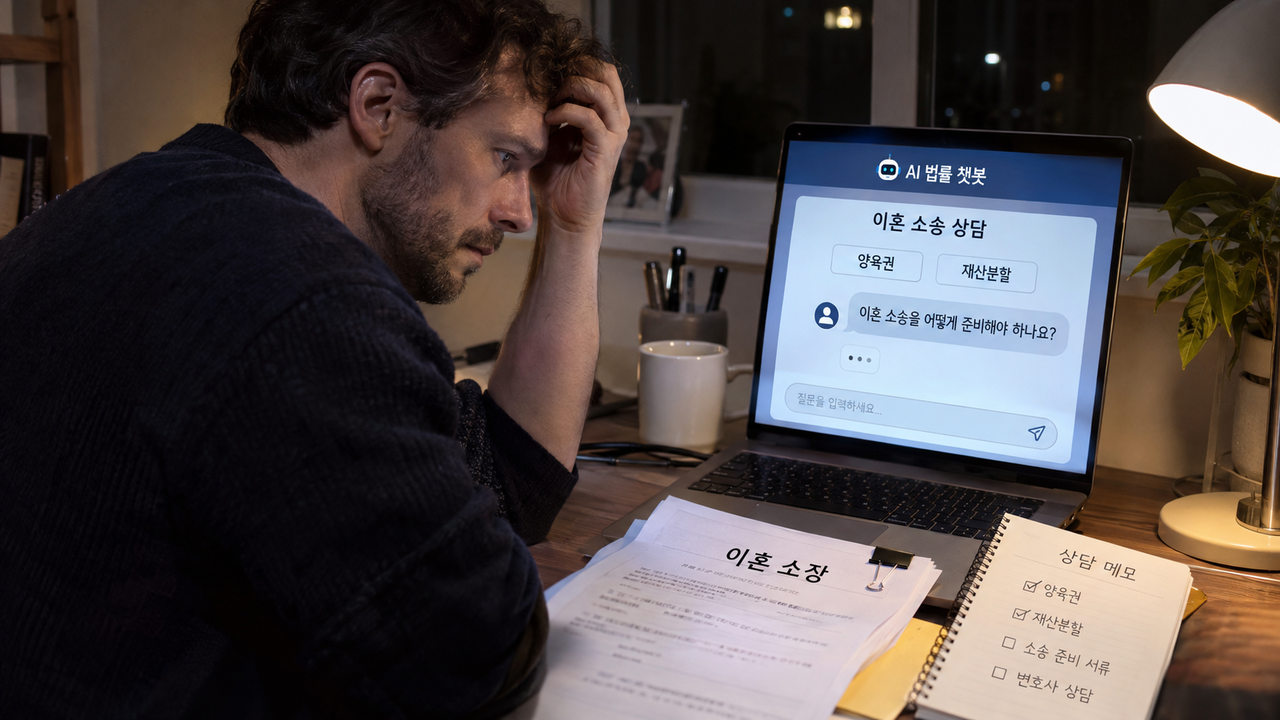
Lawyers and judges in the United States are struggling to cope as a growing number of people turn to AI chatbots for help with divorce and child custody disputes. Many have sought guidance from ChatGPT to avoid attorney fees, only to find themselves in deeper trouble after acting on faulty legal interpretations.
According to the Wall Street Journal on Friday (local time), divorce attorneys are seeing a sharp rise in clients who arrive with AI-generated legal advice, litigation strategies and draft documents prepared by chatbots such as ChatGPT.
A survey of 133 attorneys at Cordell & Cordell, a US divorce law firm, conducted earlier this year found that 80 percent of respondents had received letters, draft filings or response strategies from clients that appeared to have been written by AI.
The core problem is that AI-generated answers do not always hold up in court. Divorce and custody cases frequently involve competing accounts from both sides, yet AI chatbots tend to accept whatever the user inputs as fact and steer their responses in the direction the questioner wants to hear, critics say.
Some people who trusted chatbot legal advice ended up wasting more time and money than they would have otherwise.
One person who runs an online wellness company agreed at the time of divorce to pay a substantial spousal support amount tied to business revenue. Years later, when the money taken home from the company dropped significantly, the person asked an AI chatbot whether a court would grant a reduction in support payments.
The chatbot responded that winning such a request would be straightforward. But it had not reviewed the company's financial statements, nor had it considered that personal spending had not decreased even as income fell. The person pursued the case following the AI's suggested strategy and lost.
Hossein Berenji, a Los Angeles family law attorney who later took on the case, told the Wall Street Journal that the money the client paid the first attorney "was essentially thrown away" and that the client had likely been overpaying spousal support for years.
Cases in which AI chatbots have fed users incorrect legal information and influenced court proceedings are also multiplying. The problem of AI fabricating nonexistent case citations or legal principles has begun surfacing in family law matters.
Damien Charlotin, an adjunct professor at UC College of the Law San Francisco, found that judges had flagged AI-suspected errors — including citations to fabricated cases — in 148 family law rulings. More than 100 of those rulings came this year.
The flood of AI-drafted filings is straining not only attorneys but also judges, who must spend considerable time and resources reviewing AI-generated legal arguments and correcting errors.
In Florida, a person representing themselves in a divorce case filed at least 145 motions with the help of AI, the Wall Street Journal reported. Court records show the person later submitted to an appeals court a 45-page AI-written document along with an 863-page appendix laying out their arguments.
The court ultimately ordered its clerk in May not to accept any further filings from the person unless they bore an attorney's signature.
The Wall Street Journal said AI chatbots are drawing attention as a potential way to reduce the cost of legal representation in divorce and custody disputes, but their limitations are also becoming clear — including inaccurate legal interpretations and the uncritical acceptance of one-sided accounts. Caution is particularly warranted in cases where both sides' claims are sharply at odds, such as family disputes, because AI may simply accept the user's version of events or tell them what they want to hear.
yckim6452@heraldcorp.com