Kim Tae-geun, current secretary for local governance, tapped as successor
'Leaving Cheong Wa Dae, where graduating is harder than getting in'
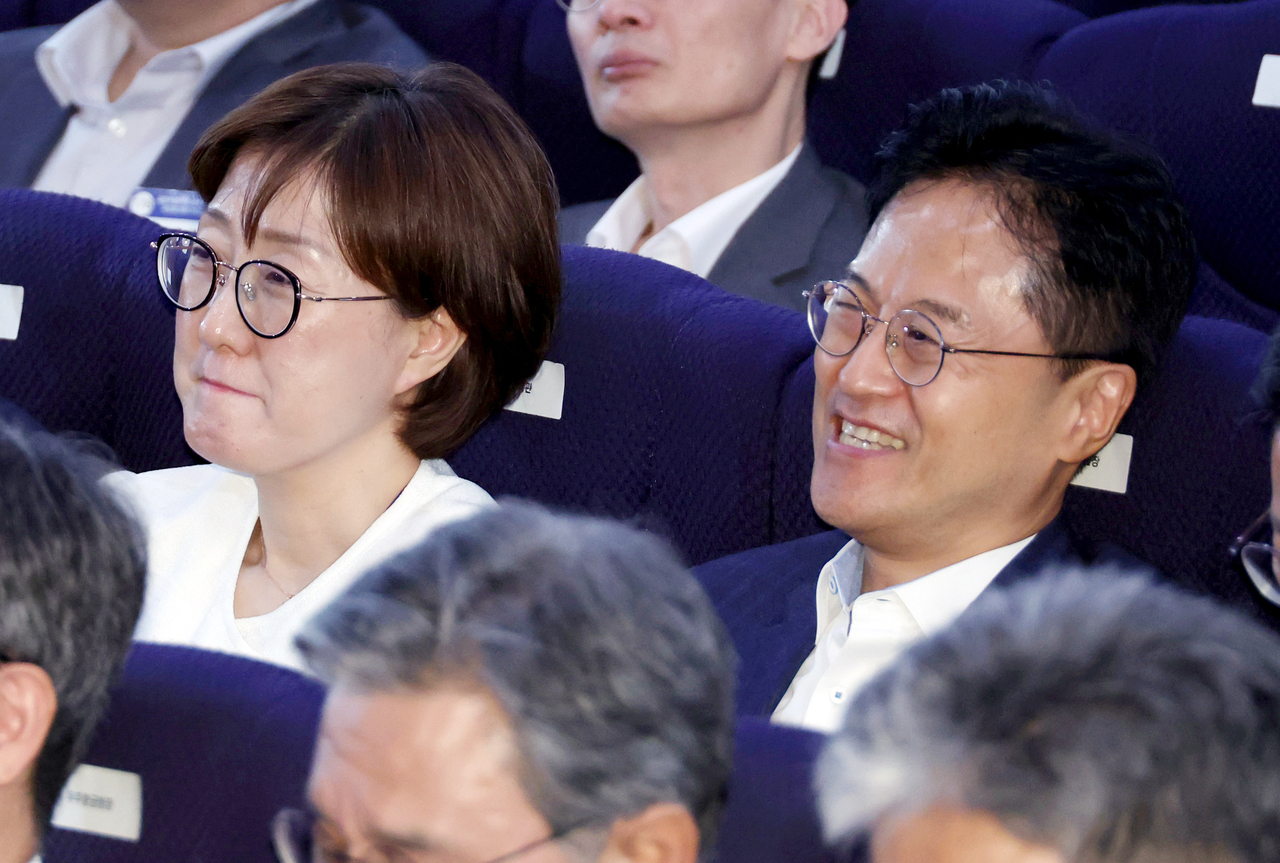
Kim Jung-woo, who headed the Cheong Wa Dae Office of State Affairs as the government's operational control tower, is stepping down.
In a Facebook post Sunday, Kim said he was "leaving Cheong Wa Dae, where graduating is harder than getting in," adding that he had "run without rest for the past 470 days." "Every single day was a string of tension, but it was the greatest honor to serve President Lee Jae Myung up close for the success of the people's sovereignty government," he wrote.
Kim said the Office of State Affairs plays a somewhat different role from other senior secretariat offices at Cheong Wa Dae. "Rather than visible achievements, it monitors the overall state of governance from behind the scenes — preparing for the unexpected and responding swiftly when problems arise," he wrote.
He invoked the image of a swan gliding gracefully across a lake while paddling furiously beneath the surface. "The role of the Office of State Affairs is no different," he wrote. "It is a position that must move ceaselessly and stay alert in unseen places so that governance, as the public sees it, can appear stable and calm."
The chief of the Office of State Affairs is a key Cheong Wa Dae post, responsible for reporting directly to the president on overall state affairs and managing pressing issues.
The Lee Jae Myung administration judged that the previous presidential office fell short in its overall governance coordination function, and after taking office reorganized and expanded the Office of State Affairs to serve as the effective control tower of government operations.
Kim noted that while it was the role of other senior secretariat offices to raise the government's approval rating, the Office of State Affairs was responsible for keeping it from falling. "Of course, approval ratings are not everything in governance," he wrote. "But I believed it was an important duty of the Office of State Affairs to monitor risk factors in advance so that public trust would not waver, and to prevent small problems from escalating into major crises."
He added that he had asked himself countless times whether he was fulfilling his role as chief of the Office of State Affairs and whether he should have been more attentive and proactive. "Whenever the approval rating fell or I felt we had not responded adequately to a pressing issue, I looked back at myself, reviewed our response systems and tried to improve them," he wrote. "Even so, looking back, there is much I regret."
The remarks were widely interpreted as reflecting his sense of regret and responsibility over President Lee's approval rating, which has been hovering in the 30 to 40 percent range in recent polls.
Kim also said the work of the Office of State Affairs had been a constant stream of urgent responses to issues that could arise at any moment, which meant he had often been unable to reply to messages in time or even exchange simple greetings for long stretches. "I feel particularly sorry to members of the press, citizens and close acquaintances," he wrote. "I ask for your understanding and forgiveness."
He expressed deep gratitude to colleagues at the Office of State Affairs who had worked alongside him day and night, and to all Cheong Wa Dae staff who had always answered his calls — whether at 5 a.m. or midnight. "You, who quietly fulfill your duties in unseen places, are the solid force sustaining the people's sovereignty government," he wrote.
In closing, Kim said he was "setting down the heavy responsibility of chief of the Office of State Affairs," and that while his time at Cheong Wa Dae was ending, his efforts for the success of the people's sovereignty government would continue.
"Wherever I am and whatever I do, I will contribute even a small measure of effort to building a country where the people are the masters and where their lives improve," he added.
Kim passed the civil service examination in the 40th cohort and won a seat in the 20th general election from Gunpo-gap in Gyeonggi Province on the Democratic Party of Korea ticket. He also served as commissioner of the Public Procurement Service under the Moon Jae-in administration.
Kim has held the Office of State Affairs chief post since July last year, succeeding Song Ki-ho, who now serves as third deputy chief of the National Security Office.
Observers expect Kim to begin preparing for a general election run in Gunpo-gap in Gyeonggi Province.
Kim Tae-geun, currently secretary for local governance development under the senior political affairs secretariat, is widely reported to be tapped as Kim's successor. Kim Tae-geun is a civic activist who built his career primarily in Ulsan, having served as executive director of the Ulsan Citizens' Solidarity and later as chair of the Ulsan Metropolitan Police Agency's human rights committee and chair of the Ulsan autonomous police committee.
shindw@heraldcorp.com