Lockheed Martin's S-92A+ selected for next command helicopter; harbor patrol vessel program approved with integrated design-build process
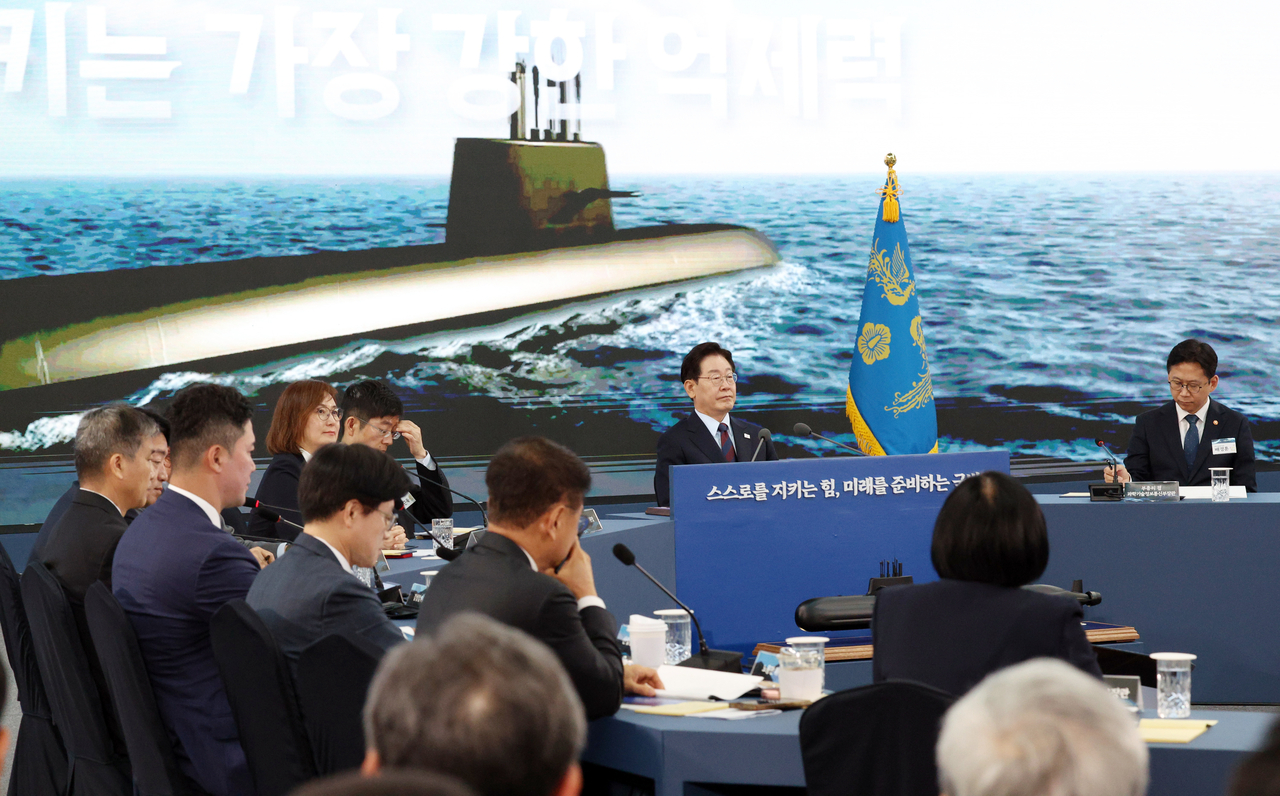
South Korea has formally launched the "Jangbogo N" program to develop a domestically built nuclear-powered submarine. For nuclear fuel cooperation, the government plans to pursue a separate agreement under US atomic energy law rather than amending the existing South Korea-US nuclear cooperation agreement.
The government held the 179th Defense Acquisition Program Administration (DAPA) committee meeting at the Ministry of National Defense on Friday, where it deliberated and approved the basic strategy for the Jangbogo N (KSS-III Batch-III) program.
The Jangbogo N program aims to develop a nuclear-powered submarine through domestic research and development. Compared with conventional submarines, the vessel will be capable of longer submerged operations and offer greater maneuverability, enhancing overall combat capability.
The program is divided into four areas — the platform, nuclear propulsion system development, integrated combat system development, and facility construction — all set to begin in 2027. The lead vessel is targeted for launch in the mid-2030s and operational deployment in the late 2030s.
A DAPA official said the platform component would be pursued through competitive bidding, with contract signing targeted for within 2027. The program will be conducted as contractor-led research and development.
The construction period is expected to exceed that of conventional submarines. "The detailed design and construction of the Dosan Ahn Chang-ho, our first 3,000-ton diesel submarine, took about nine years," a DAPA official said. "This will take longer than that — a bit more time than a standard conventional submarine." After launch, the vessel will undergo development and operational testing before entering service.
The Jangbogo N program was exempted from a feasibility review by the Ministry of Planning and Budget in August on national security grounds. DAPA requested the exemption, and officials noted that the F-35A performance upgrade program had previously received a similar exemption for the same reason.
On nuclear fuel procurement, the Defense Ministry said amending the South Korea-US nuclear cooperation agreement — known as the 123 Agreement — is not necessarily required. "Article 91 of the US Atomic Energy Act provides a separate basis for military cooperation," a Defense Ministry official said. "We believe nuclear fuel cooperation can be handled through a separate agreement." The official added that the AUKUS security partnership among the United States, the United Kingdom and Australia operates under the same framework. Low-enriched uranium will be used as fuel.
The committee also selected the model for the next-generation command helicopter on Friday.
The Command Helicopter-II program is designed to replace the military's current command helicopters starting in 2031. At Friday's meeting, the committee deliberated and approved the selection of Lockheed Martin's S-92A+ as the next command helicopter.
The program, running from 2025 to 2031, is expected to cost a total of 873 billion won ($651 million).
"The next command helicopter will be equipped with updated survivability and mission systems, enabling more reliable mission performance," DAPA said. "Aircraft modification and maintenance technology, along with exports of components by domestic small and medium-sized enterprises, will contribute to the growth of South Korea's defense industry and strengthen its export competitiveness."
The committee also approved the basic strategy for the Harbor Patrol Vessel-II program, which will replace aging harbor patrol boats through domestic research and development. The new vessels will feature enhanced combat and operational endurance capabilities. The program runs from 2028 to 2037 at a total cost of 611 billion won.
To improve efficiency, DAPA decided for the first time in a naval vessel program to integrate the basic design phase with the detailed design and lead-vessel construction phase. The agency said the consolidation is expected to shorten the program timeline and reduce costs.
The committee also approved the Tactical Surface-to-Surface Guided Weapon (KTSSM)-I Block-II program, aimed at rapidly destroying enemy tunnel and hardened artillery positions threatening the greater Seoul area. The program will procure guided missiles and launchers with a range at least 30 percent greater than the existing KTSSM "Ure." It runs from 2028 to 2036 at an estimated total cost of 536 billion won.
In addition, the committee approved the basic strategy for the Mine Warfare Unmanned Surface Vessel program, which will bolster mine detection and clearance capabilities. The program runs from 2028 to 2038 at an estimated cost of about 591 billion won.
The committee also approved a revised basic strategy and a second follow-on mass production plan for the TICN Block I-② (TMMR) program, which procures radio systems capable of voice and data communications. The program runs from 2020 to 2028 at an estimated cost of about 1.2 trillion won.
rimsclub@heraldcorp.com