About 3.93 million visitors through September, surpassing last year's full-year total
Direct arrivals via Gimhae airport and Busan port hit all-time highs
Foreign card spending tops 1 trillion won, up 51.9% from a year earlier
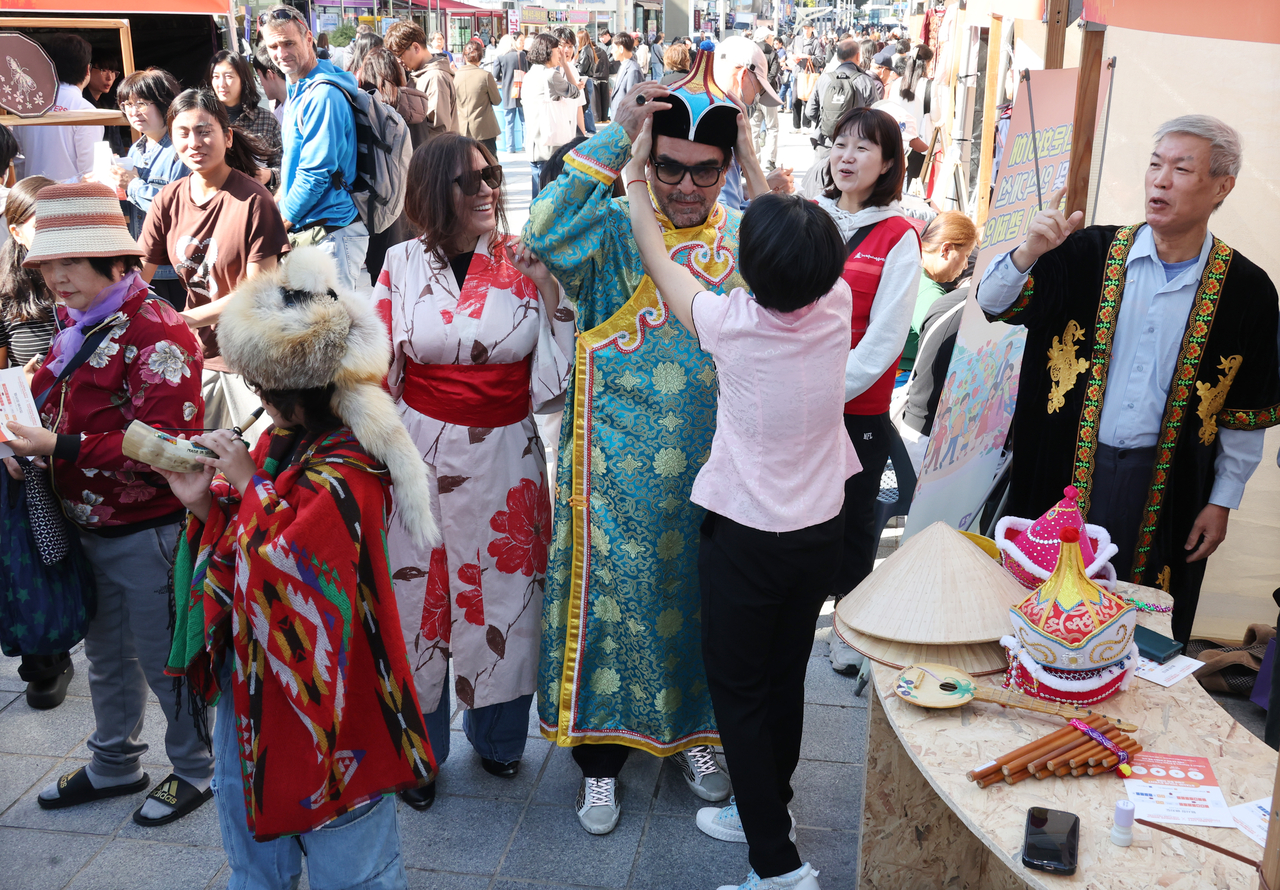
Busan has surpassed 4 million foreign tourist arrivals for the first time in history this year, and the city is on track to exceed 5 million by year-end if current trends hold.
The city said Friday that 3,934,876 foreign tourists visited Busan through September, already topping last year's full-year total of 3,643,439. The figure represents a 47.0 percent increase from the 2,676,915 visitors recorded in the same period last year — more than double the national growth rate of 21.5 percent. Busan's share of all foreign visitors to South Korea also rose to 23.0 percent, up 4.0 percentage points from 19.0 percent a year earlier.
Global travel platforms have taken notice. CNN named Busan "Asia's next great coastal city," while Airbnb reported a 30 percent increase in Busan accommodation searches over the past year. Expedia selected Busan as the only South Korean destination among its top 10 travel picks for 2027, with the city ranking fifth worldwide in search growth.
A key driver of the surge is direct travel to Busan. As the city has established itself as a destination in its own right rather than a stopover, the number of foreign visitors entering directly through Gimhae International Airport and Busan Port hit a record high this year.
Direct arrivals from January through September reached 2,333,199, up 52.7 percent from 1,527,682 in the same period last year. The share of direct arrivals climbed from 50.4 percent in January to 62.9 percent in September, a monthly record. Arrivals through Busan Port in September totaled 96,493 — up 147.8 percent from the same month last year and the highest monthly figure of the year — while arrivals through Gimhae International Airport reached 218,049, up 48.1 percent.
The influx of visitors has translated into stronger spending. Foreign card spending in Busan from January through September reached 1.02 trillion won ($757 million), up 51.9 percent from 668.9 billion won in the same period last year, according to credit card big data from the Korea Tourism Data Lab. Busan crossed the 1 trillion won threshold in September this year, having first done so in December last year, making it the only city outside Seoul to surpass that mark. The city has posted more than 130 billion won in monthly foreign card spending for five consecutive months since May. By sector, shopping accounted for the largest share at 47.8 percent, followed by food and beverage at 22.5 percent and medical and wellness services at 12.1 percent.
Meanwhile, Gimhae International Airport has led the growth in direct arrivals as the gateway for the southeastern region. In September, the Gimhae airport zone — covering Busan, Ulsan, and the South Gyeongsang Province cities of Geoje and Tongyeong — was designated a regional airport-centered tourism zone by the Ministry of Culture, Sports and Tourism.
"People from around the world are coming directly to Busan without stopping elsewhere," Mayor Jeon Jae-soo said. "As we approach the era of 5 million visitors, we will focus our efforts on improving the quality of tourism so that Busan becomes a city where people stay longer and come back again."
kaf2002@heraldcorp.com