Investigators suspect voting records were altered after the June 3 local elections
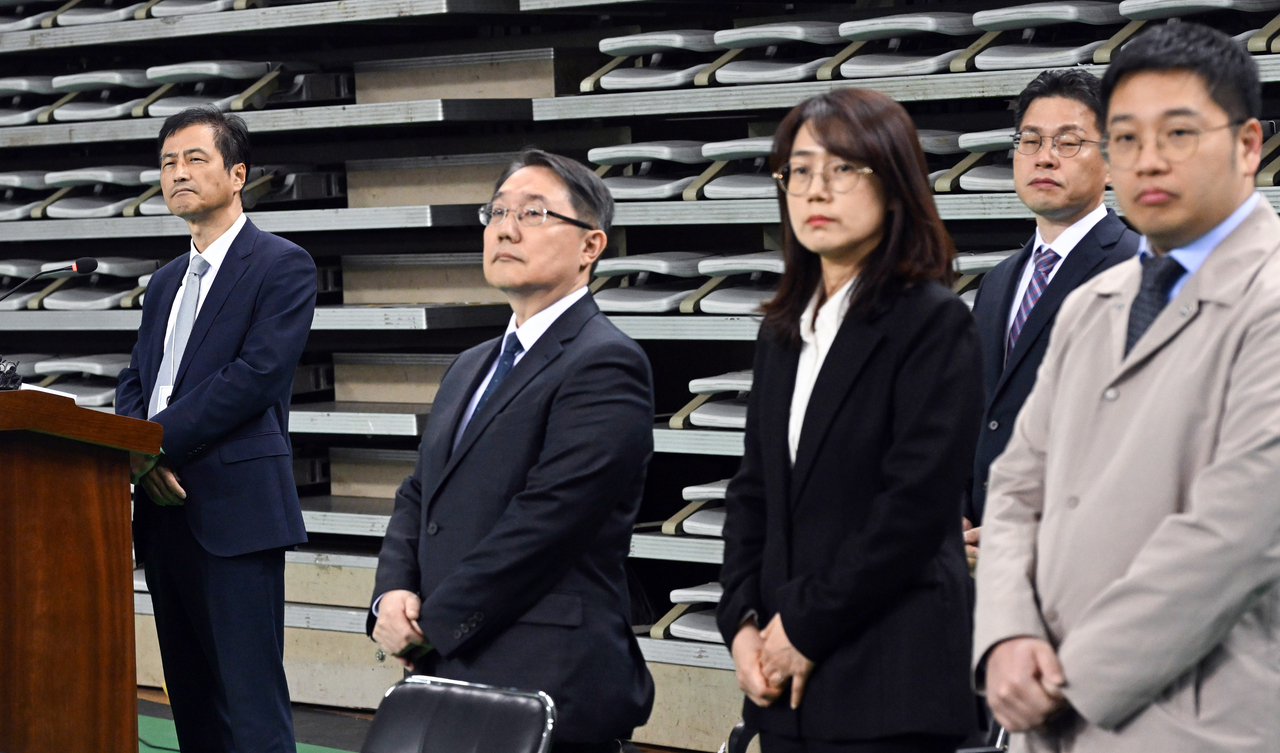
The special prosecutor investigating alleged misconduct by the National Election Commission — including a ballot shortage that emerged during the June 3 local elections — has launched a forced investigation after finding signs that polling station voting records were falsified after the fact on the commission's instructions.
Special Prosecutor Lee Tae-han's team on Wednesday executed search and seizure warrants at the National Election Commission headquarters in Gwacheon, Gyeonggi Province, and at the Seoul Metropolitan Election Commission in Jongno-gu, Seoul, on charges including dereliction of duty. A total of 44 personnel were deployed, including one deputy special prosecutor, four prosecutors including a senior prosecutor, 14 forensic investigators and 24 investigators.
Voting records are official documents prepared at polling stations on election day, logging how voting was conducted along with the management, issuance and status of ballots. Local government civil servants acting on behalf of the commission at polling stations — in roles such as voting administrator — are required to complete the records on the day and seal them once vote counting ends, preserving them until the end of the elected official's term.
The special prosecutor's team said it had found signs that so-called "unnumbered ballots" — ballots printed without serial numbers due to the shortage — were distributed to more than 140 polling stations and actually used. It said the National Election Commission, anticipating that accountability demands and legal disputes would follow, directed election commissions nationwide to make retroactive entries in voting records immediately after the election and then collected the results.
The team believes that lower-level election commissions, acting on those instructions, arbitrarily entered serial numbers for the unnumbered ballots in the voting records after the fact. They also added notes in the remarks section stating that they had anticipated a ballot shortage and requested countermeasures from the commission, or that they had received unnumbered ballots. Of the more than 140 polling stations nationwide that received unnumbered ballots due to the shortage, the team believes falsified voting records have been found at a minimum of about 40.
The special prosecutor's team suspects the falsified records were subsequently collected by the National Election Commission and submitted to the National Assembly and other bodies without disclosing the alterations. The team said it planned to secure relevant materials through Wednesday's search and seizure operation.
"We will thoroughly investigate all allegations surrounding the ballot shortage, including the falsification of voting records, to uncover the truth and establish where responsibility lies," a member of the special prosecutor's team said.
bell@heraldcorp.com