Sale contract signed in September, ownership transferred in October
Seller financing used as buyers work around tightened mortgage limits
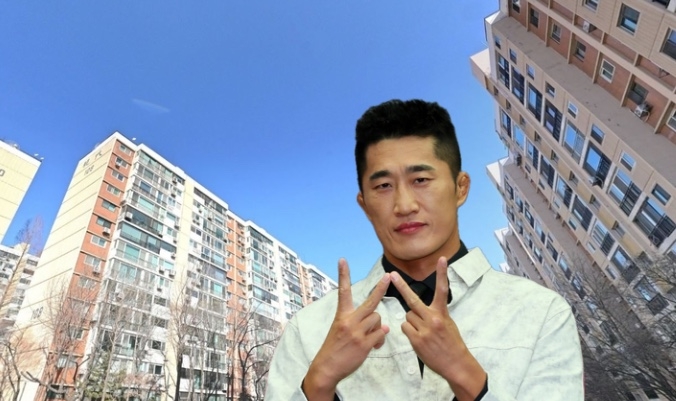
Kim Dong-hyun, a broadcaster and former mixed martial arts fighter, has purchased an apartment in Apgujeong-dong, Gangnam-gu, Seoul for 10 billion won ($7.49 million), with roughly half the purchase price borrowed directly from the sellers in what is known as seller financing. The deal reflects a workaround that has gained traction among wealthy buyers in the Gangnam area since the government slashed the mortgage cap on homes priced above 2.5 billion won to just 200 million won under its Oct. 15 lending regulations last year.
According to court registry documents, Kim signed a sale contract on Sept. 23 for a 182-square-meter unit at the Shin Hyundai 12 complex in Apgujeong-dong, with a purchase price of 10 billion won. The final payment was made and ownership transferred on Oct. 21. Kim had previously disclosed on a YouTube channel that a part-jeonse lease on an apartment in Banpo, Seocho-gu, where Kim had been living, was nearing expiration and that a move was in the works.

The ownership transfer was registered alongside four mortgage liens, each set by one of the four co-owners who previously held the property — a structure in which the buyer borrows a portion of the purchase price directly from the sellers. The maximum secured amounts were listed as 3.12 billion won, 1.08 billion won, 1.08 billion won and 720 million won respectively. Given that maximum secured amounts are typically set at around 120 percent of the actual loan, the total borrowed from the sellers amounts to roughly 5 billion won. The remaining 5 billion won is believed to have been funded through cash or other personal assets.
Seller financing has emerged in recent months as a new funding method in the high-end housing market, particularly in the Gangnam area. The government's Oct. 15 measures last year cut the mortgage ceiling on homes priced above 2.5 billion won from 600 million won to 200 million won, prompting more sellers to lend buyers part of the balance — targeting high-income purchasers with the capacity to repay.
The arrangement suits both sides: sellers who need to offload a property but are not in urgent need of the full proceeds can earn interest income, while buyers gain a way to cover the final payment despite tightened lending limits.
President Lee Jae Myung also drew attention after it emerged that Lee had used seller financing when selling a home in Bundang-gu, Seongnam, Gyeonggi Province for 2.9 billion won in July, setting a mortgage lien with a maximum secured amount of 1.77 billion won in favor of the buyer.
As seller financing spreads, the amount and share of private loans declared as a funding source in housing purchase financing plans have also been rising. According to a financing plan report submitted by the Ministry of Land, Infrastructure and Transport to People Power Party lawmaker Kim Mi-ae's office, the "other borrowings" figure in Seocho-gu financing plans last month reached 22.5 billion won — a 73 percent increase from 13 billion won in July.
The government's position is that such seller-financed arrangements are difficult to classify as illegal or taxable. Im Gwang-hyeon, now presidential chief of staff, told a National Assembly audit of the Finance and Economy Planning Committee on Oct. 13, while still serving as commissioner of the National Tax Service, that the tax authority had reviewed whether President Lee's apartment transaction was subject to taxation and had been told that it was not subject to tax.
The Shin Hyundai 12 complex that Kim purchased sits within Apgujeong Zone 2, considered the flagship Han River-adjacent reconstruction project. Zone 2 is the fastest-moving of Apgujeong Zones 2 through 5 — it selected Hyundai Engineering & Construction as its contractor last year and conditionally cleared an integrated review in July. The reconstruction plan calls for a riverside residential complex of up to 66 stories and 2,381 units.
hwshin@heraldcorp.com