43 of 130 applicants selected; 86 billion won allocated
32 depopulation zones to pursue small-school integration
11 areas to tackle education gaps and industry ties
Three-year support begins in January, extendable to five
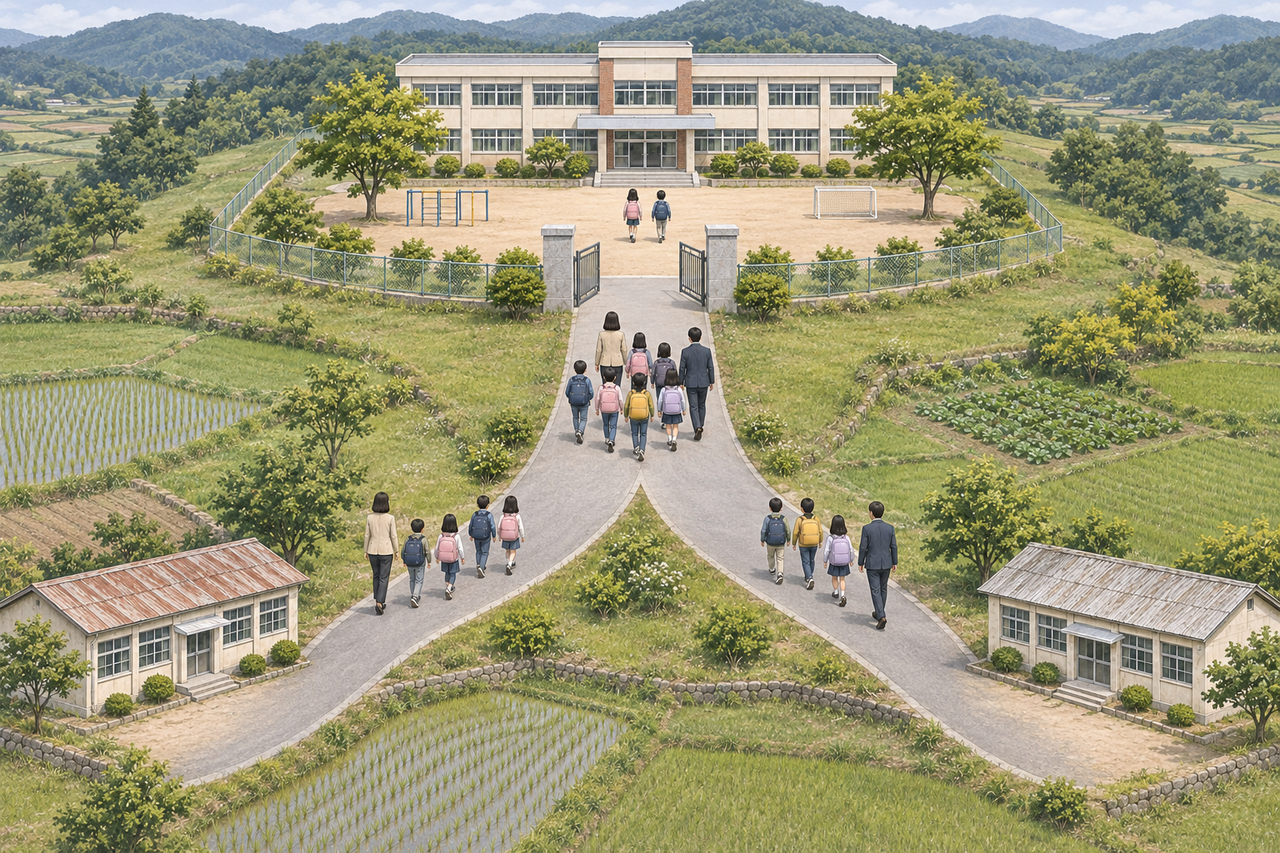
Students on remote islands will commute to school by boat, and upper-grade pupils at small rural schools will gather at hub schools for shared classes. To support joint curricula and school integration at small schools while narrowing education gaps within communities, the government will invest about 86 billion won ($64.1 million) across 43 regions next year.
The Ministry of Education announced the designations Tuesday at Government Complex Seoul, releasing the results of its "2027 Education Innovation Leader Zone" selections. The program builds on the outcomes of education special zones piloted since 2024 while addressing their shortcomings, requiring local education offices and municipal governments to collaborate on education initiatives tailored to each region's characteristics. Of 141 eligible regions, 130 applied and 43 were selected. The final designations are set to be confirmed this month after an appeals process.
Funding will come from special grants, with the ministry projecting about 86 billion won for next year. Under the basic plan, annual support is capped at 2 billion won for basic local governments and 4 billion won for metropolitan governments. Regions will receive three years of initial support, followed by a performance review and a possible two-year extension.
Thirty-two regions — including Geumsan, Sancheong and Ongjin — were selected under Type 1, which targets areas designated as depopulation zones or depopulation-concern zones. Building a local education ecosystem through small-school innovation is a mandatory objective, encompassing not only school mergers but also shared curriculum operations and the specialization of small schools.
According to the ministry, about 22 of the Type 1 selections submitted medium- to long-term plans for their schools, though not all of these should be read as consolidation plans. The number of small schools that would be reduced through mergers has not yet been tallied.
"Some areas were selected even without explicit consolidation plans, because they designed a full education ecosystem suited to their circumstances," a ministry official said, adding that the ministry would analyze the submitted plans before commenting further on how many include merger proposals.
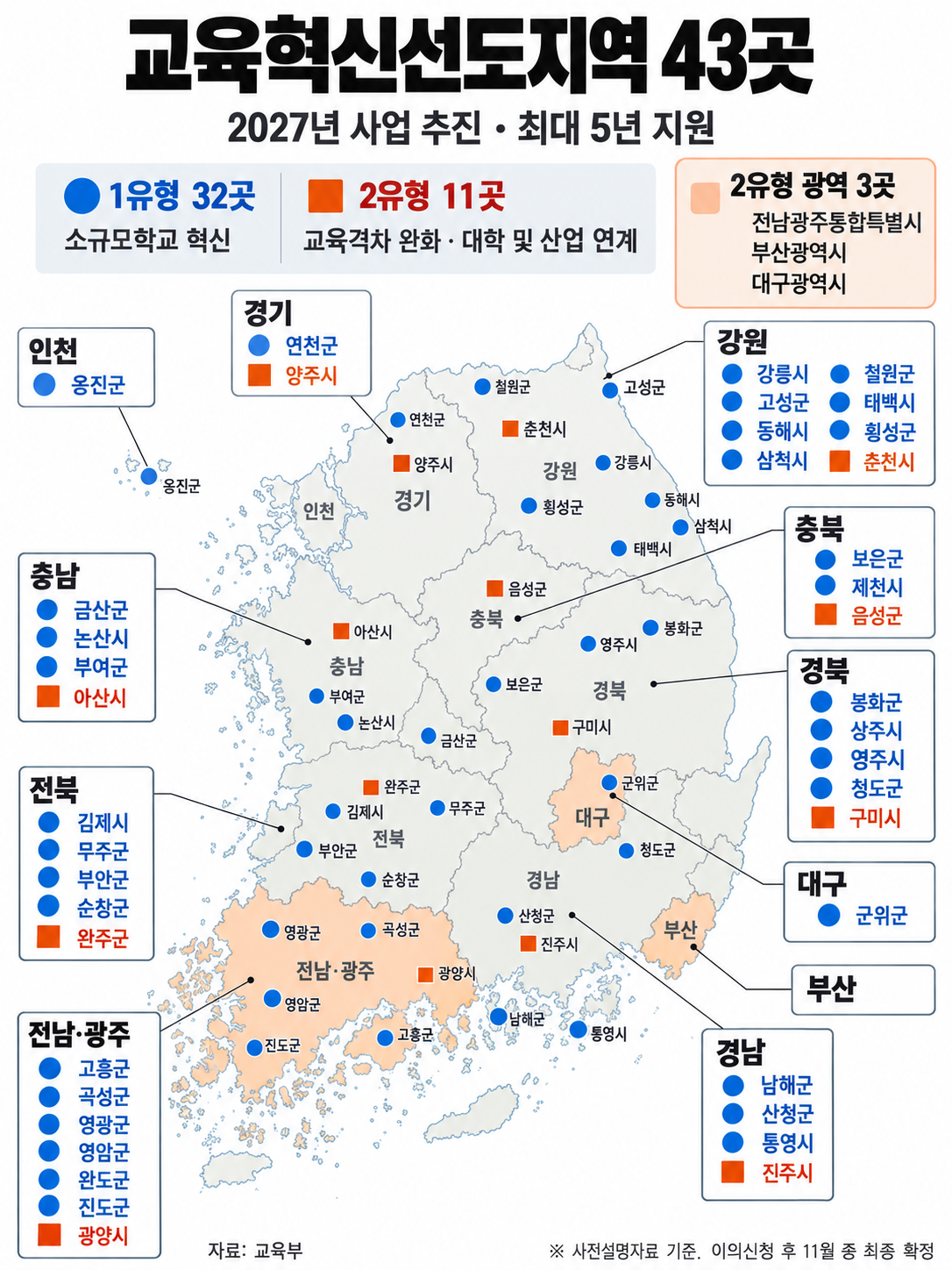
Among the selected regions, Geumsan plans to integrate its elementary schools and pursue medium- to long-term consolidation and restructuring of its middle and high schools. Its proposal also includes a tentatively named "Geumsan Education Innovation Support Center" to provide vehicles, facilities, instructors and funding for shared curriculum operations. Sancheong will run regional shared curricula before pursuing phased school mergers, and has drawn up plans to convert its elementary, middle and high schools into alternative-education specialized schools.
Eleven regions were selected under Type 2, which targets basic and metropolitan local governments outside the Greater Seoul area as well as border regions within it. Selections include Busan, Daegu, Yangju in Gyeonggi Province and Eumseong-gun in North Chungcheong Province. Mandatory objectives include narrowing education gaps within each region and strengthening ties between schools, universities and local industries.
Eumseong-gun will support shared classes and student exchanges between schools in the old city center and those in its innovation district, while also providing tiered education and community-life support for immigrant-background students and their guardians. Busan plans to operate care and after-school models suited to local conditions — including hub-school-centered, small-school alliance and village-centered formats.
Regulatory exemptions needed to underpin local education innovation, however, remain a legislative challenge. The ministry said it is pursuing special provisions for rural study programs that do not require a change of registered address and for integrated curricula, but six related bills are currently pending in the National Assembly.
Selected regions will submit operational plans by December after consulting with experts, with programs set to launch in January. The ministry said it will also draw up a separate plan for additional designations.
Education Minister Choi Kyo-jin said the ministry would "shift the framework of regional education policy to an education-ecosystem perspective, ensuring quality education flows continuously from elementary through high school in each region through the education innovation leader zone program."
brunch@heraldcorp.com