
Ties with children's charity began in 1981
Became national patron chair in 1985
Supported overseas children, helped find missing kids
Devoted life to rehabilitating at-risk youth
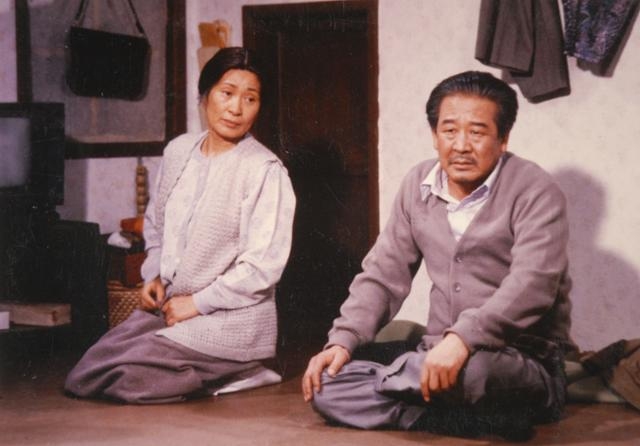
Episode 33 of the MBC drama series "Jeonwon Ilgi" (Country Diary), broadcast June 16, 1981, was titled "The Abandoned Child."
In the episode, village chief Kim (played by Choi Bool-am) takes home a small child found at a market, singing for spare change with a tin can in front of him. Kim washes the boy, feeds him and tries to send him on his way — but rumors spread through the village that the child is Kim's illegitimate son. Ultimately, Kim adopts the boy, who is given the name Geumdong. After the episode aired, letters and phone calls poured into the broadcaster in such volume that they had to be hauled away in backpacks. Choi actually believed the outpouring belonged to screenwriter Kim Jeong-su, not to the actor. Feeling unworthy of viewers who credited the on-screen father's kindness to Choi personally, Choi decided to help a real child. The hand extended to the fictional Geumdong became, in that way, a hand extended to countless children in the real world.
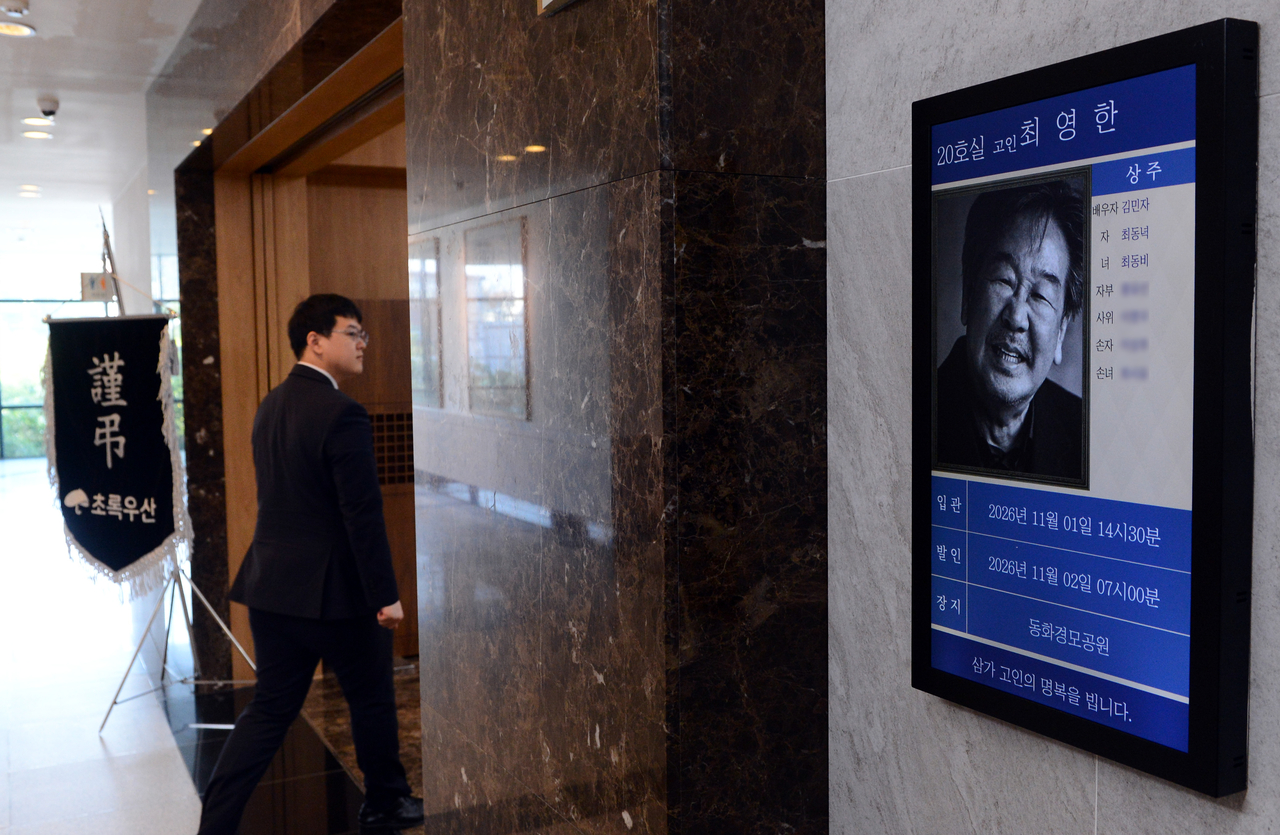
Choi Bool-am, whose given name was Choi Yeong-han, died Thursday at 87, having stood by children for nearly 45 years. The "Jeonwon Ilgi" adoption episode led to a first connection with what was then the Korea Children's Foundation — now ChildFund Korea. After taking on the role of national patron chair in 1985, Choi sustained charitable work for children for more than four decades. Marking the 30th anniversary of the chairmanship in 2015, Choi said: "The past 30 years gave me the chance to do good. It is what kept me alive."
Choi's giving extended well beyond financial support. Starting with Sri Lanka in 2006, Choi visited children overseas — Ethiopia in 2007, Uganda in 2008 — and in 2015 traveled to Kenya to see a clean-water project in action. Choi later recalled the deep happiness felt watching children drink from a newly dug well and splash water on their faces. For Choi, service was never about handing help to someone from a distance. "True service is not holding an umbrella over someone standing in the rain," Choi said. "You have to stand in the rain with them." The remark captured the spirit that guided decades of giving.

Choi also lent his voice to the search for missing children. Choi appeared on a special live broadcast titled "Mom, Dad, I'm Here," urging public attention to the issue of missing and abducted children. According to an MBC documentary, "Paha, Choi Bool-am Imnida" (Hello, This Is Choi Bool-am), broadcast in May 2026, the program helped more than 120 children find their families across two airings — with more than 40 reunited with their parents in the first broadcast alone. On air, Choi drew a distinction between children who wander off and those taken by abductors, calling for greater societal effort to protect them. Choi also participated in "A New Life for Children," an MBC public-interest program supporting children with rare and incurable diseases.
Choi's particular focus on children was not unrelated to a difficult childhood. Choi lost his father in 1948, at age 8. The father had gone to China during the Japanese colonial period and returned after liberation, but spent little time with the family while working in film production. In the documentary, Choi recalled: "I can count on one hand the times I called him 'Father.'" The time spent with his father in childhood amounted to less than three years. The actor who spent a lifetime playing fathers on screen was, at heart, a boy with only a faint memory of his own.
Choi's work with juvenile offenders stands as another expression of what Choi believed adults owed to the young. Choi participated in Zero Camp, a nonprofit that uses arts and culture to help at-risk youth and juvenile offenders reintegrate into society. Choi served as the inaugural chair of its steering committee when the program launched in 2012, and later became chair of its board of directors. Zero Camp ran arts programs — musicals, instrument lessons and character education — inside juvenile detention facilities to support the rehabilitation of young offenders.
In November 2014, an original musical titled "Nalgae" (Wings) was staged at Gimcheon Juvenile Prison in North Gyeongsang Province, with 69 young inmates taking part as cast and crew. The offenders created the work from their own experiences and performed it on stage. Choi rallied professional artists to the project, giving the young inmates access to expert arts education and the experience of a live performance. Rather than treating them simply as subjects of correction, the initiative gave them a way to tell their own stories and imagine a new life.
Zero Camp's work reached beyond prison walls. At a donation ceremony held Aug. 13, 2019, at the Seoul Regional Office of the Public Procurement Service, Choi participated in the capacity of Zero Camp board chair in a project supporting teenage single mothers and fathers. LG Electronics donated 30 top-loading washing machines, each with a 16-kilogram capacity, to the Korea Healthy Family Institute through Zero Camp. "I am deeply grateful to be able to help teenage single parents," Choi said at the time, pledging continued support for their self-reliance. The initiative marked the 50th anniversary of the 1969 launch of the Baekjo washing machine by Goldstar — now LG Electronics. Choi had been a model for the original Baekjo advertisement, and joined as Zero Camp board chair to help channel the company's anniversary project into direct support for young people.
The title "father of the nation" that followed Choi Bool-am throughout life was not earned through acting alone. Choi offered other children the parental warmth never fully received, and built a stage for young people who had lost the chance to start over. The path Choi walked — turning an actor's influence into social responsibility — left a mark on those who came after. Im Ho, who played Geumdong in "Jeonwon Ilgi," reflected in the MBC documentary that Choi was "an elder of the acting world who placed the greatest importance on social responsibility, above all the other duties that come with being an actor, an artist, a performer." Comedian Lee Hong-ryeol, who said his own work with children was inspired by encounters with Choi, put it simply: "Not everyone who grows old becomes a true adult. He really was one."
shee@heraldcorp.com




