
Government to unlock greenbelt within 5 km of Seoul to supply 76,700 homes
Experts say location and speed matter as much as volume
Short-term price stability uncertain; transport networks, pre-sale ratios seen as decisive
Land Minister Hong Ji-seon pledges ground-breaking support for 31,000 Seoul units by year-end
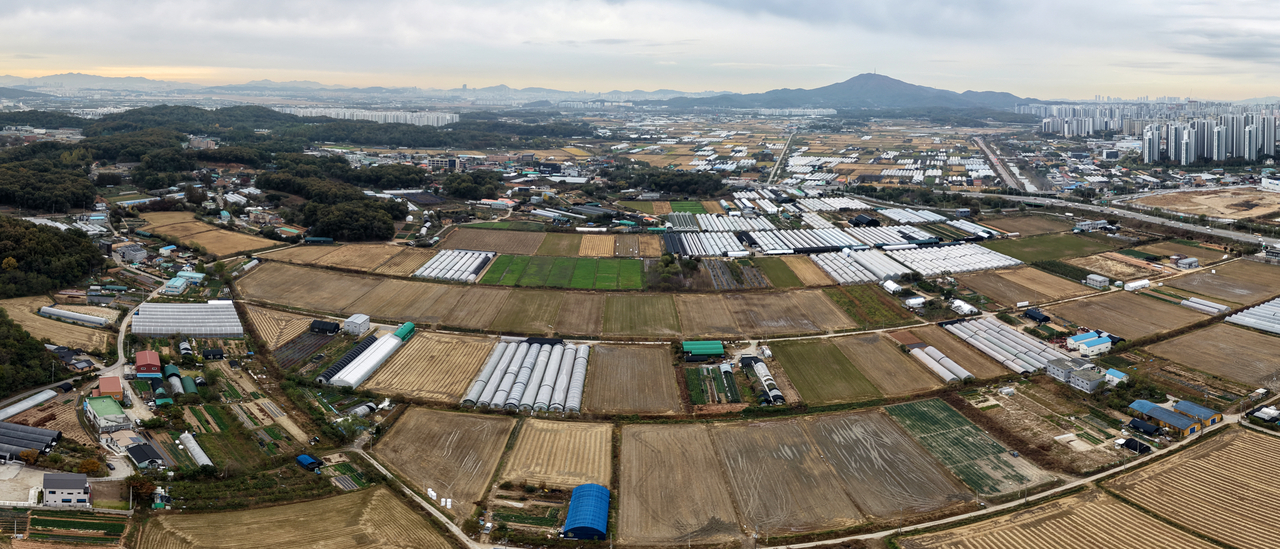
The government's plan to release greenbelt zones adjacent to Seoul and supply 76,700 new homes may help calm the panic-buying impulse among younger, first-time buyers, analysts say. With new residential sites to be developed in well-connected areas such as Gimpo, Guri and Hanam, housing demand could be more evenly distributed over time. Experts cautioned, however, that because ground-breaking and move-in dates remain years away, the government will need to accelerate supply through measures such as expanding urban redevelopment projects.
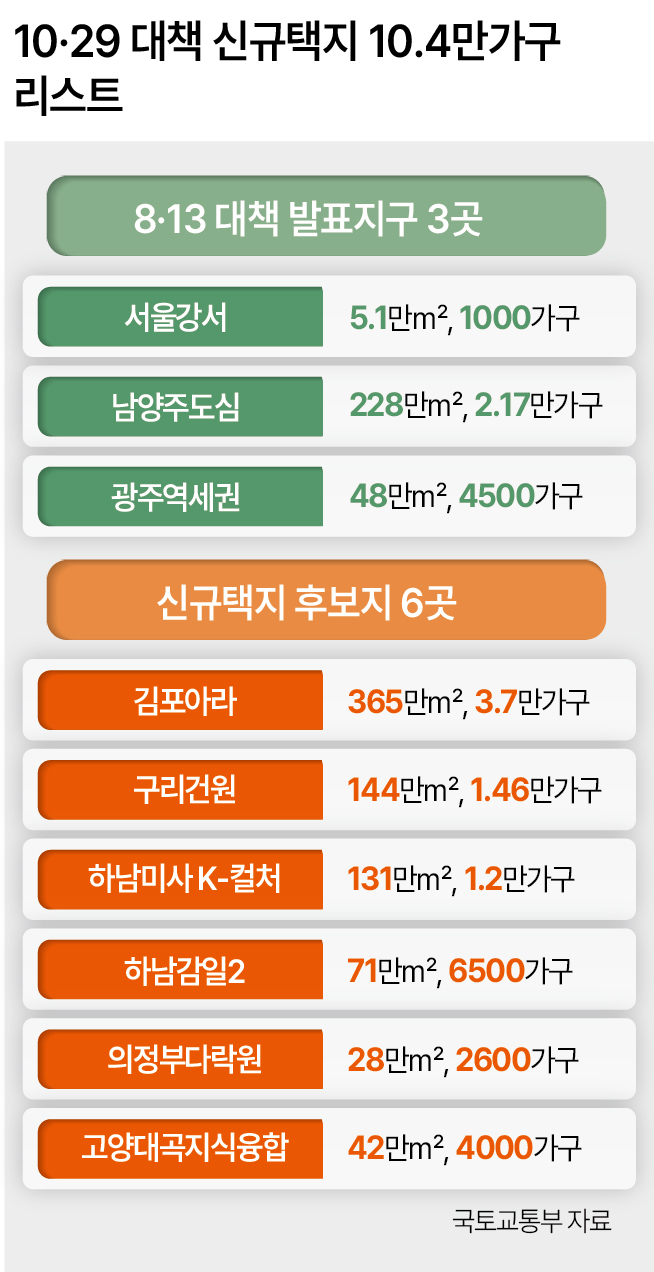
The Ministry of Land, Infrastructure and Transport announced Thursday that it would lift greenbelt restrictions at six sites to deliver 76,700 homes: Gimpo Ara with 37,000 units, Guri Geonwon with 14,600, Hanam Misa K-Culture with 12,000, Hanam Gamil 2 with 6,500, Uijeongbu Darakwon with 2,600, and Goyang Daegok Knowledge Convergence with 4,000. Including the 27,200 units from the Aug. 13 measures, the government plans to create a total of 104,000 new homes.
Experts gave the announcement a broadly positive assessment, noting that the new sites are concentrated within about 5 kilometers of Seoul's city limits — a sign that the plan prioritizes not just volume but also location and speed of delivery.
Ham Young-jin, head of the real estate research lab at Woori Bank, said simply expanding land supply on the outskirts is not enough to redirect Seoul's housing demand. "What matters is creating livable communities where residents can commute to Seoul and access schools, shops and cultural facilities," Ham said.
Nam Hyeok-woo, a real estate researcher at Woori Bank, called the site selection "very realistic," noting that the chosen areas are linked to existing rail networks or planned extensions. "In particular, if the planned supply in the Hanam Gamil and Misa areas — which border the Songpa and Gangdong living zones — is delivered as planned, the effect on supply will be tangible," Nam said.
Analysts also expect the measures to ease the wave of chase-buying that has concentrated in Seoul's outer districts and southern Gyeonggi Province. The government's stated intention to target the 76,700 new units at younger buyers and newlyweds in their 20s and 30s reflects that aim.
"Because the government has laid out a concrete supply schedule for prime locations near Seoul, this could have a partial psychological stabilizing effect — easing the urgency felt by prospective buyers who have been rushing to purchase," Nam said.
Experts broadly agree, however, that the measures will do little to stabilize Seoul's real estate market in the short term. Seoul apartment prices have risen for 90 consecutive weeks, and the nature of supply-side policy — which takes years to translate into actual move-ins — means buyers will feel little immediate relief. The government plans to apply an accelerated ground-breaking model to all six new sites for the first time, but the earliest projected move-in date is 2033.
"Before residents can move in, the site must go through district designation, land compensation, infrastructure construction, and housing permits and ground-breaking — even if the 2030 ground-breaking target is met, additional time will be needed before actual move-in," Ham said.
Beyond construction speed, experts identified transport infrastructure as the single biggest variable determining whether the supply plan succeeds. If key metropolitan transit links are not completed in time for move-in, commuting conditions in the greater Seoul area could worsen rather than improve. Lee Eun-hyeong, a researcher at the Korea Institute of Construction Policy, said the transport networks tied to the new sites are planned for completion around 2030 "but in practice there is room for further delays."
Nam said large-scale sites require water and sewage infrastructure to be secured first, and that managing opposition from nearby residents worried about increased traffic will be critical. "Since the new sites in Hanam, Guri and Namyangju are all clustered in the eastern corridor, it may be worth developing a single integrated metropolitan transport plan for the entire eastern zone rather than drawing up separate traffic measures for each district," Nam said.
The share of public sale versus rental units will also shape how effectively the new supply absorbs demand from genuine buyers. "The balance between rental and for-sale units, and how well the unit sizes match what real buyers want, can make a significant difference in demand absorption even for the same location," Nam said, adding that the pre-sale and rental ratios and unit-size mix should be specified as early as possible.
Because the new sites are focused on securing medium- to long-term supply, some analysts argue the government must also pursue parallel measures — such as easing regulations on urban redevelopment and reconstruction within Seoul — to calm near-term market anxiety.
Land Minister Hong Ji-seon visited the Sanggye 2 district housing redevelopment site in Nowon-gu, Seoul, on Thursday and said the ministry is supporting ground-breaking for 72,000 units across the greater Seoul area through private redevelopment projects this year. "We plan to support ground-breaking for 31,000 units in Seoul, including the Sanggye 2 district, by the end of the year," Hong said.
Ham said addressing current market anxiety requires not only new residential sites but also parallel action on urban redevelopment, public rental housing and non-apartment supply. Nam agreed, noting that since all of the newly announced sites are in Gyeonggi Province, "new supply within Seoul will ultimately need to be accompanied by more active redevelopment."
hwshin@heraldcorp.com
shy@heraldcorp.com




