Representatives from 4 zones, including Sanggye 3 and Jeonong 9, attend alongside contractors
LH to petition government for eased rental ratios, higher floor-area-ratio incentives
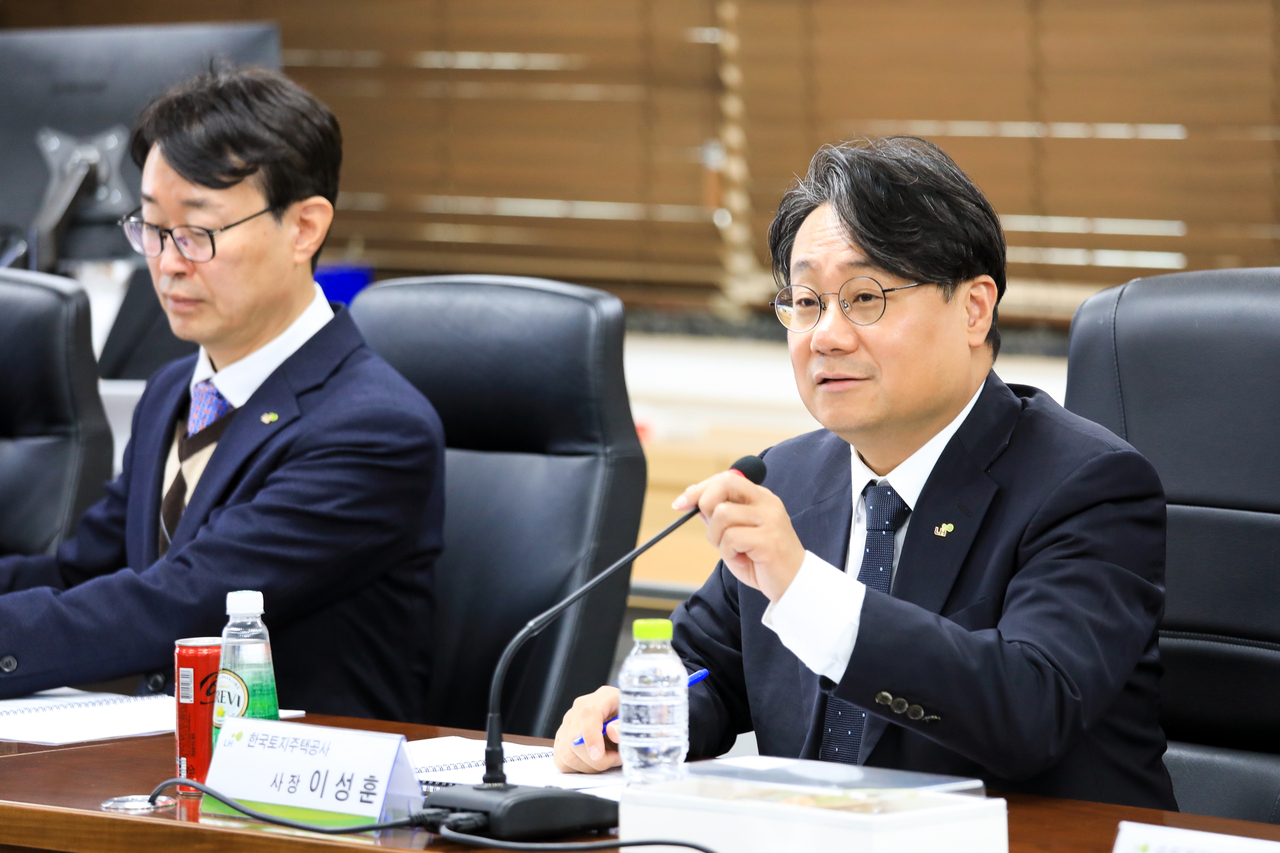
Korea Land and Housing Corporation met with resident representatives from public redevelopment zones Thursday to discuss ways to accelerate project timelines, with calls pouring in for separate support for low-viability areas and faster permit approvals.
LH held the forum at its Seoul regional headquarters on Thursday. The gathering was intended to hear directly from residents about on-the-ground difficulties, coming amid heightened attention to the pace of urban renewal projects following the president's visit to the Jangwi 9 zone in Seongbuk-gu, Seoul, on Nov. 4.
LH President Lee Seong-hun attended alongside the heads of resident representative councils from four public redevelopment zones — Sanggye 3, Jeonong 9, Sinwol 7-dong 2 and Garibong 2-92 — as well as officials from five contractors: Samsung C&T, Hyundai Engineering & Construction (Hyundai E&C), Daewoo Engineering & Construction (Daewoo E&C), GS Engineering & Construction and Doosan Engineering & Construction.
Resident representatives cited faster project timelines and transparency as the main advantages of the public redevelopment model. They noted that projects long stalled had gained momentum after switching to the public track, and that floor-area-ratio incentives had allowed more housing units to be built than under private-sector approaches, reducing the financial burden on residents. The ability to choose the brand, design and finishing materials of private construction companies was also highlighted as a benefit.
However, residents called for separate support for zones that cannot fully use floor-area-ratio incentives due to height restrictions or hilly terrain, or that lack viability because of small lot sizes and low official land prices. LH said it is petitioning the government to ease the mandatory rental housing ratio, reduce the burden of infrastructure installation costs and raise floor-area-ratio incentives. For zones facing difficult conditions, LH said it would work with the Ministry of Land, Infrastructure and Transport to explore alternative incentives — such as the free transfer of state and public land — and the designation of public redevelopment special zones.
Residents also pressed for further reductions in project timelines. LH said it plans to push for the timeline-shortening measures included in the government's Sept. 7 housing supply expansion package — such as processing project implementation authorization and management and disposal plan authorization simultaneously, and selecting appraisal firms in advance — to apply immediately to zones already under way once the relevant legislation is amended.
LH also plans to establish standard processing deadlines for each permit stage in coordination with the Ministry of Land, Infrastructure and Transport and the Seoul Metropolitan Government. It said it will coordinate relocation timing with relevant agencies to prevent a simultaneous surge in demand, and will support residents' moves by utilizing nearby LH rental housing. LH also said it would petition for regulatory improvements to streamline procedures in cases where contractor selection bids fail.
Kim Yeong-ok, chair of the Garibong 2-92 zone's resident representative council, urged LH to work to ensure that regulatory improvements announced through the government's Sept. 7 measures — including floor-area-ratio increases — are legislated as soon as possible, so that zones already under way can also benefit. LH said it would consult with the Ministry of Land, Infrastructure and Transport to help the relevant amendment bills pass the National Assembly quickly, and would cooperate with the Seoul Metropolitan Government to ensure the new rules take effect on the ground without delay.
"Public redevelopment projects are carried out with a sense of responsibility by private construction companies chosen directly by residents, under their own private brands — making them no different from privately branded apartment developments," LH President Lee said. "LH plays a supporting role, assisting with permit procedures and the like. We will strengthen cooperation with residents, contractors and relevant agencies to deliver results sooner."
LH said it will immediately act on recommendations from the forum that fall within its own authority, and will formally petition the Ministry of Land, Infrastructure and Transport and the Seoul Metropolitan Government on matters requiring legislative changes.
Meanwhile, LH said it will roll out a plan to shorten the period from procurement to ground-breaking in order to support faster housing supply. The approach involves working backward from scheduled ground-breaking dates to set procurement timelines, and strengthening advance coordination between procurement departments and contract and review teams to keep each step moving without delay.
hwshin@heraldcorp.com