
A career spanning broadcasts, talk shows and essays reveals one actor's philosophy
A call from Yuk Young-soo showed him the weight of television
'If my face can be of use, I'll throw myself into anything'
'I have regrets — I hope you will do it in my place'
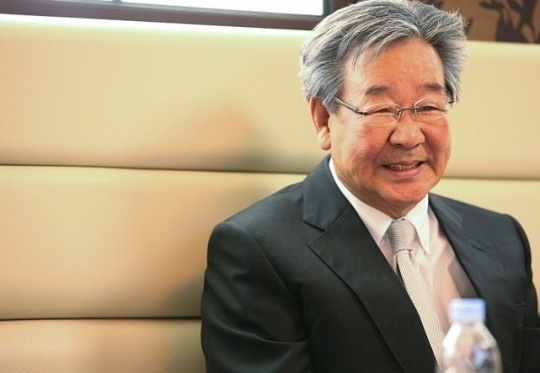
"If there are thorns on the path the people must walk, clearing them away — that is the spirit of the performer."
In April 2024, during the MBC documentary "The Legend Returns: Chief Inspector," actor Choi Bool-am said those words to Lee Je-hoon and Lee Dong-hwi, who were about to play the young detectives in "Chief Inspector 1958." Choi urged them to use their work to help expose corruption in society — a mission he felt he had left unfinished, and one he hoped the next generation would carry forward.
Choi made his debut in 1959 in the stage production of Hamlet and spent 67 years as an actor. Over that career Choi appeared in more than 130 drama series, some 90 films and roughly 55 plays. The words left behind — in broadcasts, talk shows, magazine interviews and essays written in Choi's own hand — amounted to both a philosophy of acting and a philosophy of life.
A blank canvas and a chalkboard
"An actor must be like a blank sheet of paper."
That was a conviction Choi held throughout his life. In a conversation with physician John Linton published in the monthly magazine Saemteo, Choi said that to act well, one must be as clear as a canvas waiting to be painted. Once a role was finished, he said, an actor had to let it go quickly and break free from habitual performance and stock characters. Choi described that process as "erasing, the way you wipe a chalkboard clean."
For Choi, the erasing was an unusually heavy task. The face of Detective Park — carried for 18 years in "Chief Inspector" — and that of Chairman Kim — held for 22 years in "Country Diary" — were not easily wiped away. In a 2007 interview on KBS 1 Radio's "Park In-gyu's Focused Interview," Choi described a ritual performed in front of the makeup room mirror. After finishing makeup and costume, Choi would tell the reflection to "stay here and rest," then become Chairman Kim and walk into the studio. Some days Choi lived as that character for more than 20 hours.
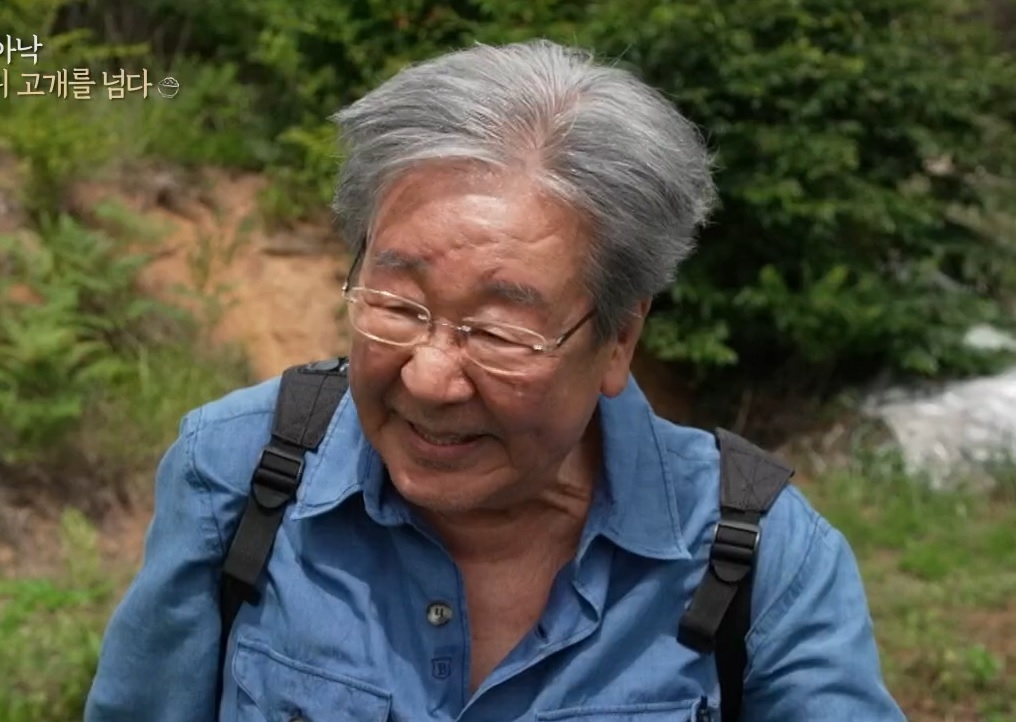
Old age came to Choi early on screen. In the late twenties, in the television debut "Prince Suyang" (1967), Choi played the 50-something statesman Kim Jong-seo. At 30, in MBC's "Yeokpung" (1969), Choi played a man past 80. In the early forties, Choi portrayed an octogenarian Syngman Rhee in "The First Republic" (1981–1982). In the same radio interview, Choi said that "acting is done not with the body but with the mind" — though acknowledging that "as the thinking deepens, there comes a time when the body can no longer keep up." Choi added: "A person changes once a year at 60, once a month at 70, and every single day past 80."
Choi was wary of acting that fixated on outward appearance. In the 2007 essay "On the Old Line That Life Is a Play and People Are Its Actors," Choi wrote: "Staring into the mirror wondering how to look prettier — that is not what an actor does." Without finding one's own path inside a work, Choi wrote, "if you only look the part on the surface, your true nature is eventually exposed." In a 2013 appearance on MBC's "I Like People," after watching a junior colleague's stage performance, Choi remarked that "the blood of a performer seems to be something you are born with" — a hint that the urge to return to the stage had never faded.
A guest who enters the living room without knocking
Detective Park of "Chief Inspector" was a notably heavy smoker. In a single episode, the character could go through four cigarettes — one in the opening scene, one at a busy crime scene, one at the climax, one when something went wrong. It was a character detail Choi had devised personally. In the 2007 KBS 1 Radio interview, Choi recalled a phone call that came because of those cigarettes. First Lady Yuk Young-soo had called to say she worried that "all the people will follow along and smoke," and asked Choi to cut back. It was the day Choi truly understood how far a single actor's gestures could reach. Choi said the call was never forgotten.
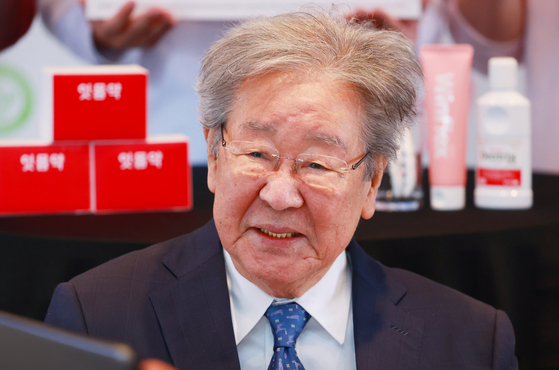
In the same interview, Choi explained why stepping away from film had felt right. In the 1980s, when simultaneously leading "Chief Inspector" and "Country Diary" on one broadcaster, Choi announced that television was enough and declined film work — believing it was only right to leave that space for those who worked in cinema. When referring to himself, Choi chose the word "gwangdae," a traditional Korean term for a performer. Choi parsed it as meaning "broad and great," and believed that performers "carry a mission to deliver the people's right to know," and that "today's broadcasting is the work of the gwangdae troupe."
Having devoted a life to the television screen, Choi felt both the promise and the responsibility of the medium deeply. In the 2007 essay, Choi wrote: "Should television not be drawing the kind of person we want to resemble, the kind of human being we want to follow?" In a 2013 essay, Choi wrote that "broadcasting must be a cultural pillar that quietly leads the age." A sense of public duty ran along the same lines. In a 2011 appearance on KBS 2TV's "Yeoyu Manman," Choi said: "I am someone who has put my face before the public, so if that face can be of use, I must throw myself into anything."
Imagining an absent father
In 1948, Choi's father, Choi Cheol — a filmmaker — died just before the release of his film "Suu." In a 2009 appearance on Gyeongin Broadcasting's "Choi Bool-am's Incheon Love Story," Choi recalled standing at the preview screening at Incheon's Dongbang Theater, holding the father's portrait. Memories of the father were brief. Choi turned that absence into material for the craft. In the 2007 KBS 1 Radio interview, Choi said: "I think imagining and bringing out a father I never had is probably better work for an actor."
The 22 years of "Country Diary" were spent holding together the wavering place of the patriarch. In the same interview, Choi said that playing the head of a four-generation household at the moment when large farming families were giving way to nuclear ones made the word "father" inevitable. In the essay, Choi wrote of wanting to portray a father like "a zelkova tree with wide shade" — an elder who receives New Year's bows from neighbors on holidays and pats the shoulders of young people returning to their hometown.
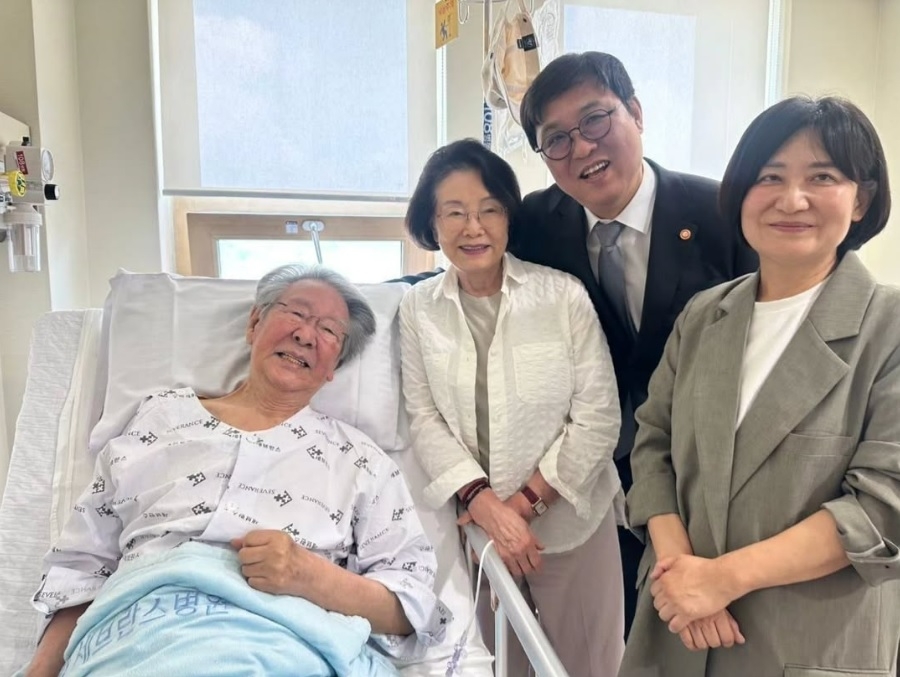
In real life, Choi was not the strong father portrayed on screen. In the Saemteo conversation, Choi said "the word 'weak father' would be more accurate." Chairman Kim, too, was not a strong man — because to hold and embrace grandchildren, children and an aging mother, one must not be hard. Over time, Choi came to resemble the Chairman Kim played for so long. Wife Kim Min-ja, also an actor, once said that looking at the back of her husband sitting in front of the television, "it looks exactly like Chairman Kim sitting there."
It was Choi's mother, Lee Myung-sook, who raised Choi in the father's absence. In the MBC documentary "Paha, This Is Choi Bool-am," broadcast in May, Choi said that "today's self exists within the framework my mother built," and that the words "Mother, I am truly grateful" come naturally. It was also the mother's influence that led Detective Park to carry a white handkerchief instead of a gun and handcuffs. The advice was that "criminals must be handled not with a gun but with the mind — that is what earns the people's applause."
Though Choi spent a life as the "nation's father" alongside the public, in later years Choi lamented that the place of the father had disappeared from Korean society. In a 2023 appearance on tvN Story's "Chairman's People," reunited with Kim Hye-ja for the first time in 21 years, Choi explained a distance from drama series in a single phrase: "There is no longer an era for fathers." The image of a father who looked after the family and worried about the neighborhood had been erased, Choi said. In the same program, Choi also confessed that when first receiving the role of Chairman Kim, having never farmed, the approach had simply been to imitate what was seen.
The taller the building, the longer the shadow
"The taller the building, the longer the shadow."
In the final episode of "Chief Inspector" in 1989, Detective Park said those words and walked out of the police station. It was a line aimed at an era when rapid industrialization was widening the gap between rich and poor, and that shadow was spreading into crime. Thirty-three years later, in 2022, on KBS Ulsan's talk show "Nam Hee-seok's Ulsan Era," Choi returned to that line. The more dazzlingly a society grows, Choi said, the more it must look back at its shadows. Choi urged people to be faithful to their own duties rather than chasing material wealth, to accept fair reward for that work, and to share with neighbors who have less.
The work Choi named as the defining role of a lifetime was "Chief Inspector." In a 2017 appearance on KBS 2TV's "1 vs. 100," when asked to choose among "Chief Inspector," "Country Diary" and "Koreans' Table," Choi picked "Chief Inspector" as the work poured into during youth. In the essay, Choi wrote: "Even now, just hearing the theme music of 'Chief Inspector' makes my heart race." Choi described "Chief Inspector" as the cornerstone that built the craft, and "Country Diary" as the shining wings that lifted it to a higher place.
In 1986, after the mother's death, Choi found among her belongings a ramyun box filled with an account book of unpaid debts. In a 2009 appearance on KTV's human-interest talk show "Confession of My Heart," Choi admitted that the first thought was that collecting all those debts would bring quick wealth. It was only much later that Choi grasped what the mother must have felt, leaving behind a son she could no longer provide for. "Life is a succession of regrets," Choi confessed.
The motto published in the Saemteo conversation was a saying of Confucius: not to overflow in joy, not to be consumed by grief. In a 2018 appearance on SBS's "Master in the House," Choi described the years kept at a distance from acting since 2014 not as retirement but as "stepping back" — saying there was no sense of growth because the production staff were too deferential to point out problems with the performance. That same April, Choi returned to the stage for the first time in 25 years in the play "When the Wind Blows and the Stars Tremble."
Choi's feelings for wife Kim Min-ja never wavered. In the 2023 "Chairman's People," Choi said that even now, thinking of Kim Min-ja makes the heart race.
The heart of a performer
"Chief Inspector 1958" in 2024 became Choi Bool-am's final performance. Appearing as an elderly Park Young-han, Choi saluted before the graves of fellow detectives who had already passed. After back surgery last year, Choi stepped down from "Koreans' Table," and from July last year held long conversations with a production team to prepare the MBC documentary "Paha, This Is Choi Bool-am." At the family's request — they wanted Choi to focus on rehabilitation — Choi did not appear in the documentary. The message sent to viewers as the project was being prepared read:
"I want to convey my gratitude to the viewers who have loved me for so long. That is the heart of a performer."
Choi Bool-am, who spent a life as the nation's father, died Thursday night at around 10 p.m. at a hospital in Gangseo-gu, Seoul, where Choi had been receiving inpatient treatment. A memorial altar will be set up at the funeral hall of Asan Medical Center. Choi is survived by wife Kim Min-ja, also an actor, a son, Dong-nyeok, and a daughter, Dong-bi.
shee@heraldcorp.com




