
33 senior officials expelled — more than double last year's figure
'Xi Jinping Party-building thought' elevated as theoretical foundation
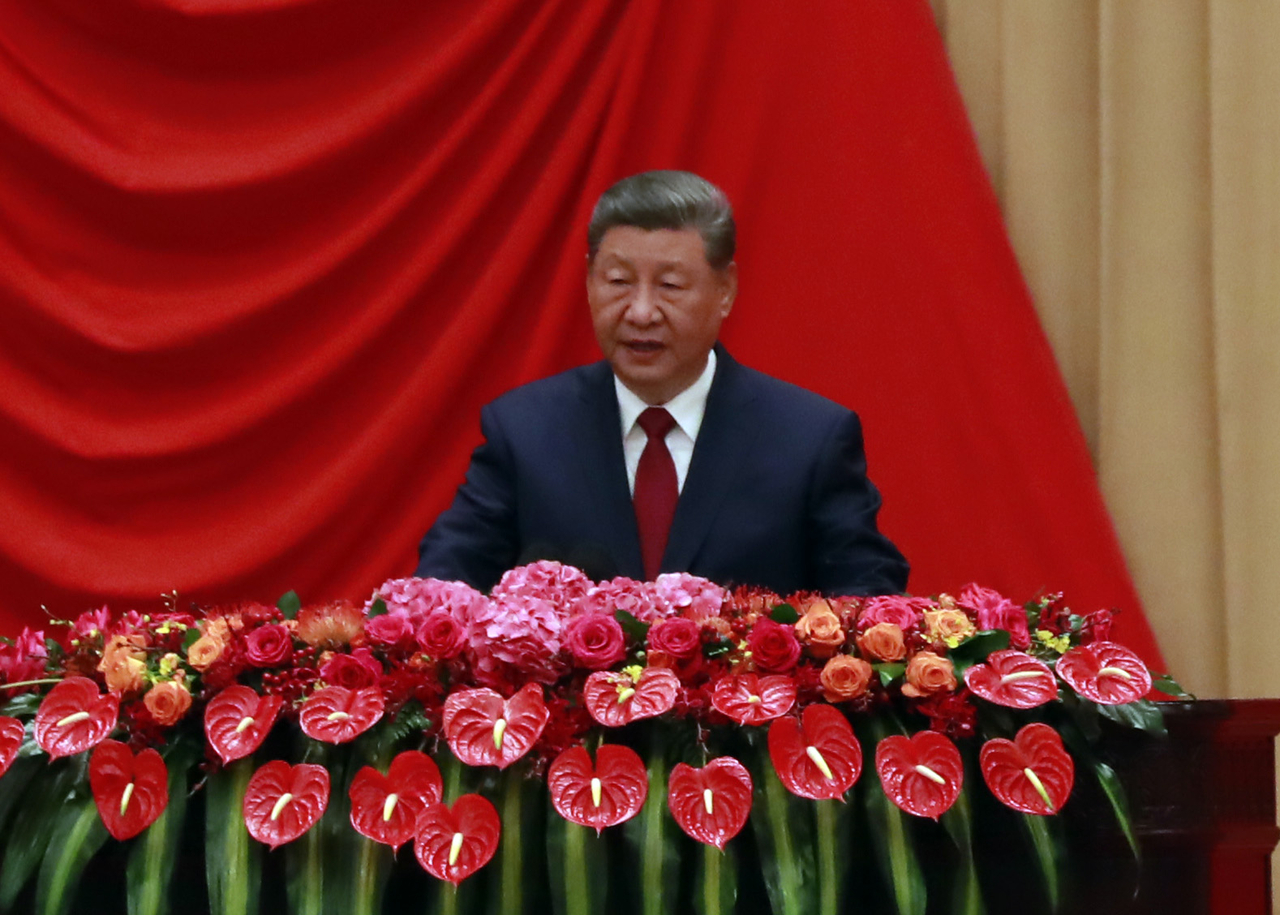
China's ruling Communist Party has moved to consolidate its power base ahead of next year's national congress, where President Xi Jinping's bid for a fourth term is expected to be decided. The party confirmed the expulsion of 33 senior officials — including some of Xi's longtime associates — and elevated "Xi Jinping Party-building thought" as the ideological foundation for prolonged one-party rule.
According to the communique issued Thursday from the fifth plenary session of the 20th Central Committee, the party leadership pledged to continue its campaign of "comprehensive and strict party governance," tightening centralized control and imposing stricter standards on the selection, appointment, management and oversight of cadres.
The communique credited Xi with overcoming problems including weakened intraparty leadership and lax discipline. It said the party center had resolved longstanding issues through internal rectification and eliminated major risks within the party, state and military.
Particularly notable was the communique's framing of "Xi Jinping Party-building thought" as the theoretical basis for building a Marxist party capable of long-term governance. The document called on the party's more than 100 million members to maintain political conformity and uphold discipline, while also assigning shared political responsibility for party governance to senior officials.
The scale of the personnel purge was extraordinary. The party reviewed disciplinary and legal violations by 34 senior officials across the party, government and military, confirming the expulsion of 33. That is more than double the 14 officials expelled at last year's fourth plenary session.
Among those disciplined were Zhang Youxia, former vice chairman of the Central Military Commission, and Zhong Shaojun, former director of the CMC General Office — both figures with longstanding ties to Xi. Senior officials from key positions across the party and government were also among those removed.
A total of 279 people attended the fifth plenary session, including 162 full Central Committee members and 117 alternate members — 36 fewer than the 315 who attended last year's fourth plenary session. Of the 205 full Central Committee seats, only 162 were filled.
The Communist Party has historically used the plenary session preceding a national congress to realign its leadership structure and ideological direction. At the sixth plenary session of the 18th Central Committee in 2016, Xi was designated the "core" of the party center and the entire party. At the sixth plenary session of the 19th Central Committee in 2021, the party adopted its third historical resolution.
This time, a shift in the plenary session schedule meant the fifth plenary session took on the role previously played by the sixth. The session addressed party leadership and discipline, combining a sweeping purge with a prominent reaffirmation of Xi's party-building ideology.
The 21st National Congress of the Communist Party of China is scheduled for the second half of next year, when Xi's fourth-term bid and the composition of the next top leadership will be decided. Analysts say the large-scale personnel changes have expanded Xi's room to shape the incoming Central Committee and Central Military Commission.
hajun825@heraldcorp.com




