
Inha University Hospital to end services Friday
International St. Mary's Hospital opening delayed
Ministry of Education corrects charter amendment procedure from 'report' to 'approval'
Eligibility to operate medical facility also in question
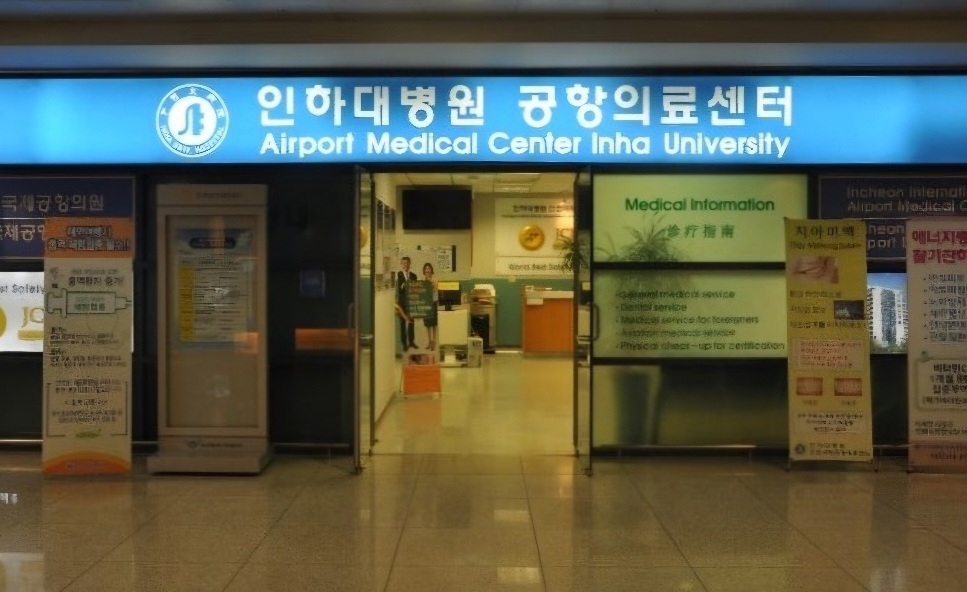
The medical center at Incheon International Airport's Terminal 1 is set to face its first service gap since the airport opened 25 years ago.
Inha University Hospital, the current operator, will end services Friday, but Catholic Kwandong University's International St. Mary's Hospital — the designated successor — faces an unavoidable delay in its planned opening due to administrative setbacks.
The break in continuity during the operator transition raises concerns not only about inconvenience for passengers and airport staff but also about the facility's ability to respond to medical emergencies.
According to the office of Democratic Party of Korea lawmaker Heo Jong-sik, Incheon International Airport Corp. expects International St. Mary's Hospital to miss its originally scheduled Nov. 6 opening.
The delay stems from the Ministry of Education correcting the charter amendment procedure — reclassifying it from a simple "report" to one requiring formal "approval."
The airport corporation estimates that if the approval process proceeds, the relevant permits will not be finalized until late November or sometime in December. That means the medical center could remain without an operator for more than a month.
The charter amendment procedure is not the only obstacle. A new question has emerged over whether the charter of Incheon Catholic Hagwon — the school foundation that operates the hospital — meets the legal requirements for establishing and running a medical institution.
The Ministry of Health and Welfare's operational guidelines for medical institution establishment state that a school foundation wishing to open a medical facility must have departments that train medical professionals and must explicitly list the establishment and operation of medical institutions as a stated purpose in its charter.
Incheon Catholic Hagwon operates a medical school and a nursing school at Catholic Kwandong University.
However, the establishment and operation of medical institutions has been confirmed to be absent from the stated purposes in the foundation's charter.
Instead, medical operations are listed under a revenue-generating activities clause, and whether that arrangement satisfies the relevant guidelines is now a key question.
The Ministry of Education asked the Ministry of Health and Welfare on Tuesday for its assessment of the matter. If the ministry determines that the charter requires further revision, the hospital's opening could be pushed back even further.
Lawmaker Heo sent a formal letter to the Ministry of Health and Welfare urging it to expedite its review, and called on the ministry to promptly provide specific guidance on any required revisions and the steps involved to prevent additional delays.
Under a new operating agreement, the airport corporation had earlier planned for International St. Mary's Hospital to run the T1 medical center and Inha University Hospital to run the Terminal 2 center, each for three years.
International St. Mary's Hospital had been preparing for its opening after a board resolution in August and a charter amendment process with the Ministry of Education in September, but the change in administrative procedures has thrown those plans into disarray.
The gap traces back to Inha University Hospital's decision to end its T1 operations.
The hospital's governing board voted to close the T1 medical center after deficits accumulated from running both terminal facilities simultaneously, compounded by worsening operating conditions following major airlines' relocation to Terminal 2.
The impact of the service gap is expected to be considerable. Based on 2025 figures, the T1 medical center sees an average of about 2,800 patients per month.
Demand extends beyond airport travelers — airport-based staff also rely on the center for outpatient care and pre-employment health screenings, and disruptions to those services are anticipated.
Concerns have also been raised about emergency medical response. The medical center has served not only as a general clinic but also as the on-site medical coordination hub in the event of aircraft accidents or other airport disasters.
A prolonged gap could strain not only routine care but also the airport's capacity to respond to emergencies.
The airport corporation plans to extend operating hours at the T2 medical center from Sunday, expanding from 10.5 hours to 12 hours a day.
However, since T1 and T2 are separate terminals, extending T2's hours alone is unlikely to fully address the medical service gap at T1.
"A change in administrative guidance during the operator transition has led to a prolonged service gap," Heo said.
Heo added that Incheon International Airport Corp., the Ministry of Health and Welfare and Jung-gu in Incheon should work together to draw up interim measures — including deploying emergency medical personnel and coordinating with the T2 medical center.
With the medical service that has operated uninterrupted at Incheon Airport for 25 years now on the verge of suspension, there is growing urgency to finalize the successor operator's permits swiftly while putting in place concrete measures to protect the safety of passengers and airport workers during the gap.
gilbert@heraldcorp.com




