
6th Battery Industry Day held in Seoul
Government, lawmakers and industry gather
SungEel HiTech CEO Lee Kang-myung receives Silver Tower Order of Industrial Service Merit among 20 honorees
Government reviews domestic production incentive tax regime
Lawmakers call for direct subsidies to loss-making firms
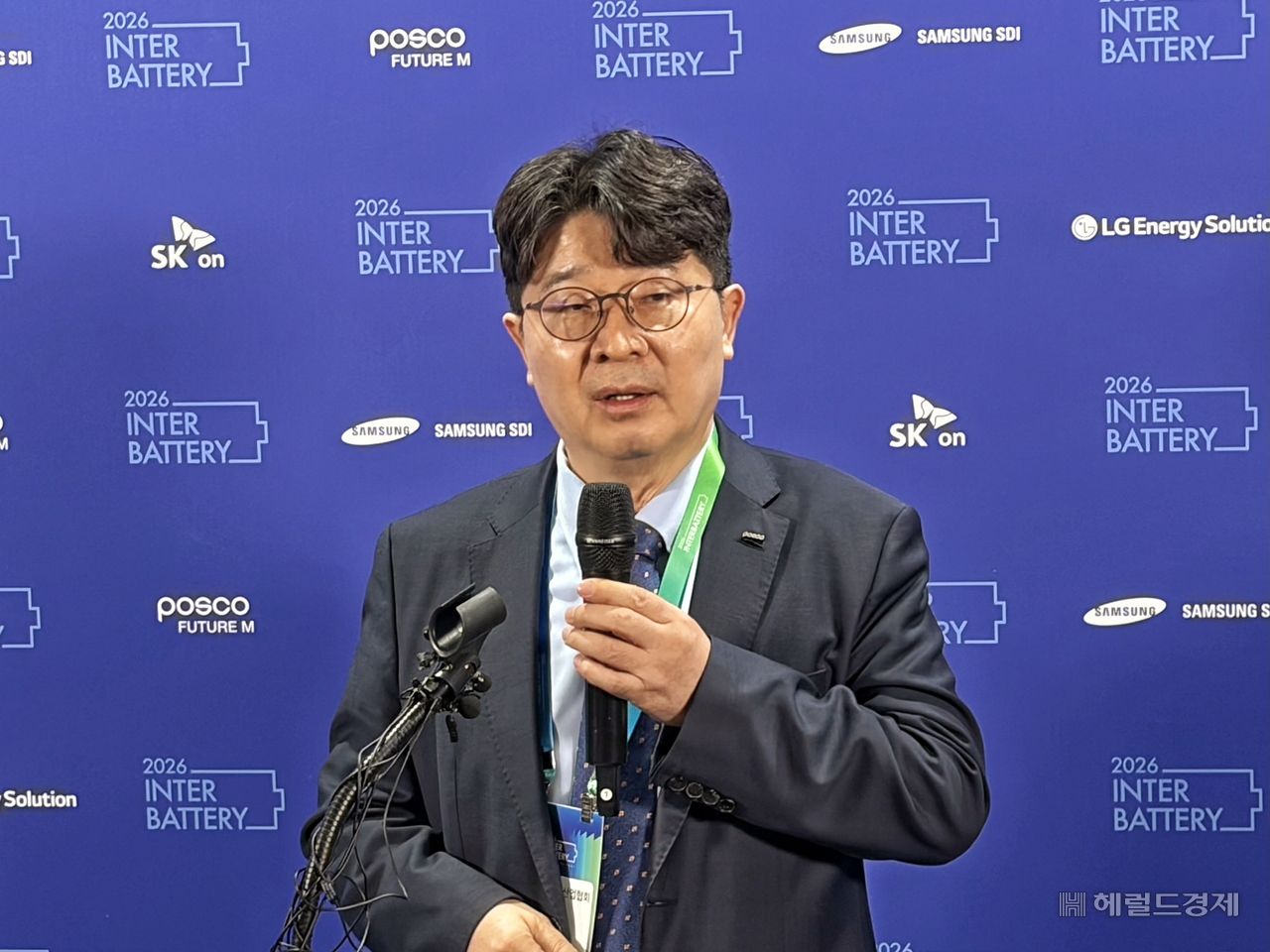
South Korea's battery industry gathered Thursday to chart a path to recovery as it grapples with slowing electric vehicle demand and an intensifying low-price offensive from Chinese rivals. The government pledged to finalize a battery competitiveness package by year-end, while lawmakers called for direct financial support for loss-making companies.
The Korea Battery Industry Association held the sixth Battery Industry Day ceremony at the Josun Palace Hotel in Gangnam-gu, Seoul. About 250 people attended, including Min Woo Lee, director general for industrial growth at the Ministry of Trade, Industry and Energy; National Assembly lawmaker Kim Jong-min; and Korea Battery Industry Association President Eom Gi-cheon, along with representatives from the battery industry, academia and research institutions.
The three major battery makers were represented by LG Energy Solution Senior Managing Director Song Chung-seop, Samsung SDI Senior Managing Director Jeong Tae-young and SK On Executive Vice President Shin Young-gi.
Battery Industry Day was launched in 2021 to recognize the achievements of business leaders and researchers who have contributed to the development of South Korea's battery sector. Now in its sixth year, the ceremony presented government commendations to 20 people for their contributions to the industry.
The top honor, the Silver Tower Order of Industrial Service Merit, went to SungEel HiTech CEO Lee Kang-myung. Lee was recognized for pioneering the used lithium-ion battery recycling business in South Korea and commercializing technology to recover critical battery minerals.
Lee's company was the first in South Korea to commercialize a hydrometallurgical process for recovering key battery materials including cobalt, nickel and lithium. SungEel HiTech also built an integrated recycling system spanning pre-treatment of spent batteries through metal recovery and materials production. Since 2014, the company has expanded overseas, establishing recycling hubs in eight countries and building a resource-circulation model that feeds recovered materials back into battery manufacturing.
The Order of Industrial Service went to Ecopro BM CEO Choi Moon-ho, who was credited with leading the domestication and export expansion of high-nickel cathode materials. Choi was also recognized for strengthening the technological competitiveness of nickel-cobalt-aluminum (NCA) and nickel-cobalt-manganese (NCM) cathode materials and expanding overseas production capacity.
Ecopro BM received the $3 billion export tower award in 2023 and had an annual cathode material production capacity of 262,000 tons as of last year. The company is also building local production systems in Hungary and Canada.
SK On Executive Vice President Shin Young-gi received the Presidential Commendation. Shin was recognized for increasing the use of domestically made battery equipment and diversifying the supply chain while establishing SK On's production bases in the United States, Europe and China. Shin contributed particularly to maintaining a domestic equipment localization rate of more than 90 percent during overseas factory construction.
Four people received Prime Minister Commendations: Samsung SDI Part Leader Kim Young-gi, US Embassy in Seoul Commercial Specialist Baek Hee-suk, LG Energy Solution Senior Managing Director Lee Sang-hoon and KAIST Professor Choi Nam-soon. Ministry of Trade, Industry and Energy commendations were awarded to 13 people, including L&F Senior Managing Director Kong Gi-young.
This year's event also carried significance as the battery industry's growth axis broadens beyond electric vehicles to include ESS and robots.
However, price competition with Chinese manufacturers, protectionist moves by major economies and instability in raw material supply chains remain key challenges for the domestic battery industry. Securing new markets including ESS while preparing for a recovery in EV demand has become increasingly important.
In his opening remarks, Korea Battery Industry Association President Eom Gi-cheon said battery demand is diversifying across AI data centers, ESS, robots and ships. Eom said responding to protectionist policies and supply chain regulations around the world requires not only corporate effort but also strategic government support at the national level.
Eom also said cooperation across the entire industry ecosystem — from raw materials and refining to components, equipment and recycling — is essential.
"I will listen more closely to the voices of our member companies, unite the capabilities of the industry, and fulfill a more responsible role at the center of driving the sustainable development of the K-battery industry," Eom said.
The government also signaled it would move toward concrete support measures. Min Woo Lee, director general for industrial growth at the Ministry of Trade, Industry and Energy, said in his congratulatory address that three factors are critical for the domestic battery industry to maintain competitiveness: technological and price competitiveness, supply chain self-sufficiency and cooperation across the industrial ecosystem.
The government is currently reviewing the introduction of a domestic production incentive tax regime that would provide tax benefits to companies manufacturing batteries in South Korea.
"We will work with the industry to develop effective support measures and finalize a battery industry competitiveness package by year-end," Min said.
In the National Assembly, lawmakers raised the need for a support approach that combines tax credits with direct subsidies.
"Secondary batteries are a core strategic industry that, alongside semiconductors, will carry South Korea's future — but they face a serious crisis from China's low-price offensive and intensifying global competition," said lawmaker Kim Jong-min. "A two-track approach is needed: tax credits for profitable companies and direct subsidies for those operating at a loss."
The remark reflected concern that even if a production tax credit is introduced, loss-making companies with no immediate corporate tax liability would not benefit right away.
Kim also raised uncertainty surrounding China's export controls. "With the expiration of China's export control exemption on Nov. 10 approaching, uncertainty is growing for our companies," Kim said. "We must strengthen the domestic production base and resolve supply chain uncertainty for key materials and equipment. The National Assembly will also ensure the necessary legislation and budget are in place so our companies can continue to invest and grow at home."
kwater@heraldcorp.com




