
- IAEA nuclear energy ministerial conference closes in Incheon with 62 member states, over 800 attendees
- Talks cover SMR commercialization, AI integration and nuclear safety cooperation
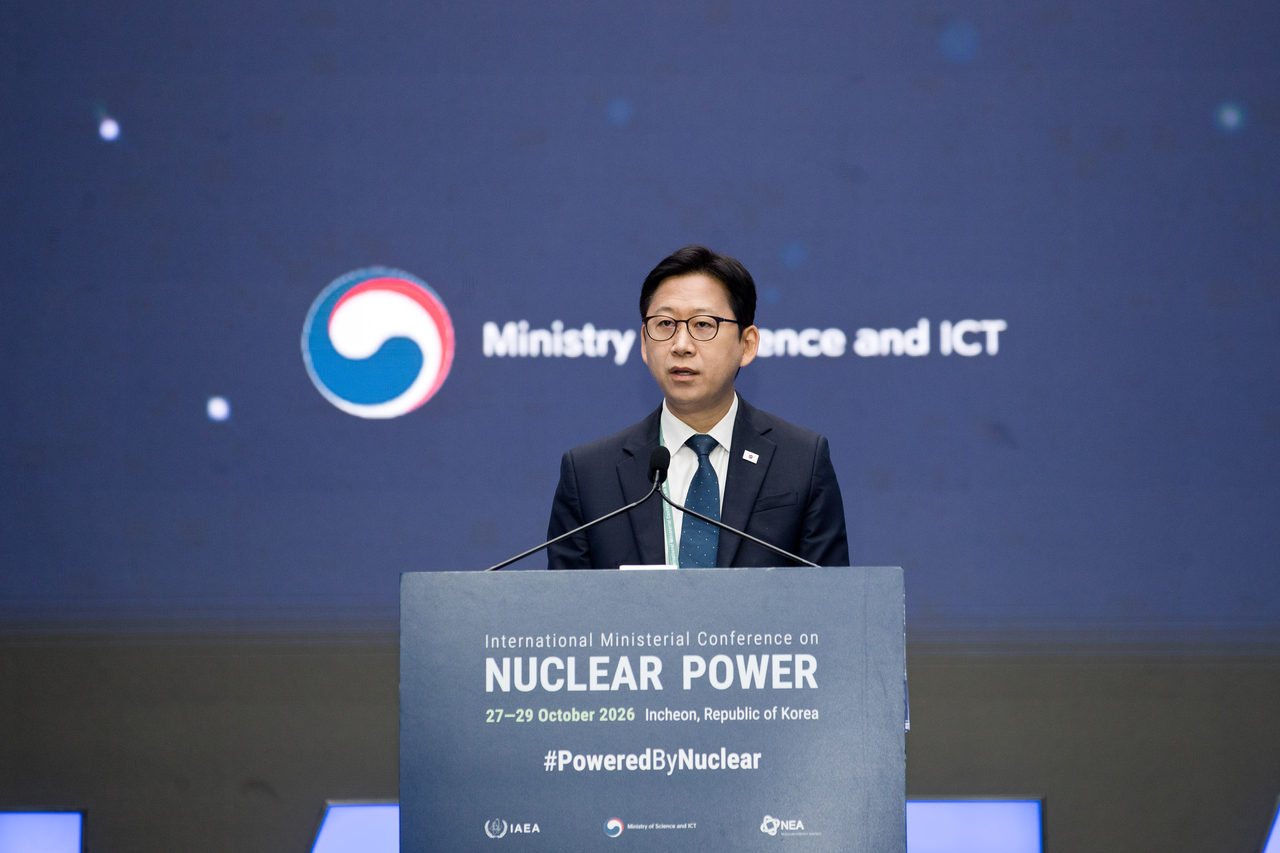
Government representatives from 62 countries gathered in South Korea to discuss the future of nuclear energy, including the commercialization of small modular reactors (SMRs), AI integration and nuclear safety. Korea used the occasion to advance cooperation in the global nuclear market, drawing on its accumulated expertise spanning large-scale reactors to next-generation designs.
The Ministry of Science and ICT said Thursday that the IAEA Ministerial Conference on Nuclear Energy, held at Songdo Convensia in Incheon, concluded after a three-day run.
The conference — the first of its kind held in Korea — brought together government representatives from 62 IAEA member states, delegates from five international organizations and officials from about 85 domestic and foreign companies, with more than 800 people in attendance.
Discussions focused on key issues facing the nuclear industry, including new reactor construction and adoption, safety regulation, financing and the development of a skilled workforce.
Participants agreed that policy consistency, regulatory independence and predictability in project costs and construction timelines are critical for countries newly introducing nuclear power to pursue their programs on stable footing.
On the financing side, the conference addressed risk-sharing arrangements among governments, companies and investors, as well as ways to link projects with support from international financial institutions.
The commercialization of SMRs and advanced reactors — widely seen as central technologies for the future nuclear market — also emerged as a major agenda item.
Participating countries discussed verifying the safety and economic viability of SMRs through demonstration and operation, streamlining licensing frameworks, and managing nuclear fuel supply and spent fuel. The need to establish regulatory foundations for expanding nuclear applications to marine, offshore and remote environments was also raised.
The integration of AI into nuclear facilities drew considerable attention. Participants shared examples of AI-assisted reactor inspections and knowledge management, and discussed the conditions necessary for safe technology adoption, including data governance and cybersecurity. The conference reaffirmed the principle that humans must retain final decision-making responsibility in matters of nuclear safety.
As the host country, Korea presented its reactor development and operating experience, along with advanced technology applications such as digital twins and AI-based monitoring, during a special session titled "A New Era of Nuclear Energy."
A dedicated "K-Nuclear Special Pavilion" operated throughout the conference, showcasing domestic nuclear technologies ranging from large reactors and SMRs to next-generation reactors and research reactors. Korea used the exhibition to highlight its competitiveness across the full nuclear industry chain — design, manufacturing and construction — and to explore opportunities for expanding overseas project cooperation.
Deputy Prime Minister and Minister of Science and ICT Bae Kyung-hoon said the conference was "a forum where countries pooled their experience and capabilities to chart the future of nuclear energy together, laying the groundwork for policy, technology and industrial cooperation built on safety and trust." Bae added that Korea "will actively pursue talent development, technology exchange and industrial cooperation with the IAEA and its member states, drawing on the technology and experience of K-nuclear."
nbgkoo@heraldcorp.com




