
Godeok District 1 targets 65% consent rate
Godeok 2-1, Mapo-gu's Dangindong also push fast-track plans
Villa sales up 28% in Gangdong-gu, 34% in Gwangjin-gu
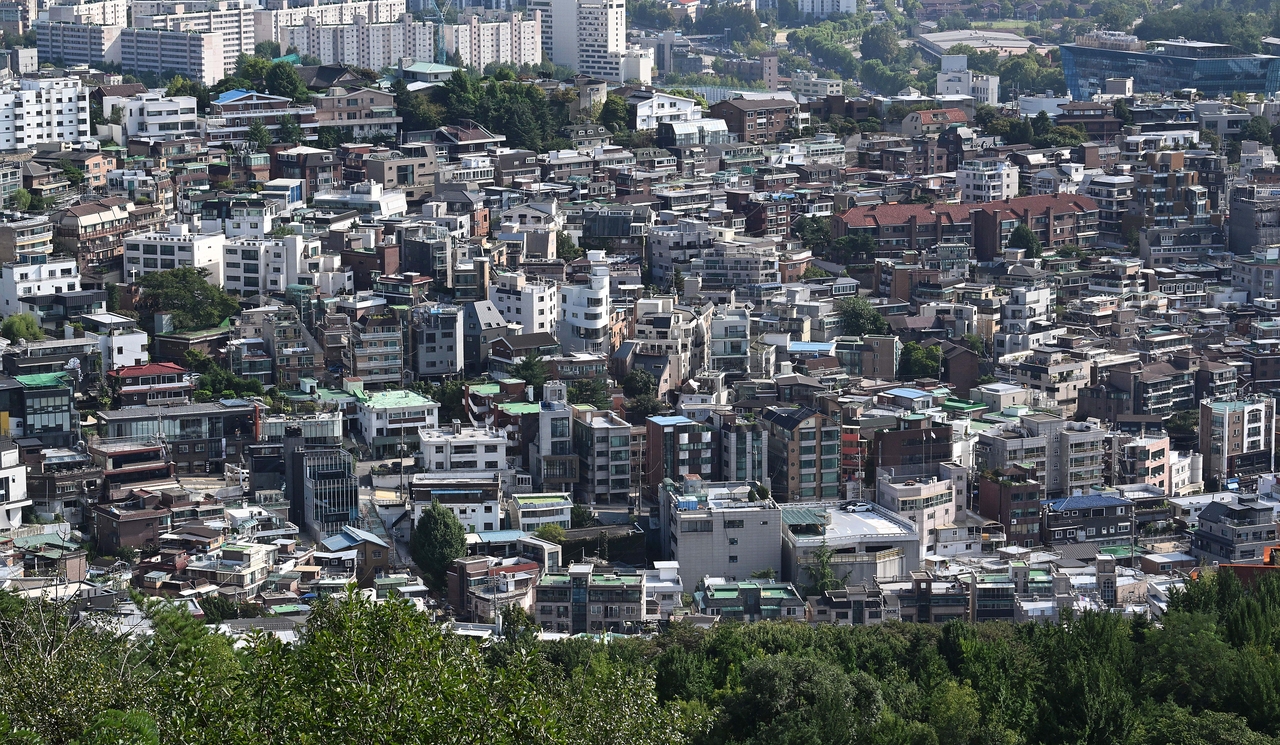
Redevelopment sites along Seoul's Han River belt are racing to advance their fast-track urban renewal plans, known as the Sintonggihwaek, or Integrated Planning, program, as rising nearby home prices fuel residents' expectations of asset gains and momentum builds for consent drives. The push has gained further energy after Seoul Mayor Oh Se-hoon was acquitted in an appeals court ruling, raising hopes that the program — closely associated with Oh's administration — will continue without interruption.
According to industry sources Thursday, the redevelopment preparatory committee for Godeok District 1 — centered on 536 Godeok-dong in Gangdong-gu — achieved a 51% consent rate just 20 days after it began collecting preliminary consent forms required to obtain a sequential registration number for a fast-track candidacy application. The drive began Oct. 4, and as of Saturday more than half of the roughly 800 landowners and property holders in the zone had submitted consent forms, the committee said.
The consent drive follows a Sept. 17 advisory panel meeting at the Gangdong-gu district office, which deferred the issuance of a registration number. At that meeting, officials announced a plan to form a consultative body — comprising representatives of both supporters and opponents as well as a coordinator — to reconcile differing views before revisiting the registration number decision.
The preparatory committee aims to secure a preliminary consent rate of at least 65% before submitting the forms to the district office and obtaining a registration number as soon as possible. "The site is along the Han River and can accommodate a large complex of more than 2,600 units, so residents' will to push ahead with redevelopment has grown stronger and the consent drive is picking up speed," a committee official said. "Prices at nearby large apartment complexes such as Godeok Raemian Hillstate and Godeok Gracium have risen sharply over the past few years, and opposition to redevelopment has eased compared with before."
Godeok District 2-1 — centered on 142 Godeok-dong and separated from District 1 by a park — is also accelerating its fast-track redevelopment push. The preparatory committee for District 2-1, which received conditional registration number approval last month, held a public information session Tuesday to share details on redevelopment procedures, project viability and the planned schedule.
In Mapo-gu, a fast-track redevelopment drive along the Han River is also gaining momentum. The area around 15-22 Dangindong in Mapo-gu, which submitted its fast-track candidacy application to the Mapo-gu district office Oct. 15, is collecting resident consent forms with a target of securing a rate above 70%. The committee plans to push the consent rate as high as possible ahead of the expected final application window to the Seoul Metropolitan Government, anticipated around December through January next year.
The accelerating push at Han River belt redevelopment sites reflects a broader drive to advance projects and boost asset values amid a sharp rise in prices for Han River belt and mid-to-low-priced apartments this year. The resolution of the legal risk surrounding Mayor Oh has also reinforced the continuity of the fast-track program — often called "Oh Se-hoon's urban renewal model" — strengthening the momentum behind ongoing projects. The program was introduced by the Seoul Metropolitan Government after Oh took office in 2021, with an emphasis on speeding up redevelopment by supporting planning from the earliest stages in partnership with private stakeholders.
"The biggest concern for fast-track sites — as well as other renewal projects such as Moataun — was whether the legal risk would sap the drive to push ahead," an official at one redevelopment association said. "Since the verdict, association members have been reacting with relief."
As redevelopment activity spreads across the Han River belt, demand for villas — low-rise multi-unit and row houses — in the area is also rising. Buyers priced out of the soaring apartment market and squeezed by a tight jeonse supply are shifting to the villa market, with transactions concentrating on properties that have redevelopment potential.
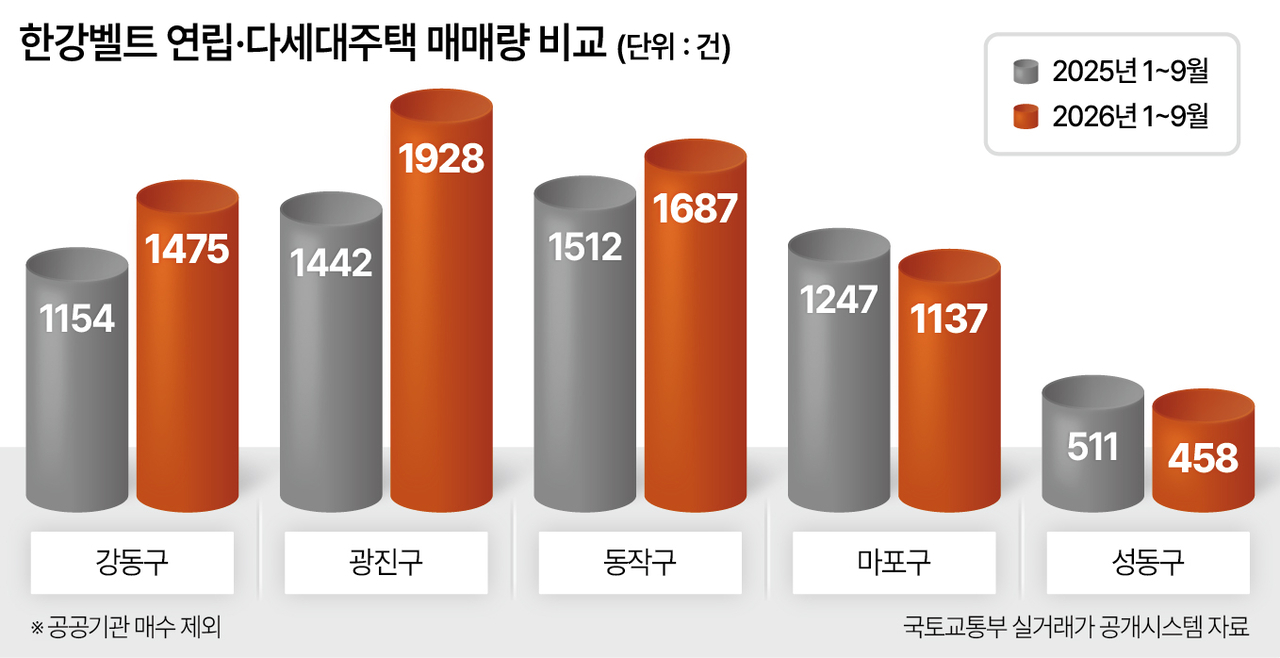
Villa sales in Gangdong-gu from January through September this year — excluding purchases by public institutions — jumped 28% to 1,475 transactions, up from 1,154 in the same period last year, according to the Ministry of Land, Infrastructure and Transport's actual transaction price disclosure system. Gwangjin-gu saw a 34% increase over the same period, rising from 1,442 to 1,928 transactions, while Dongjak-gu posted a 12% gain, from 1,512 to 1,687.
Song Seung-hyun, chief executive of Urban and Economy, said Seoul's real estate market is showing a split trend — owner-occupiers gravitating toward apartments while investors concentrate on villas. "For fast-track sites, buyers should be aware that land transaction permit requirements apply," Song said, "and before purchasing, they should carefully examine project viability, the rights calculation base date, and the balance of resident support and opposition."
hwshin@heraldcorp.com




