Q3 sales 45.11 trillion won, down 3.4%
Operating profit 2.68 trillion won, up 5.5%
Strike, Middle East war weigh on global sales, down 11.3%
Exchange rate, hybrid growth cushion earnings
Annual sales target cut from 4.16 million to 4 million units
New models to drive Q4 recovery push
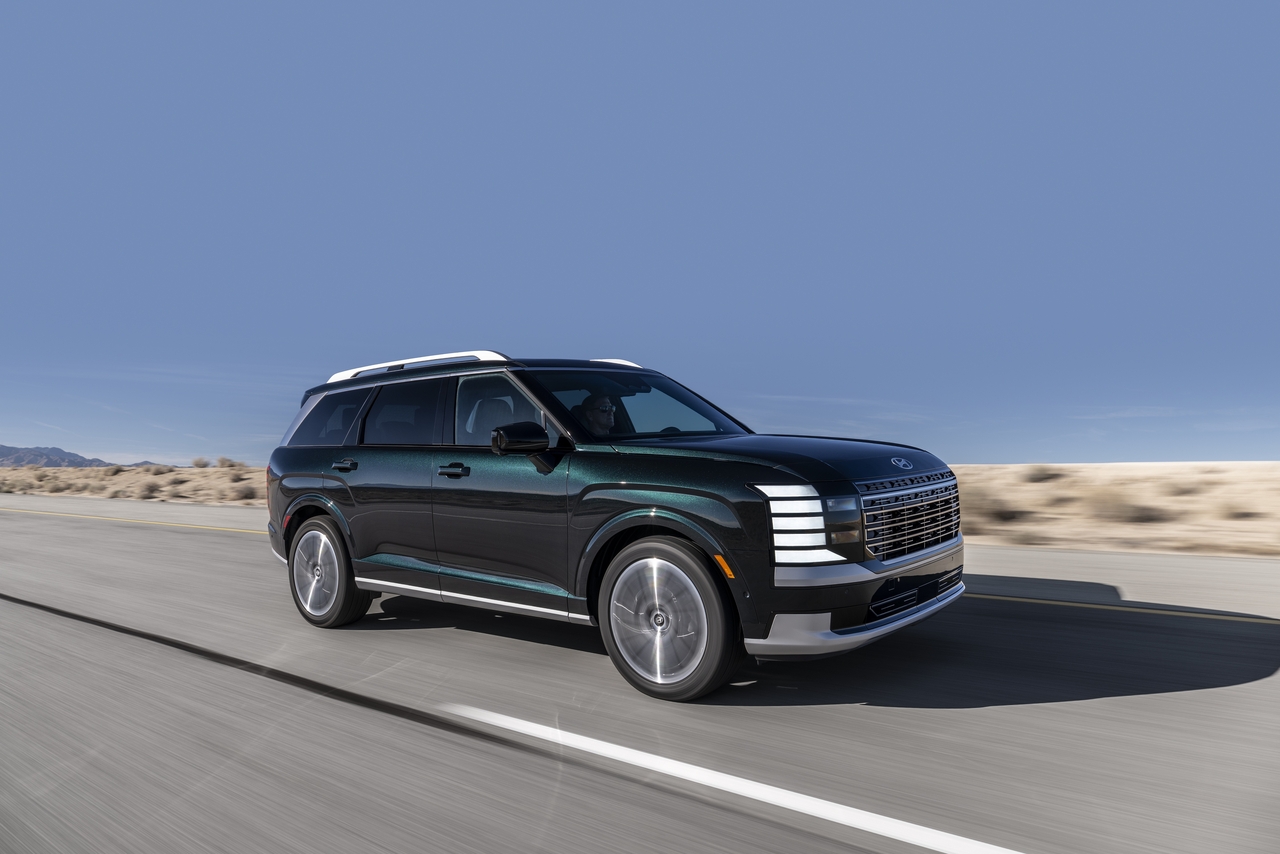
Hyundai Motor posted lower sales in the third quarter as a labor strike and softening demand weighed on volumes, but a favorable exchange rate and strong hybrid vehicle sales pushed operating profit up 5.5%. The automaker also trimmed its annual operating profit margin target by 0.8 percentage points and cut its investment plan by 1.8 trillion won ($1.35 billion), scaling back its full-year ambitions.
Hyundai Motor reported Thursday that third-quarter consolidated sales reached 45.11 trillion won and operating profit came in at 2.68 trillion won. Sales fell 3.4% from the same period last year, while operating profit rose 5.5%. The operating profit margin improved 0.5 percentage points year-on-year to 5.9%.
The primary driver of the sales decline was a drop in volumes. Global wholesale sales in the third quarter totaled 920,710 units, down 11.3% from a year earlier. Domestic sales plunged 27.2% to 131,468 units, hurt by factory disruptions from a union strike and fewer working days during the Chuseok holiday period.
Overseas sales also fell 8.0% to 789,242 units, as a slowdown in global industry demand linked to the Middle East war compounded export disruptions caused by the domestic factory strike. Europe was particularly hard hit, with wholesale sales dropping 18.0% amid a product lineup shift toward electrification and a reduction in internal combustion engine models.
The United States offered a relative bright spot. While overall US retail auto demand slipped 1.3%, Hyundai Motor's retail sales there rose 3.5%. Market share held at 6.6%, marking six consecutive quarters above the 6% threshold.
A favorable exchange rate played a major role in protecting profitability despite the volume decline. The average won-dollar rate in the third quarter was 1,423 won, up 2.8% from a year earlier. The currency effect alone lifted automotive operating profit by about 1.28 trillion won, more than offsetting the roughly 1.11 trillion won drag from lower sales volumes.
Cost-cutting efforts also helped defend earnings. Selling, general and administrative expenses fell 19.2% year-on-year to 4.64 trillion won in the third quarter, and their share of sales narrowed 2.0 percentage points to 10.3%. However, the cost of sales ratio rose 1.5 percentage points to 83.8%, reflecting higher raw materials prices.
Expanding hybrid vehicle sales provided another pillar of support. Hyundai Motor sold 167,414 hybrid electric vehicles globally in the third quarter, about 6,000 more than a year earlier. Hybrids accounted for 18.2% of total sales, up 2.7 percentage points. In the United States, the hybrid share climbed to 26.8%, a record high on a quarterly basis.
Combined sales of electric and hybrid vehicles totaled 245,540 units, down 2.7% year-on-year. However, because overall sales fell by a larger margin, electrified vehicles' share of total sales rose 2.4 percentage points to 26.7%.
Despite the gain in operating profit, net profit declined. Net profit for the period in the third quarter came in at 1.93 trillion won, down 24.2% from a year earlier, partly because non-operating income fell to 229 billion won from 789 billion won in the same quarter last year.
The earnings pressure is also visible in the cumulative figures. Sales for the first three quarters totaled 140.26 trillion won, up 0.6% from a year earlier, but cumulative operating profit fell 17.7% to 8.04 trillion won.
Hyundai Motor also revised its full-year targets Thursday. The global wholesale sales target was cut to 4 million units from the 4.1583 million units set at the start of the year, a reduction of about 158,300 units. The domestic sales target was lowered to 664,000 units from 700,000, and the overseas target was trimmed to 3.336 million units from 3.4583 million.
The annual operating profit margin target was also reduced, to a range of 5.5–6.5% from the previous 6.3–7.3%, cutting both the upper and lower ends by 0.8 percentage points. Hyundai Motor cited higher fixed costs from lower volumes and rising raw materials prices as the reasons for the adjustment.
The automotive segment's investment plan for this year was cut to 16 trillion won from 17.8 trillion won, a reduction of 1.8 trillion won, or about 10.1% below the original plan. Hyundai Motor said it reviewed investment priorities and timing to arrive at the revised figure. The full-year consolidated sales growth rate target of 1.0–2.0% was left unchanged.
"This guidance revision does not reflect a deterioration in our fundamental business competitiveness or earnings power," a Hyundai Motor official said. "It is an adjustment to realistically incorporate into our annual outlook factors that were difficult to anticipate at the outset, such as rising raw materials prices and production disruptions."
Hyundai Motor plans to pursue an earnings recovery in the fourth quarter through a return to normal production and an expansion of new model sales. Domestic factory output has normalized since September, and the company intends to ramp up sales of the all-new Avante and all-new Tucson while launching full-scale sales of the Ioniq 3 in Europe. The company said it will work to restore production volumes while continuing to cut costs and improve its cost structure.
"In the third quarter, sales volumes declined due to fewer working days and domestic factory production disruptions, but we defended profitability through the exchange rate effect, cost optimization and expanded hybrid sales," the official said. "In the fourth quarter, we will recover sales volumes on the back of normalized production and the full launch of key new models, and we will continue company-wide cost reduction efforts to improve profitability."
Meanwhile, Hyundai Motor said it would maintain its shareholder return policy despite the earnings slowdown. The company declared a cash dividend of 2,500 won per share for both common and preferred shares in the third quarter, unchanged from a year earlier. Total dividends will amount to about 656.9 billion won, with a record date of Nov. 30 and a payment date of Dec. 30.
kwater@heraldcorp.com