
Korea Institute of Industrial Technology wins two spots in top 10 mechanical technologies of 2026
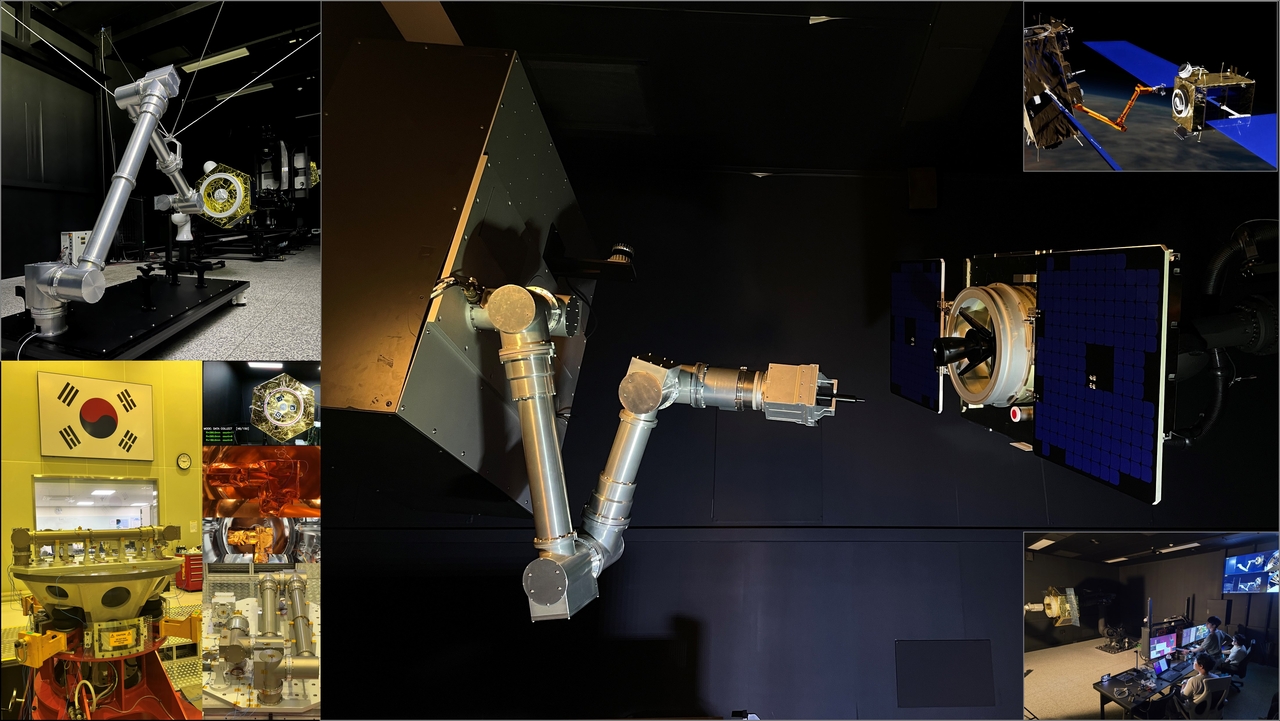
South Korea has developed a domestically produced robotic arm capable of repairing malfunctioning satellites and collecting space debris in orbit. Researchers have also localized key polishing and cleaning equipment used in semiconductor manufacturing, reducing device size by more than 70 percent.
The Korea Institute of Industrial Technology announced Thursday that two of its in-house technologies — a space robotic arm and semiconductor polishing and cleaning equipment — had been selected for the "2026 Top 10 Mechanical Technologies of Korea" award.
The award is presented annually by the Korea Federation of Mechanical Engineering Societies to recognize outstanding mechanical technologies and products developed domestically over the preceding year. The federation has selected winning technologies every year since 2013.
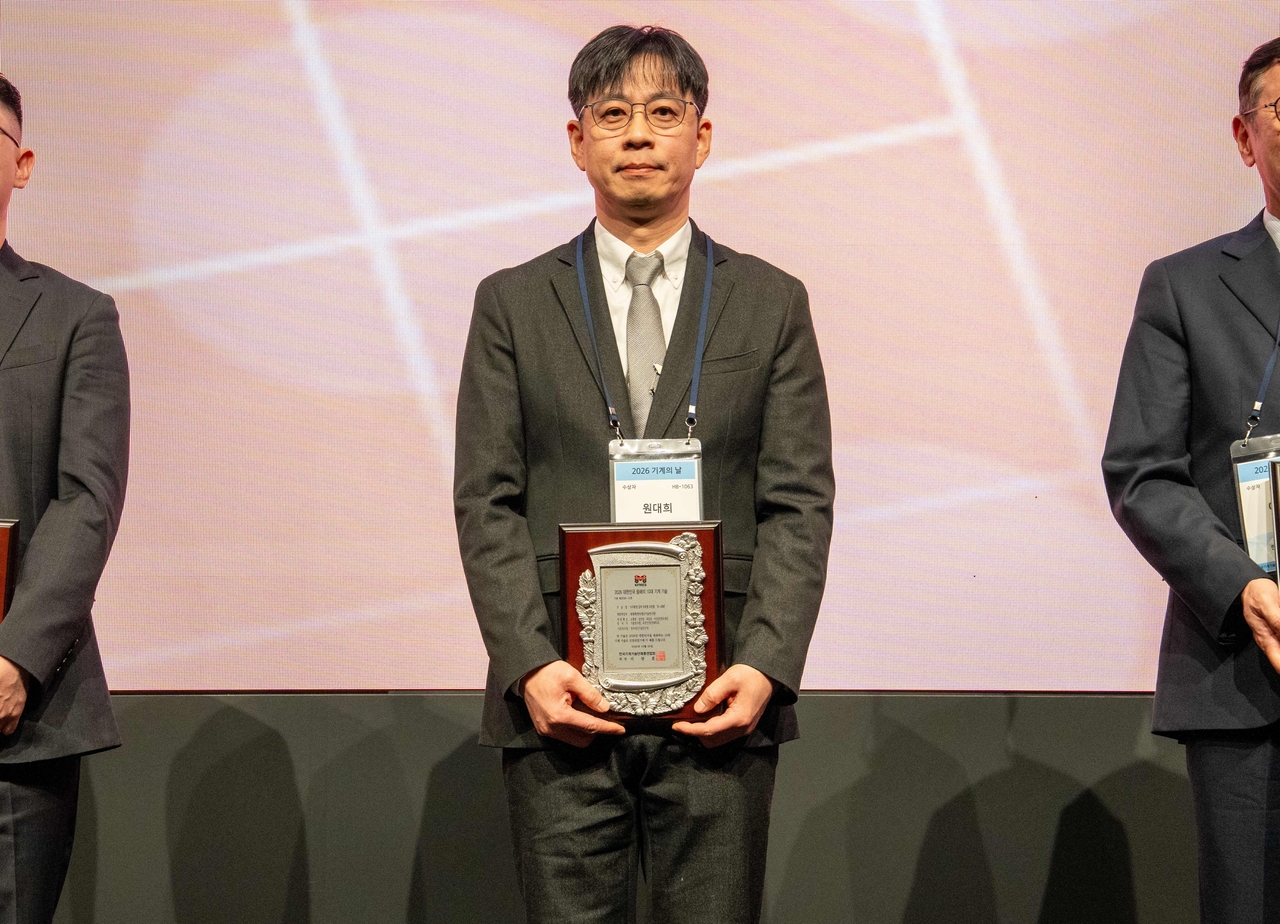
The space robotic arm selected this year, called K-ARM, was developed by a research team led by Won Dae-hee, a senior researcher in the institute's Human-Centered Robotics Research Division.
K-ARM is designed to be mounted on a satellite and carry out a range of space missions, including capturing space debris and repairing disabled satellites.
The arm is stowed in a folded position inside the satellite at launch and deploys once the satellite reaches orbital altitude. By swapping out the gripper and multipurpose tools at the end of the arm, it can be used not only for debris collection but also for satellite repairs and refueling.
The greatest challenge in developing a space robotic arm is the extreme environment. Space is a vacuum, and equipment must withstand severe temperature swings, radiation exposure and the intense vibrations generated during launch — conditions that rule out the use of standard industrial robot components.
The research team designed and built the arm using components suited to the space environment, becoming the first in South Korea to secure the relevant technology.
The team also produced an engineering qualification model of K-ARM — designated EQM-grade — that passed vibration and thermal vacuum tests simulating actual space conditions, verifying the arm's suitability for the space environment.
The team also developed a ground-based system called K-POS that simulates a microgravity environment to validate the performance of the robotic arm and satellite-mounted equipment before launch.
That technology was co-developed with a research team led by Hanyang University Professor Choi Young-jin and robotics company Neuromeka. The institute is currently pursuing technical cooperation with the Agency for Defense Development and the Korea Aerospace Research Institute on satellite system development.
The second recognized technology — semiconductor polishing and cleaning equipment — came from a research team led by Jo Han-cheol, a senior researcher in the institute's Extreme Process Control Group.
Wafers used in semiconductor manufacturing must have uniform surfaces to minimize defects. Chemical mechanical planarization, or CMP, is an essential process for precisely flattening wafer surfaces to meet that requirement.
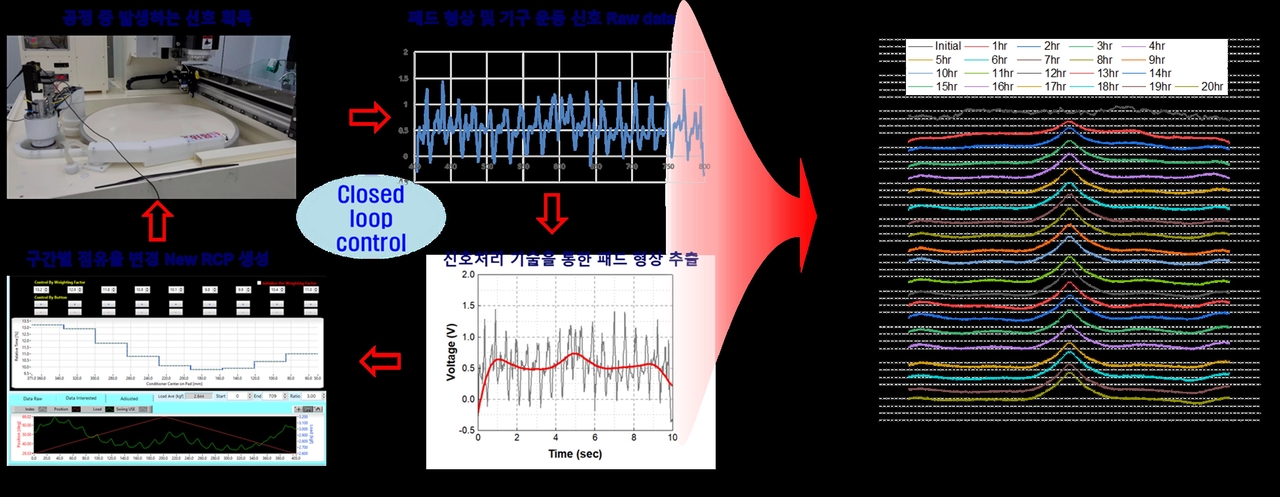
The research team developed a device that monitors changes in polishing pad thickness in real time during the polishing process and minimizes thickness variation — addressing the process non-uniformity that occurs as pads wear down.
The team also redesigned the cleaning unit that removes contaminants from wafers after polishing. By improving the core structure, the researchers reduced the device's volume by more than 70 percent compared with existing equipment.
The smaller footprint allows multiple units to be stacked, cutting the floor space required for installation while increasing throughput. The equipment also incorporates a self-diagnostic function that monitors force and friction to assess its own condition.
The core polishing process technology was transferred last year to a domestic semiconductor equipment company, where it is currently undergoing validation as a key module for next-generation polishing equipment.
The institute expects that successful commercialization would allow South Korea to enter the global market for such equipment, which American and Japanese companies currently dominate with a combined market share of more than 90 percent.
"From controlling extreme environments for the space robotic arm to breaking through the foreign-technology barrier in semiconductor equipment, this selection among the top 10 mechanical technologies reflects the fruits of hands-on, field-driven work," institute President Son Ung-hee said. "We will focus on securing breakthrough foundational technologies and commercializing them so that our national strategic industries are not shaken by global supply chain crises."
nbgkoo@heraldcorp.com




